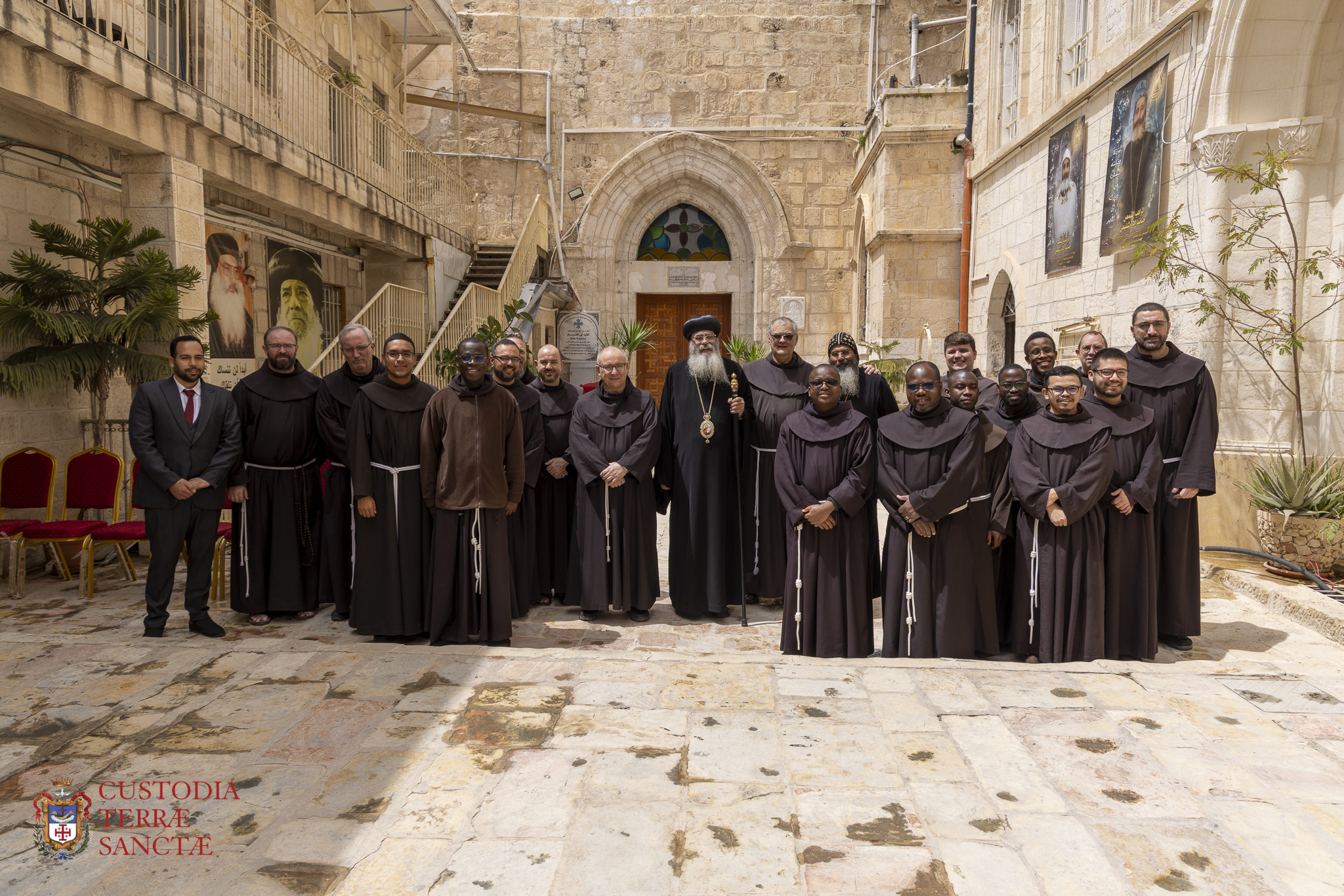
In these days, while the war between Israel and Iran was bringing tension and concern throughout the region, the convents of the Custody of the Holy Land also experienced an unusual and intense time.
The measures issued by the authorities prevented many workers from reaching their workplaces. For our communities this meant suddenly finding themselves without the precious help of the people who daily collaborate with the friars in the houses, in the schools and in the structures that welcome pilgrims.
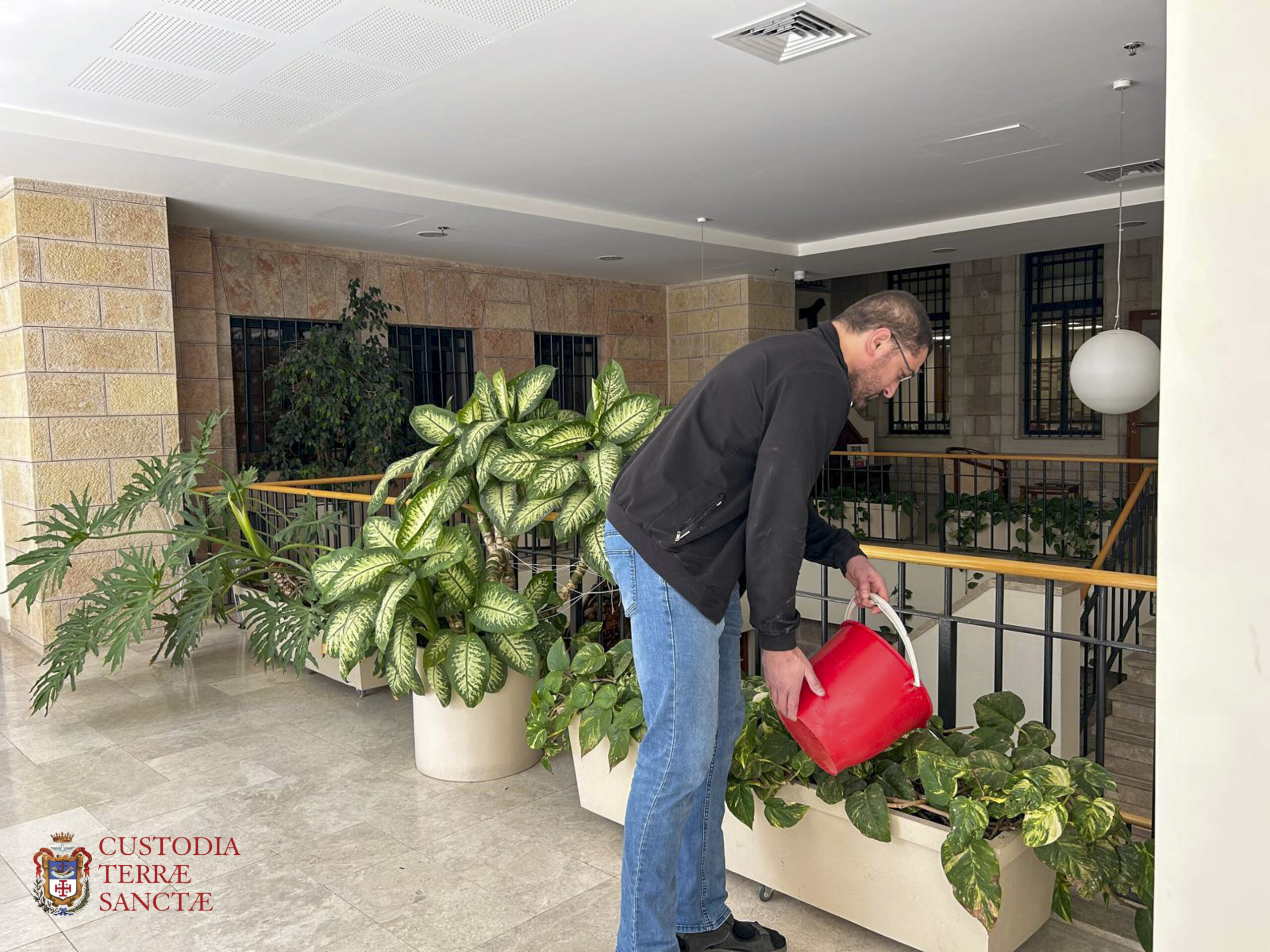
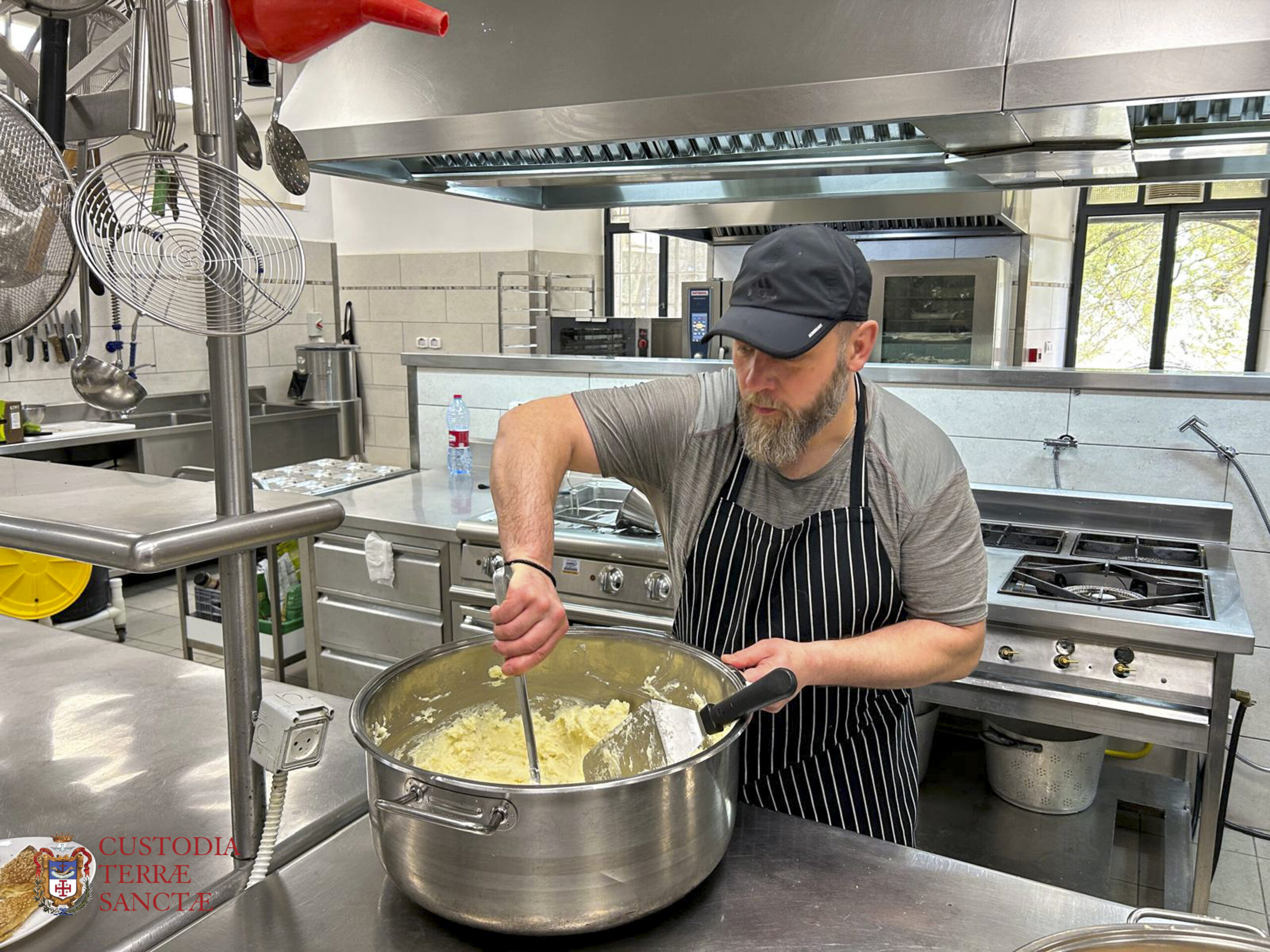
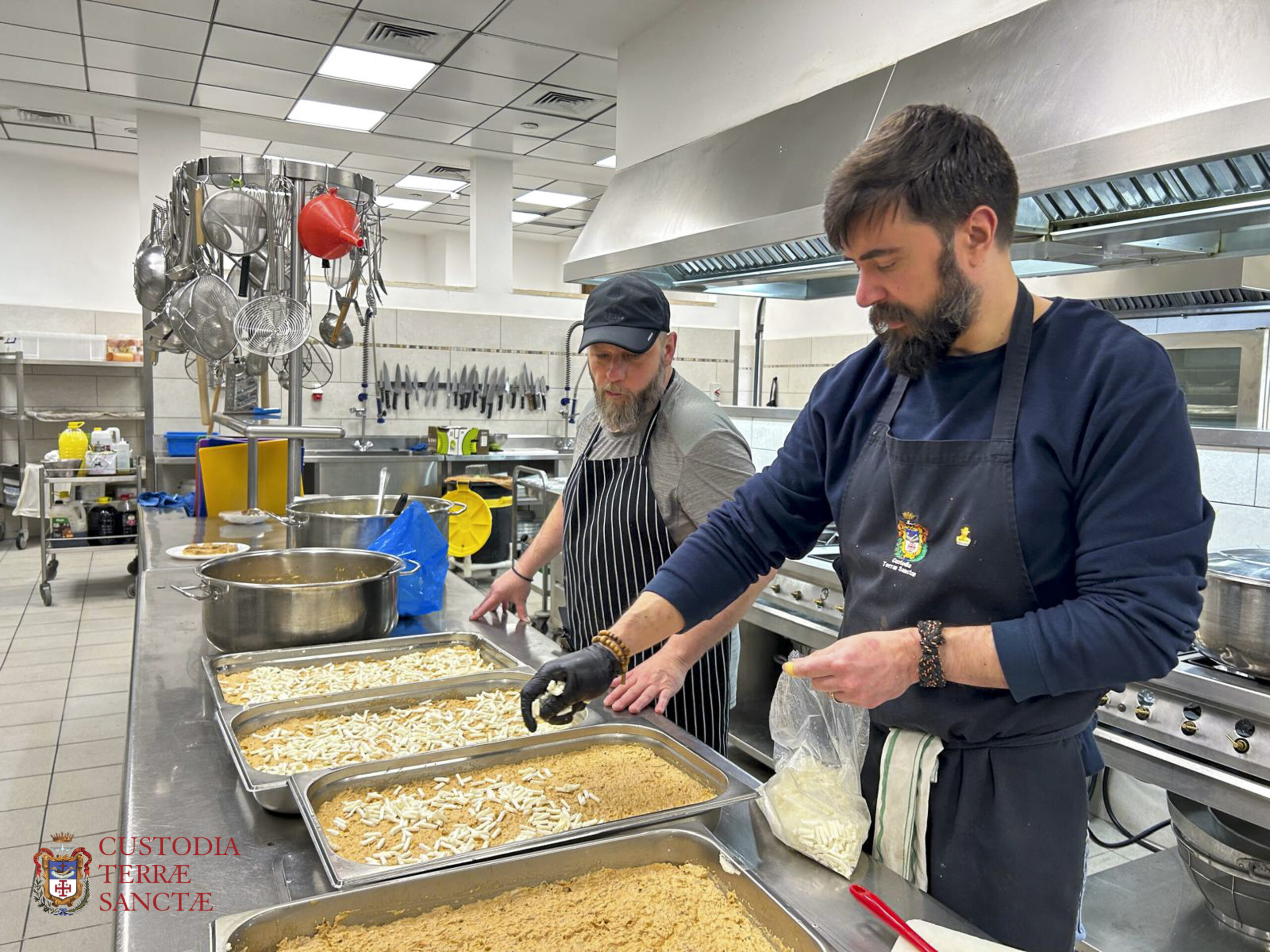
The friars remained inside the convents and structures of the Custody, continuing community life while directly taking on all those services that are normally carried out with the collaboration of the staff. Cooking, cleaning, the management of common spaces, garbage collection, the care of courtyards and gardens, every daily activity became a shared responsibility of the fraternity.
In some convents, such as the main Franciscan complex that hosts more than seventy friars, the challenge was particularly concrete. Preparing lunch and dinner for such a large number of people requires organization, time and many available hands. Thus, among pots, dishes and kitchen shifts, the friars took turns at the stove, transforming the refectory into an even more lively place of fraternal collaboration.
Cleaning also required constant commitment, corridors, courtyards, stairs, church, refectory and common spaces continued to be cared for with attention. Some swept, others washed the floors, others took care of the garden or garbage collection, small gestures that marked the rhythm of the communities’ days.
Unexpected help also came from the temporary suspension of university classes decided in these days. Many student friars, having no courses to attend, were able to dedicate more time to manual work and to the domestic services of the community.
For many it was a concrete opportunity to rediscover the value of manual work and daily collaboration. At the same time, this experience fostered a renewed gratitude toward those who normally work in our houses. They are people who often carry out humble and little visible services, but they are fundamental for the life of the communities.
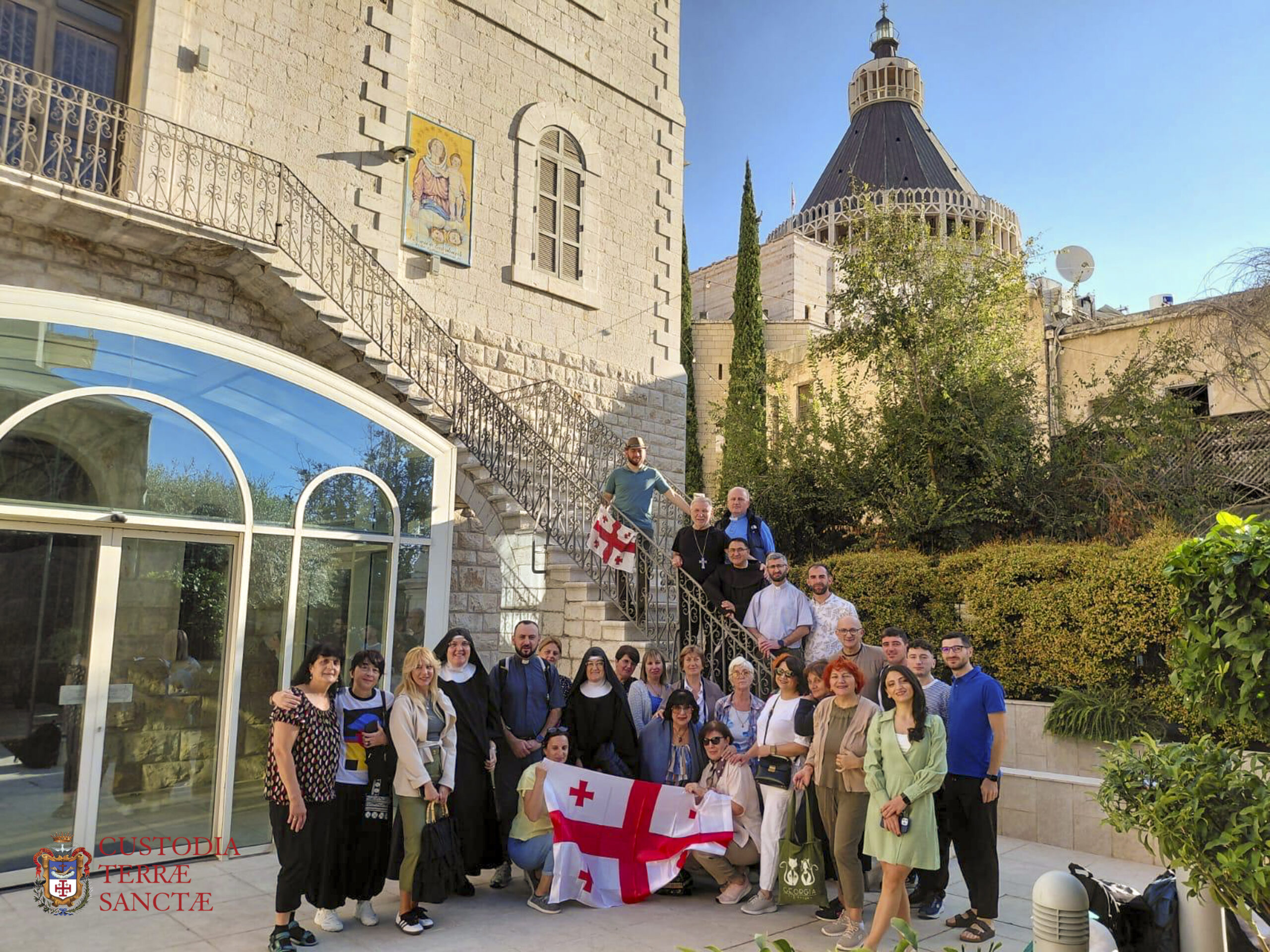
The structures that welcome pilgrims also faced some unexpected challenges. Some small groups present in the Holy Land at the moment when the conflict began found themselves blocked and unable to leave the country, without flights and without reservations in new structures. The Franciscan Casa Nova houses then generously welcomed pilgrims in need of a roof and a meal. For each one there was an open door and a sufficiently safe roof until the day of their return journey, which took place through Egypt.
Life in the convents of the Holy Land thus continued, among prayer, fraternity and shared work. Even in a time marked by uncertainty, daily life found its rhythm in the simple and concrete gestures that keep a community alive. And precisely in these gestures, often hidden, the experience of a fraternity that takes care of the common home and of the people who inhabit it was renewed, never ceasing to pray for peace and for the return of normality.
Fr. Alberto Pari