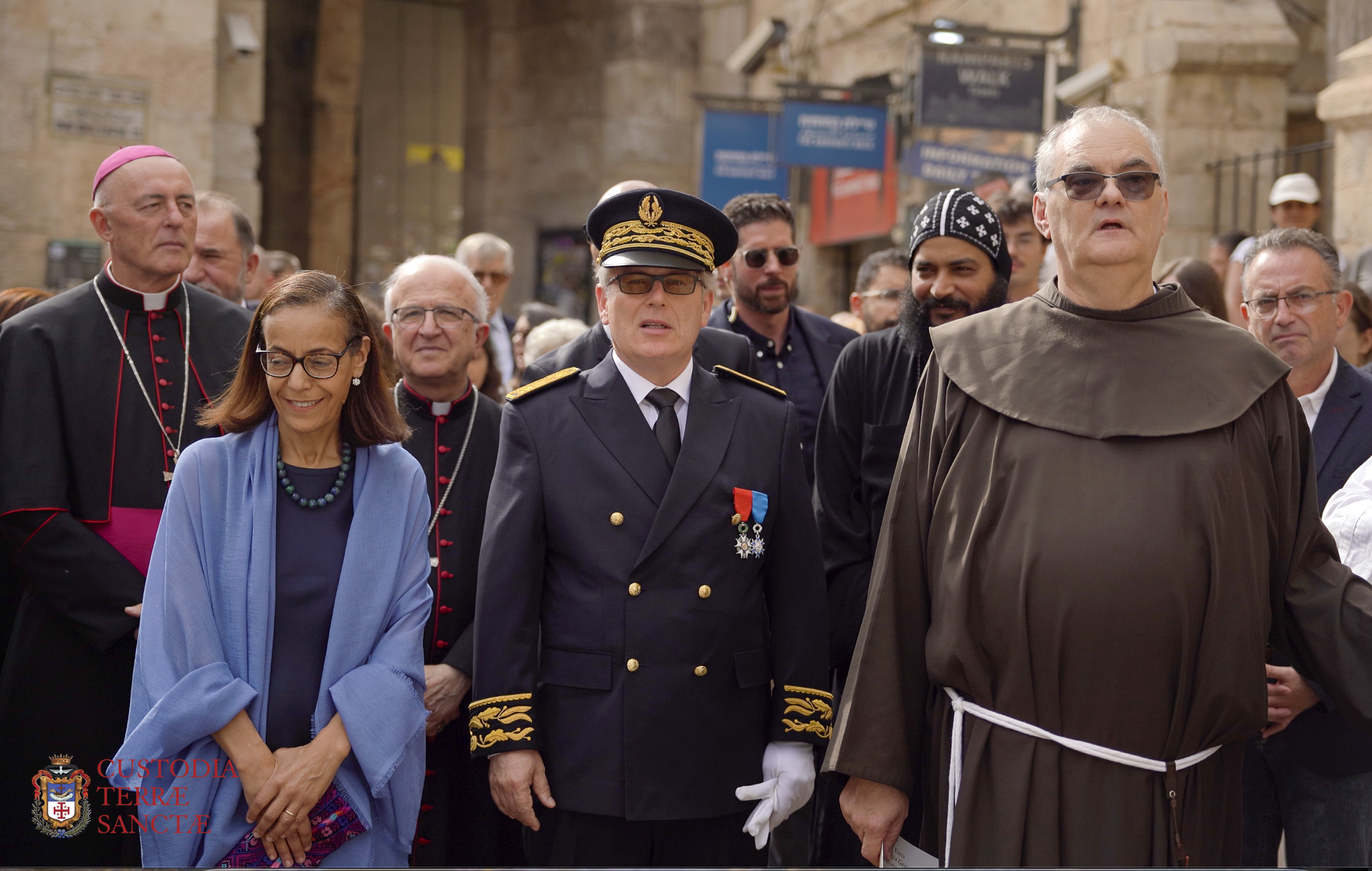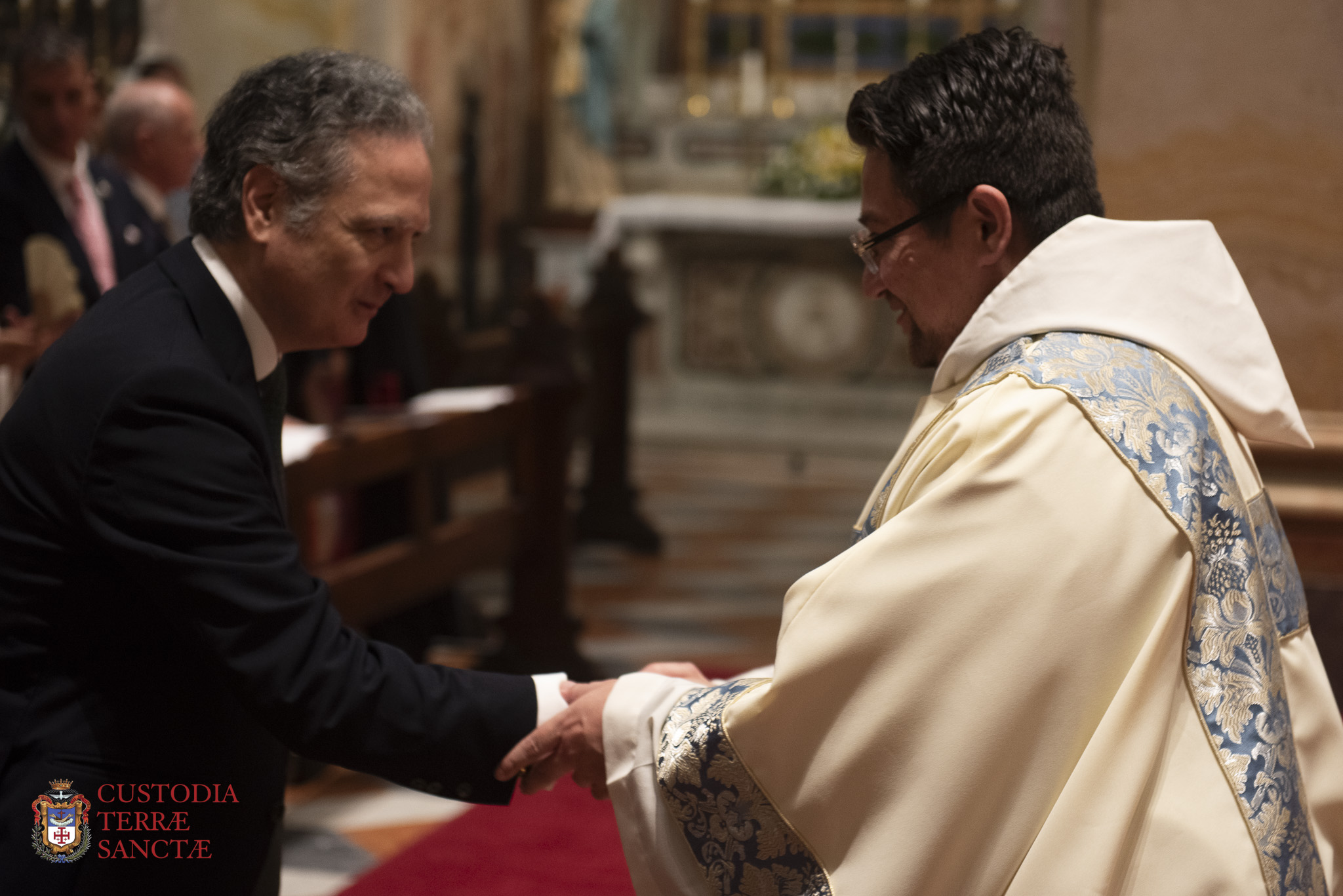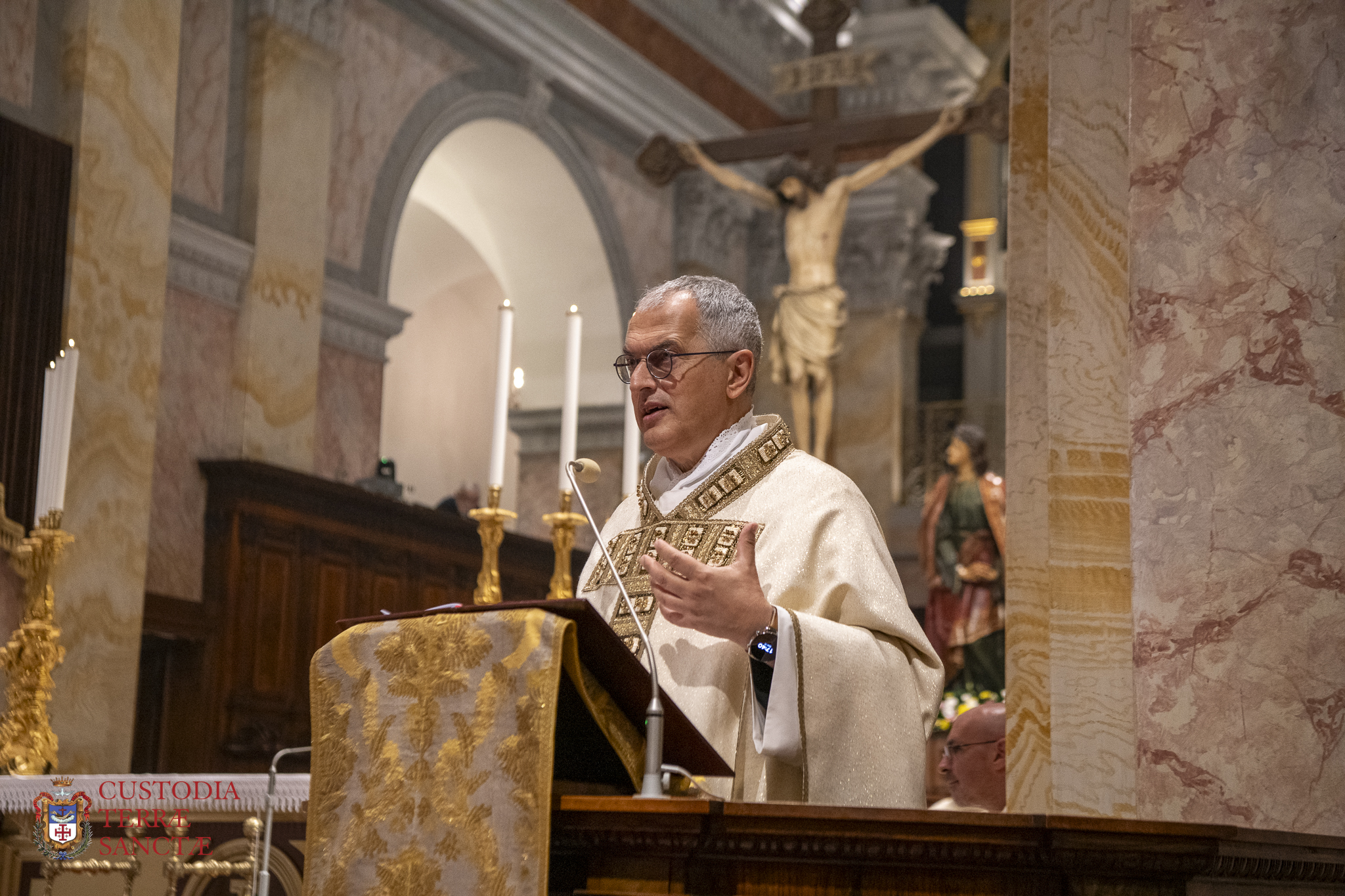
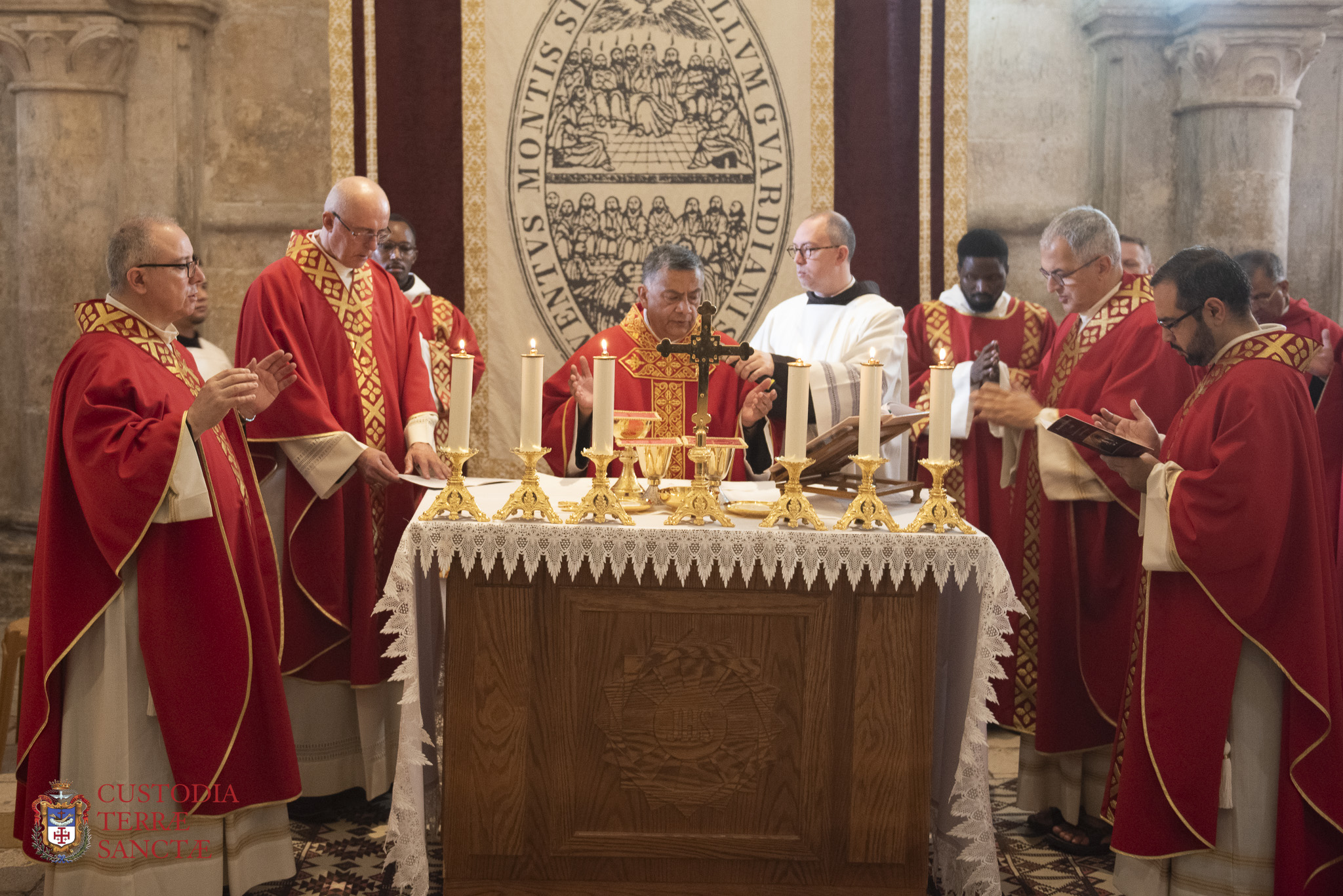
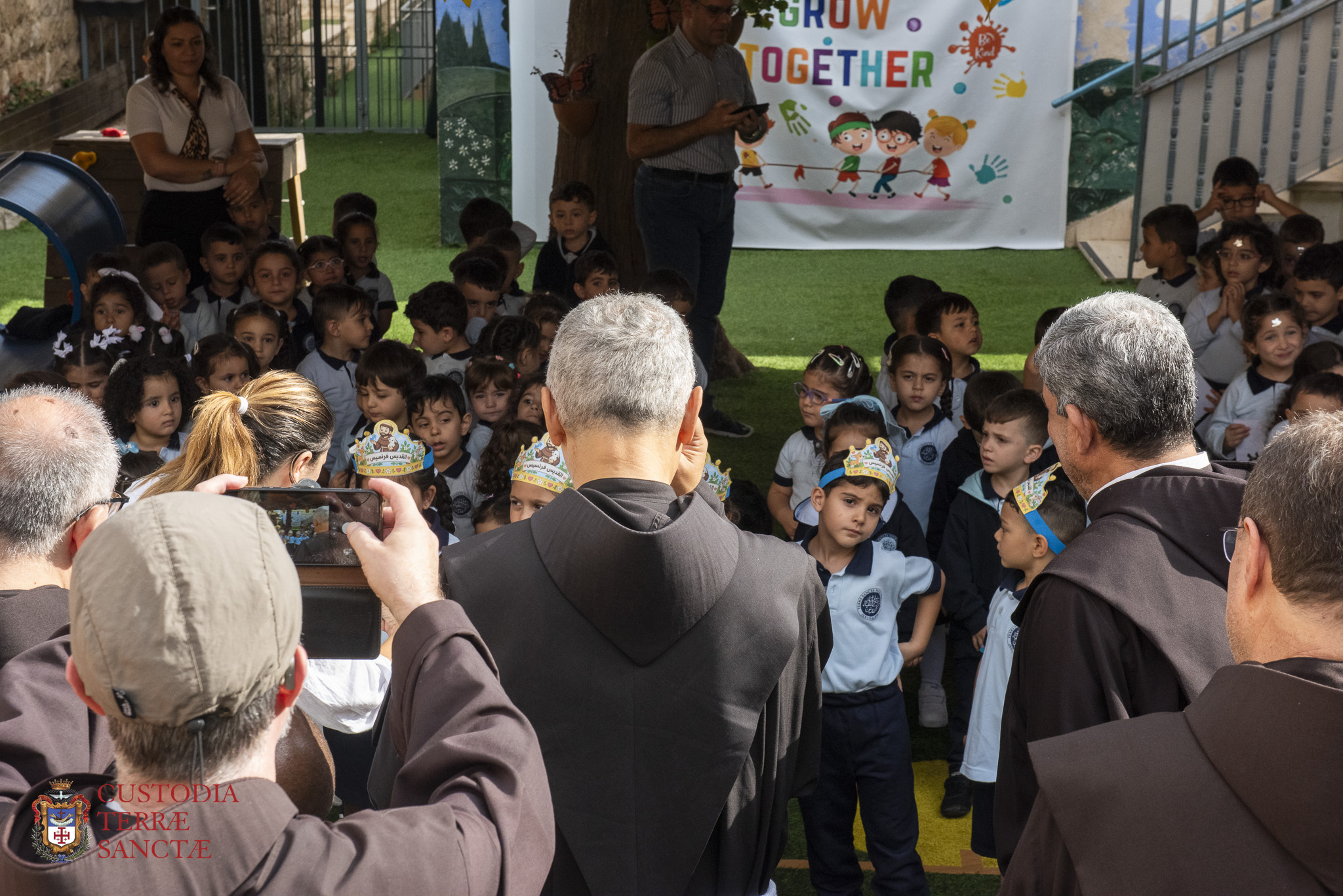
The visit began in Jerusalem with the solemn profession of eleven friars. It then continued on Mount Nebo. Subsequently, it unfolded once again in the Holy City, with the meeting with the friars of Judea, the Masses at the Holy Sepulchre and the Cenacle, and the visit to the Terra Santa School. Finally, there were several meetings with the communities of Galilee. The journey to the Holy Land of the Minister General of the Order of Friars Minor, Fr. Massimo Fusarelli, his third since he was elected, took on a particular significance this year. At a time of profound tension, of wounds that need to heal and major questions about the future, coming here together with the members of the General Definitory served, according to Fr. Fusarelli, to "feel the tension firsthand, especially when meeting people, the young people, who make you feel a painful uncertainty about the future." "It also means giving confidence to the friars, it is a sign that the Order is present and accompanies them," continued the Minister General, "and giving Christians, religious but also lay people, a word of hope." "I know that a word does not solve problems," he continued, "but they are not alone. This, then, is the true value: we remain, we choose to be here and we want to do so better and better."
What is the objective of these fraternal visits?
To get to know the realities firsthand, not only on paper, in documents, but by meeting the brothers and gaining some understanding of the social, ecclesial and cultural context. This allows those who carry out an international service to broaden their horizons.
Francis came to the East to meet the sultan. Based on this precedent, what contribution can the Franciscans make today to peace and dialogue?
Francis must be placed in the context of his time. He came to the East and met the sultan to proclaim Jesus to him and bring him to faith in Christ, so it was a different kind of dialogue from the meaning we give it today. And yet, one thing happened: the two met. I would say, then, that the key word is encounter. They met and understood one another, because they were two men who were searching and also two men of faith. For this reason, today it is very important in the Middle East and in the Holy Land to foster encounter with others as much as possible and to multiply the places where this can happen. Our schools of theological and biblical formation here in the Holy Land, for example, are places of encounter, many international students who carry out pastoral ministry in the Arab world have daily contact with Israel and with Palestinians, with brothers from other Christian churches. Encounter is the key word. And Francis truly leaves it to us as a testament.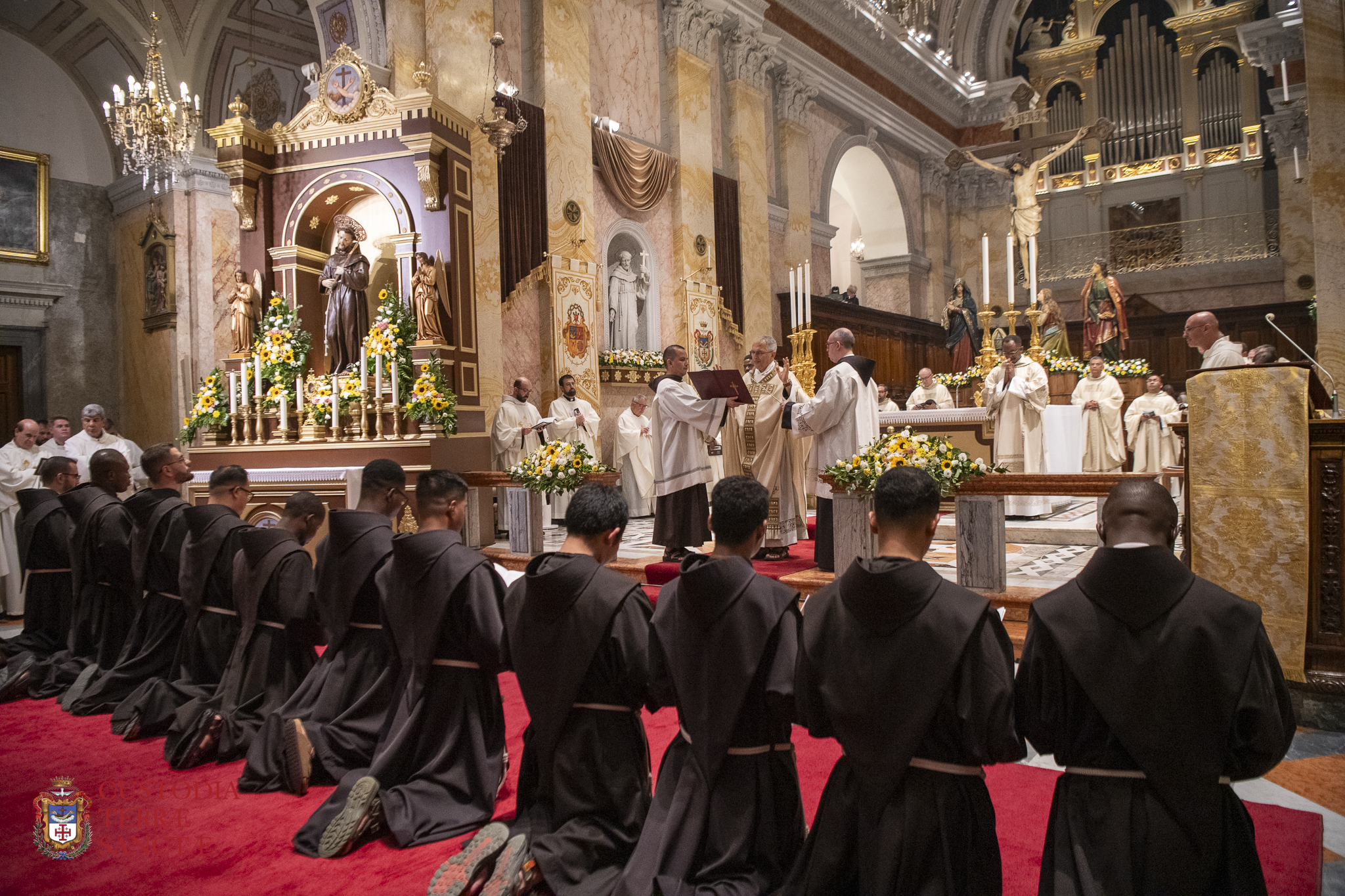
How important is it that the world does not forget Christianity in these places?
It is important in order to remember that Christianity has a history. The Holy Land reminds us of the biblical roots that lead to Christ and the Apostles. But there is also a living Church here. And we should care more about it, remain close to it, support it and enable Christians to remain. Because here we do not want to become a liturgical spectacle or a museum of the Christian past. We want to have, however small, a community that lives, celebrates, practices charity and bears witness to the Gospel. Therefore, a Christianity without the Holy Land is a Christianity without memory, but also without a future.
What are the most important challenges for the Order in this land?
The greatest challenge is to maintain our presence as an international Custody, to attract and call missionary friars here from the various provinces of the Order. To come to develop projects, to make this a field of mission and to serve those who safeguard the holy places. Here this is our first vocation, and we must foster it also through culture, study, especially of the Scriptures, as takes place at the Studium Biblicum Franciscanum. Just as for Saint Francis the word of God had a central role in his evangelical and spiritual experience, so it is for us as well. The Custody is not only about preserving something, it is also about promoting our charism. And it is important to emphasize that it is not only the Custody that needs the friars: we too, as an Order, need the Custody.
Is there a place in this Land to which you feel particularly attached?
Calvary, because I associate it with one of the pilgrimages I made here in the 1990s with young people. We used to come to Jerusalem on foot: that pilgrimage, that stop at Calvary, left a deep mark on me. It remains a very important place for me, as does Nazareth, with its beautiful Marian dimension.
Saint Francis is a figure loved even outside the Church, often with some secular aspects being exaggerated. What aspect of his charism, instead, needs to be rediscovered?
The heart of Francis' experience, which is the encounter with Christ, needs to be rediscovered. Without Christ, the Saint becomes an ecological, pacifist, environmentalist icon or whatever else, but detached from the root. The root is Christ, it is his Gospel. Francis was fascinated, attracted, seized by Jesus, and this can speak to everyone, including lay people, nonbelievers and non-Christians… because Francis did not live the religious dimension as one section of his life. He lived a single, integrated religious, anthropological and human dimension. Faith, therefore, was part of his humanity. To separate Francis from Christ and from the Gospel means no longer understanding him. This is the heart. With this heart made clearer, we can then speak of Francis as a universal brother, a herald of peace and reconciliation, capable of perceiving the unity of creation, of our common home, without forgetting the poor. And the Saint helps us precisely to bring all this together in an extraordinary way.
If you were to leave a message for young people, what would it be?
I understand that being young today is much more difficult than when I was young, because we had a perspective for the future. Today that is no longer there. Young people do not always receive the attention they need from the adult world. So I would like to tell them to make themselves heard and to make us listen to their voice, to enter into contact and dialogue with the adult world, without resorting to violence. At the same time, we adults should be more open to listening and place greater trust in them.
How does Faith fit into this?
Young people have many questions, and many of them do not immediately find their answer in Christ. But Christ is a living Person, the encounter with Him can set life in motion, set it on a journey. So I would say to young people, especially those in the secularized Western world, not to be afraid of faith, of the encounter with Christ. I say the same thing to young people in Africa, Asia and Latin America: look to Christ as the friend, the brother who can shed new light on your life. And why not, also by responding to his call and following him.
The General Chapter, which will be celebrated in May next year, is approaching. In what condition does the Order approach it?
We are accompanying the Order both in growth and in decline. Growth can be seen especially in Africa and Asia, where we have more vocations and therefore provinces, new entities or new configurations are taking shape. But accompaniment also applies to decline, in order to understand how not to allow ourselves to die out, but to safeguard and ensure the Franciscan presence in certain territories. The new development I see is that, little by little, our mentality is changing. And we are moving from maintaining a position at all costs to asking ourselves how to safeguard and promote our presence in new forms as well. Another element is the work we are doing on the safeguarding of minors and vulnerable adults, not only to deal with cases of abuse, but to change our mentality. And we have increasingly discovered that this safeguarding, too, is an expression of our charism. It is not merely a way of responding to a problem. It is part of our charism and calls for a change of culture and mentality. A third step I see is that we are more aware of our fragilities, more willing to talk about them, accompany them, serve them and look to the future. Without closing ourselves off by celebrating only ourselves and our history. Because an Order that has existed for 800 years is always tempted to turn itself into a museum: instead, we must look ahead and have an ever greater missionary drive.
Lorenzo Vita