The bond between the Custody of the Holy Land and Spain is a historic one, with roots going back to the beginning of the Franciscans’ mission in the Holy Places. A profound relationship, marked by friars born in the Iberian Peninsula and missionaries in this Land, protection, on the part of Madrid, of places of worship, and the attention paid by the Spanish sovereigns to the needs of local Christians. And this relationship was recalled today, Sunday, October 11, with the celebration in the Church of St. Saviour in Jerusalem of the Virgen del Pilar, one of the Marian observances most deeply felt in Spain and throughout the Hispanic world, and patroness of the Guardia Civil.
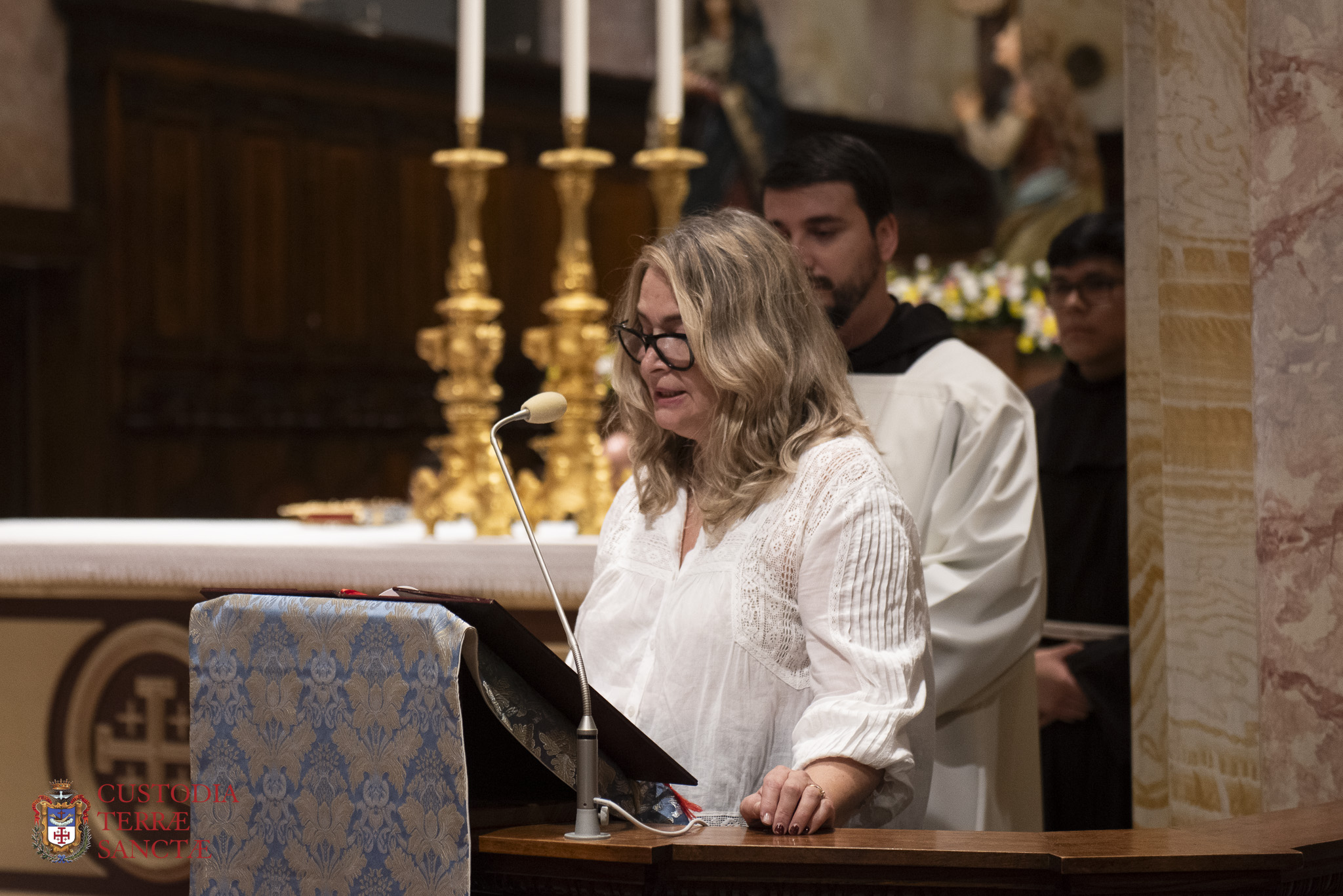
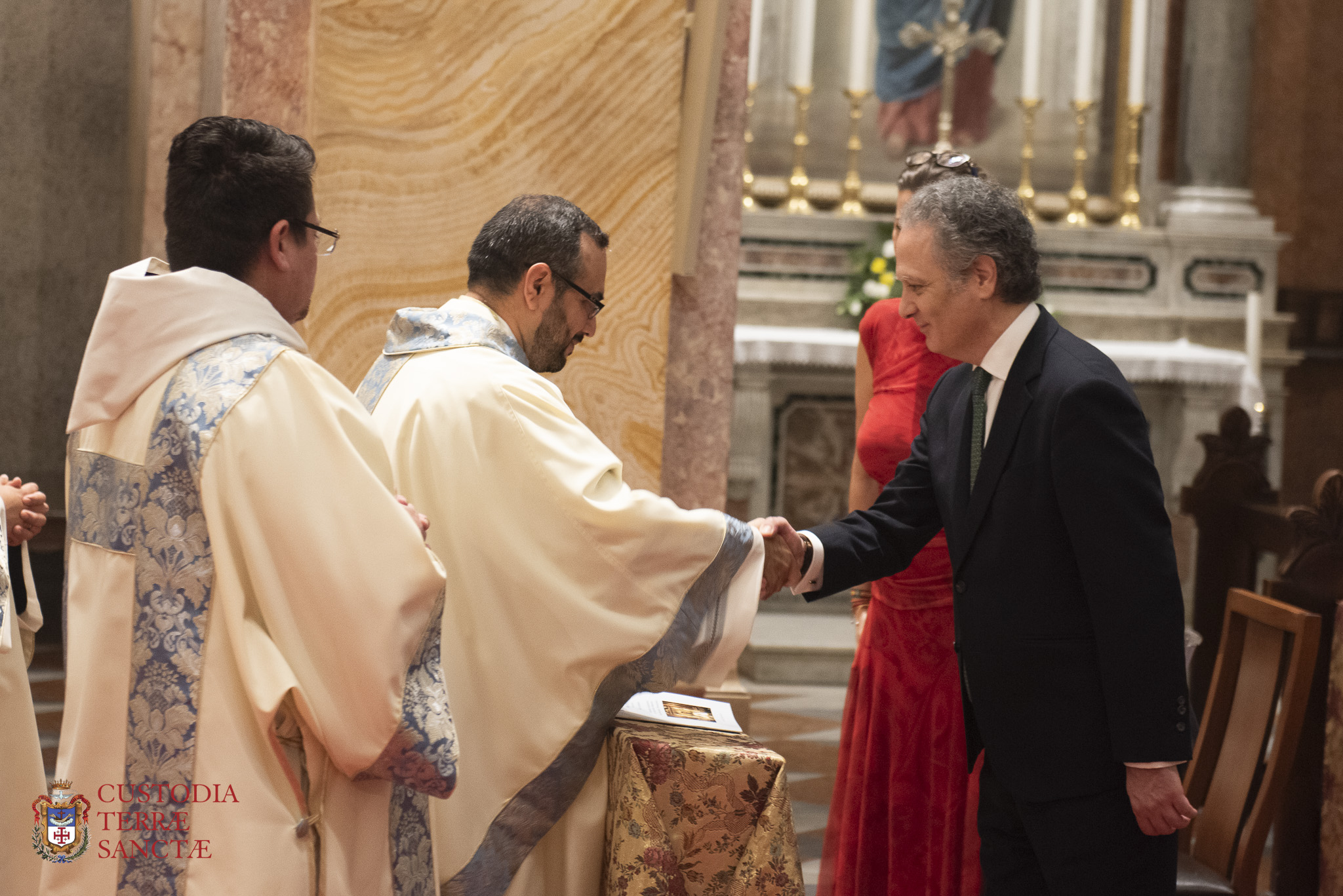
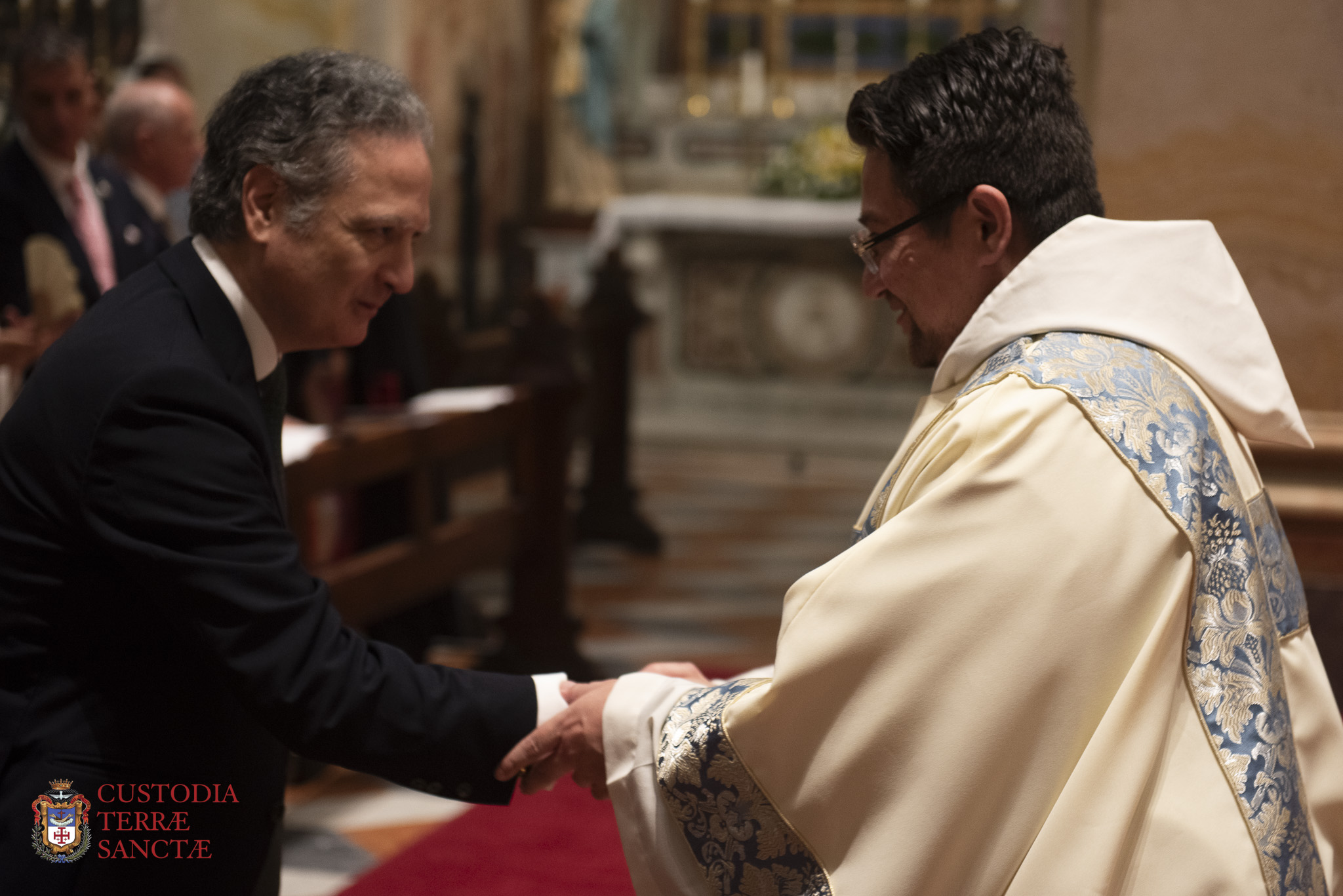
The Holy Mass, celebrated in Spanish and presided over by the Custodial Vicar, Fr. Ulise Zarza, was thus a moment of prayer and community, strengthening a fraternal bond. Gathered around the altar were the Friars Minor of the Custody, members of institutions, diplomats, and Spanish faithful residing in Jerusalem. Among those present were the Consul General of Spain, José Javier Gutiérrez Blanco-Navarrete, his wife Rebekah Kosinski, the team of military and civilian personnel making up Madrid’s diplomatic representation in the Holy City, and members of the Guardia Civil, who had come to pay homage to their patroness in an atmosphere of deep recollection and spiritual communion.
Indeed, the devotion to the Virgen del Pilar has a strong symbolic value for the Church and for Christian tradition. This is also true for the Holy Land. According to ancient tradition, Mary appeared to Saint James the Greater while he was in Spain proclaiming the Gospel, offering him comfort and encouragement for his evangelizing mission. The devotion, whose heart is found above all in the city of Zaragoza, took root in Spain, becoming one of the most important traditions of Marian devotion in the country. And if that tradition spiritually united the Holy Land and James’ journey in Spain, the celebration in Jerusalem reaffirmed this bond and the universality of the faith that animates the Holy Places, where the various national communities continue to joyfully preserve and bear witness to their spiritual traditions alongside the Franciscan family of the Custody.
Lorenzo Vita