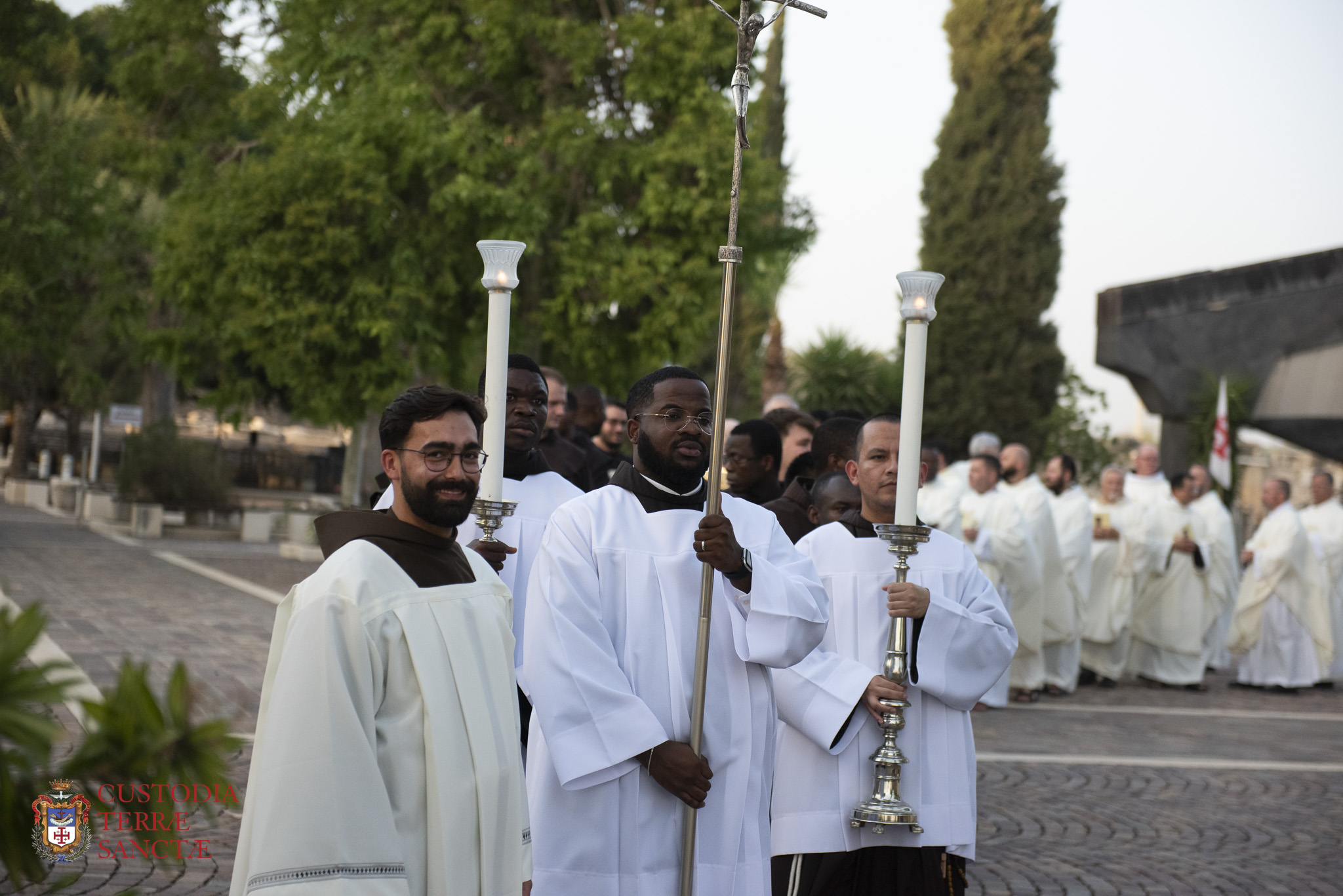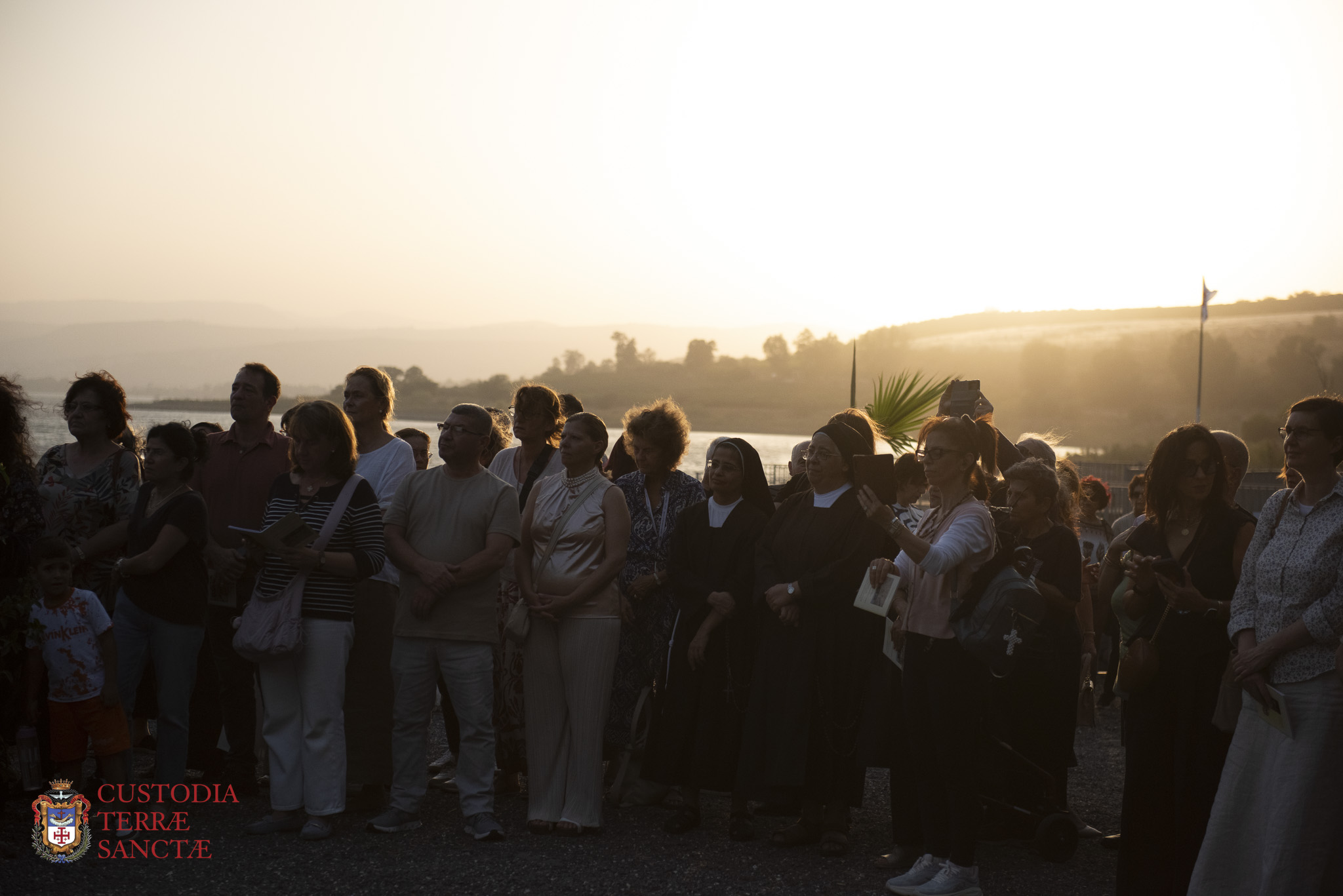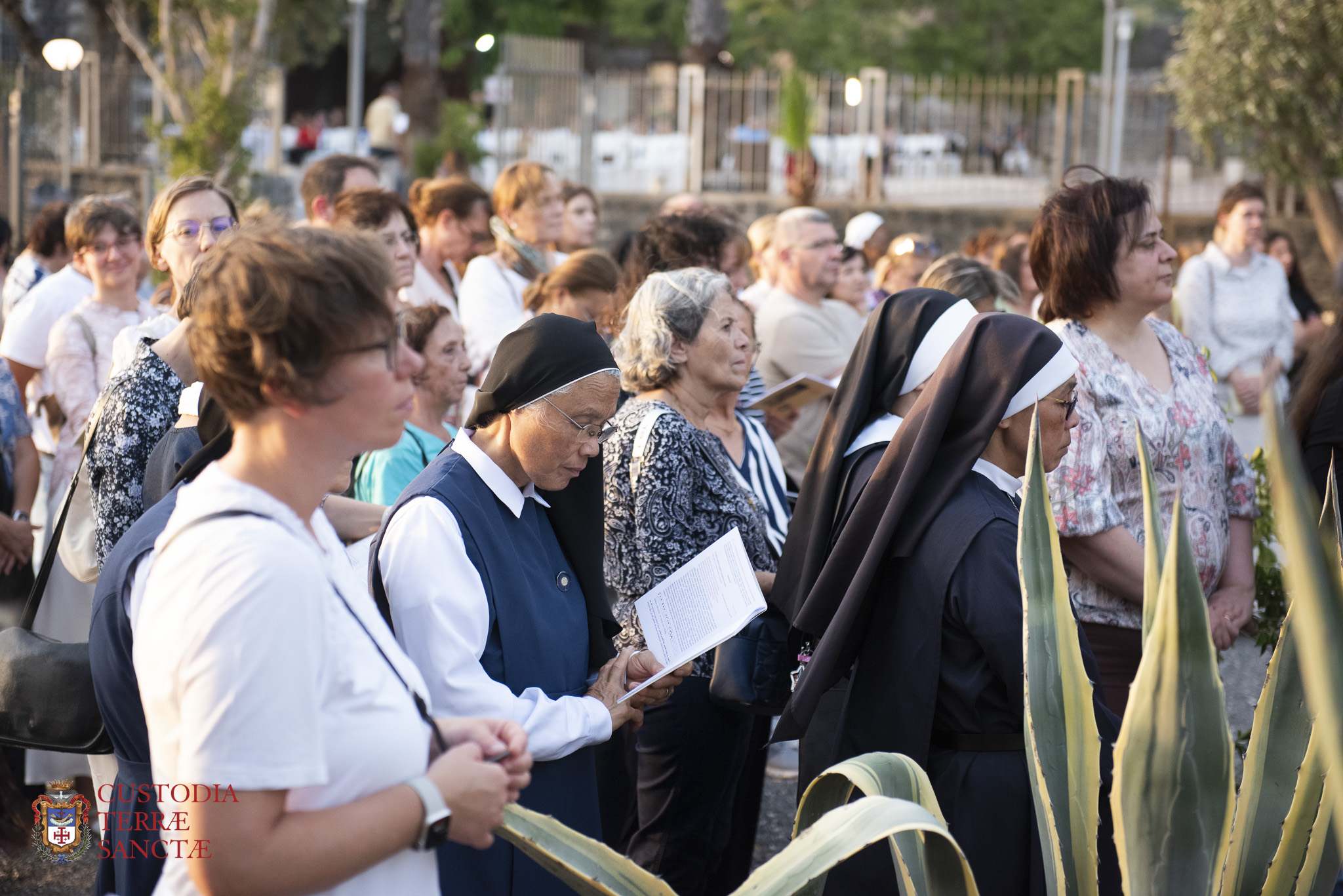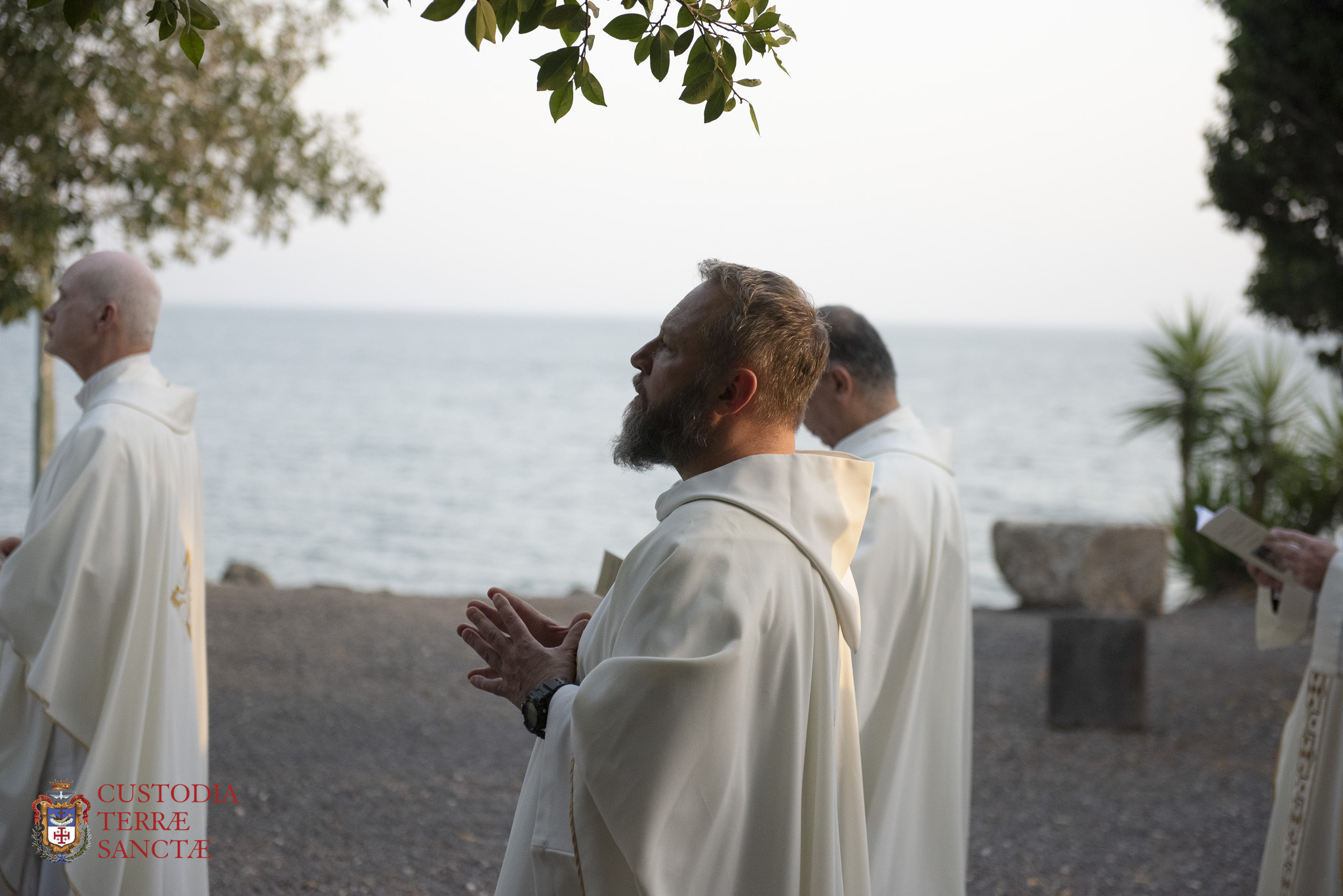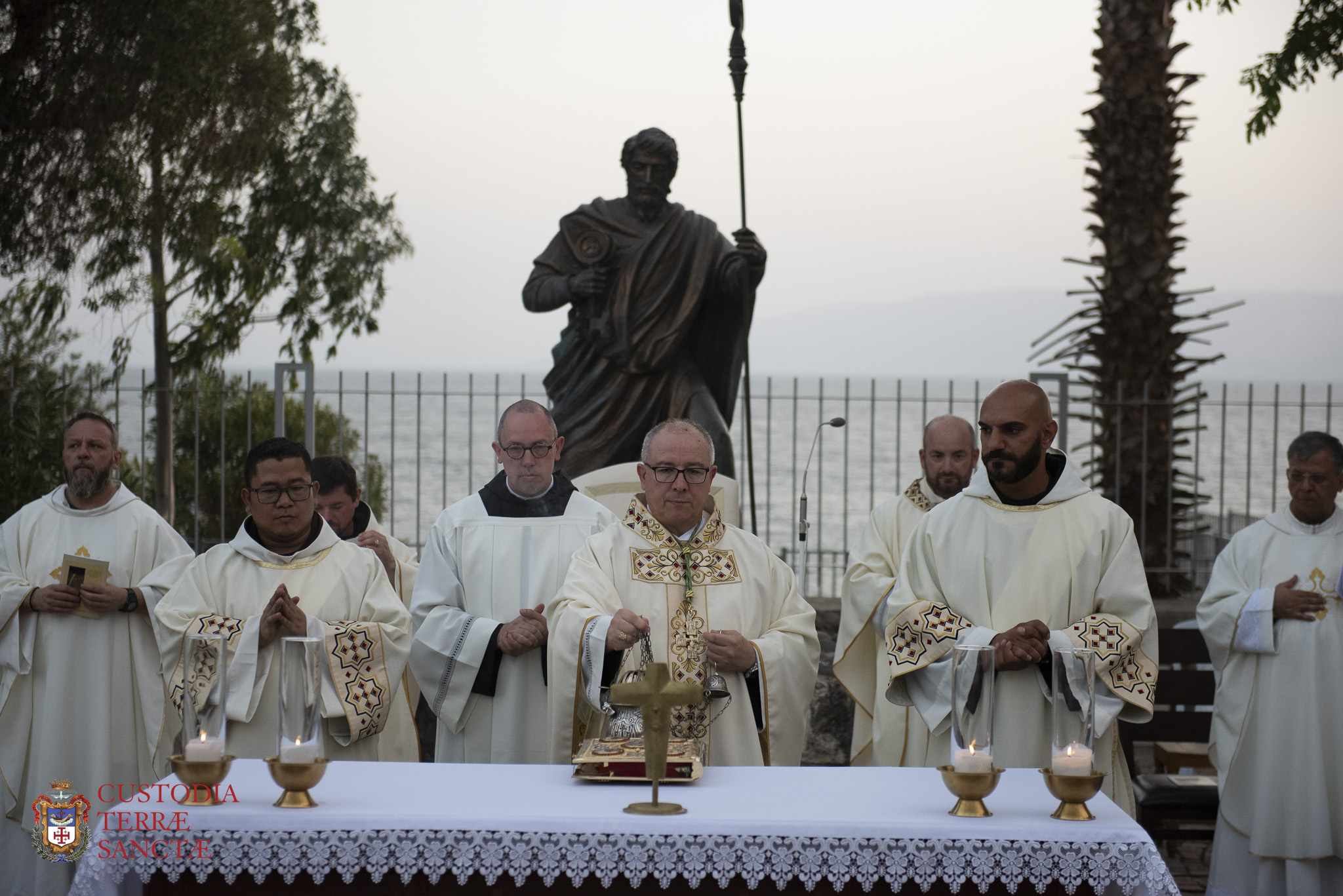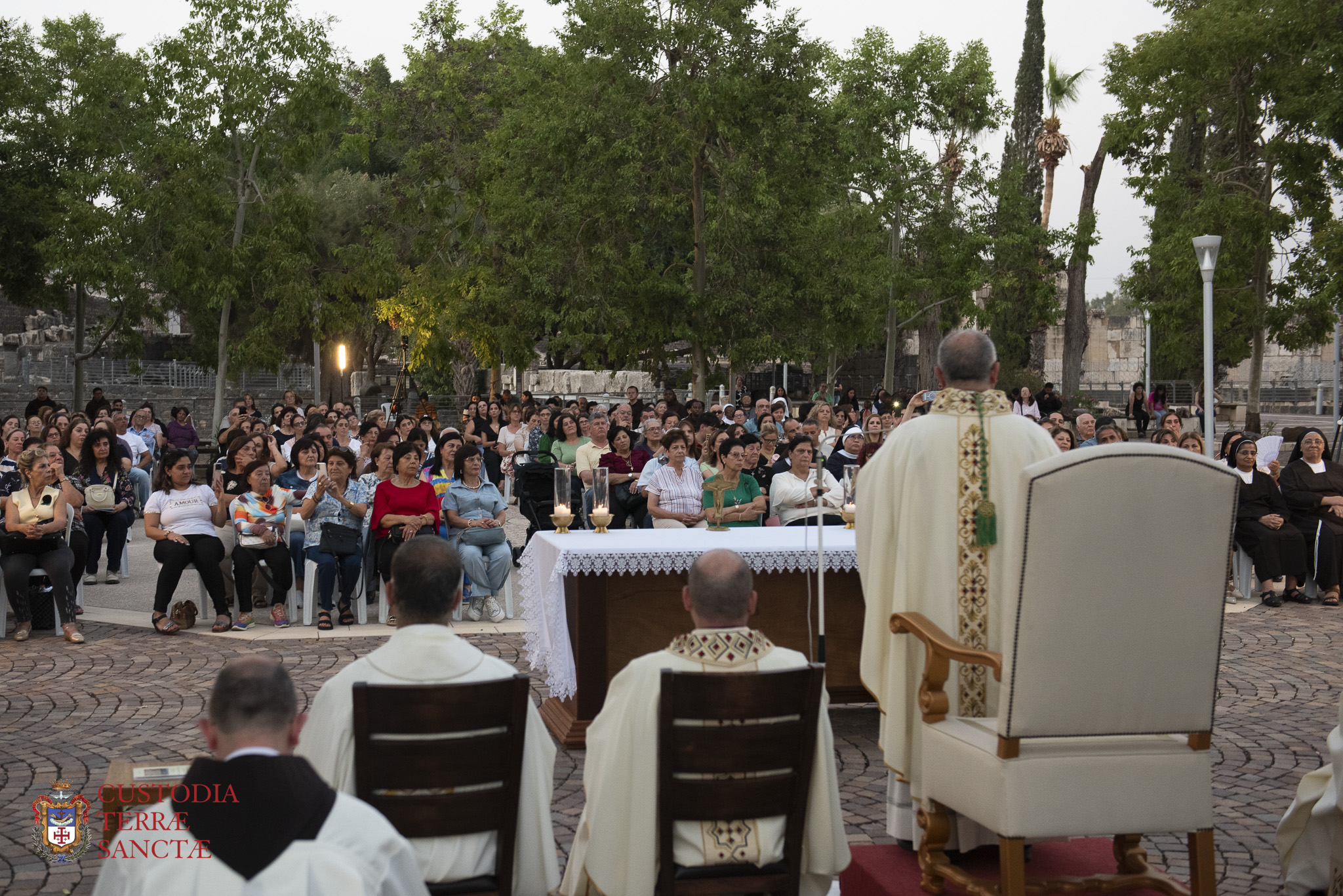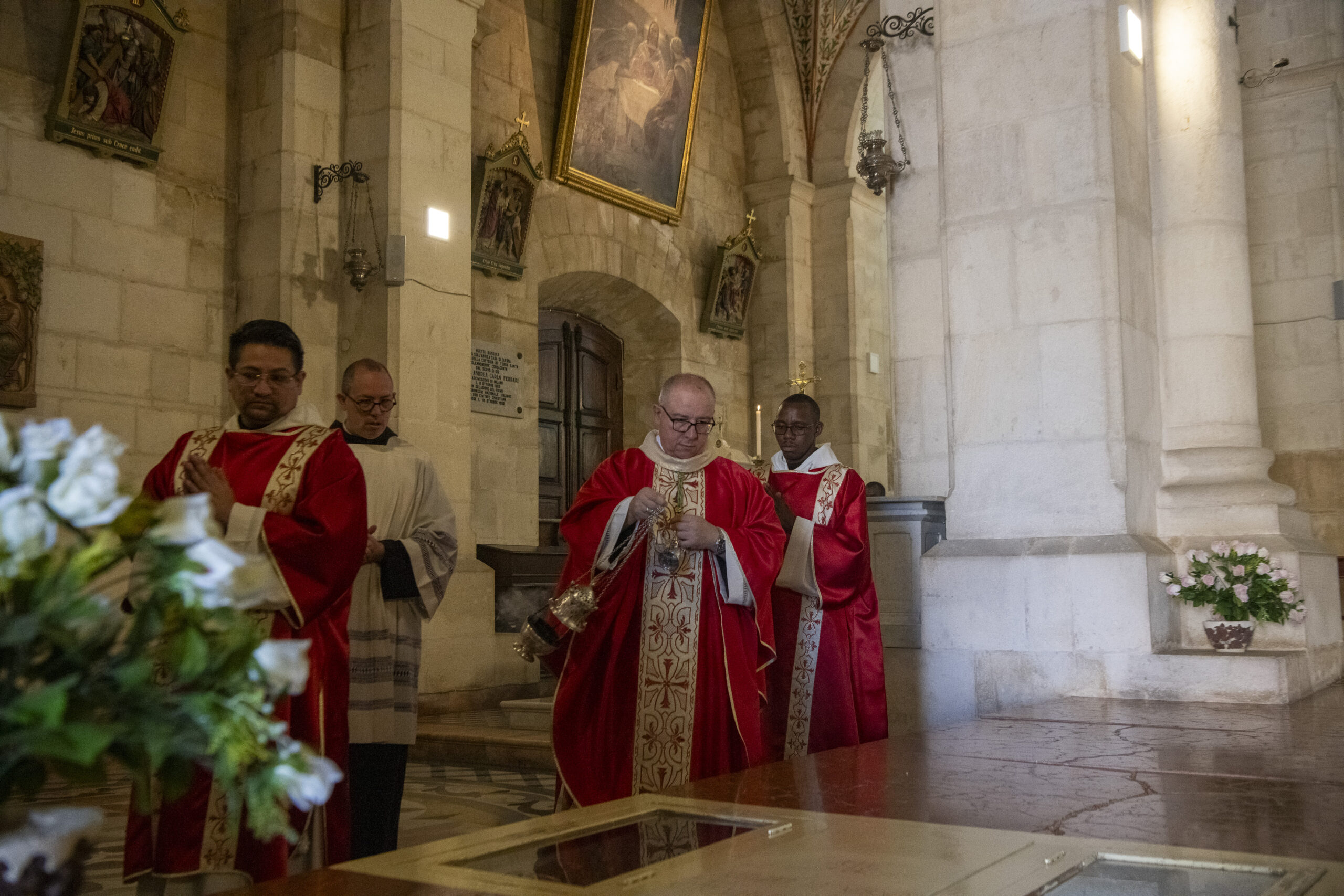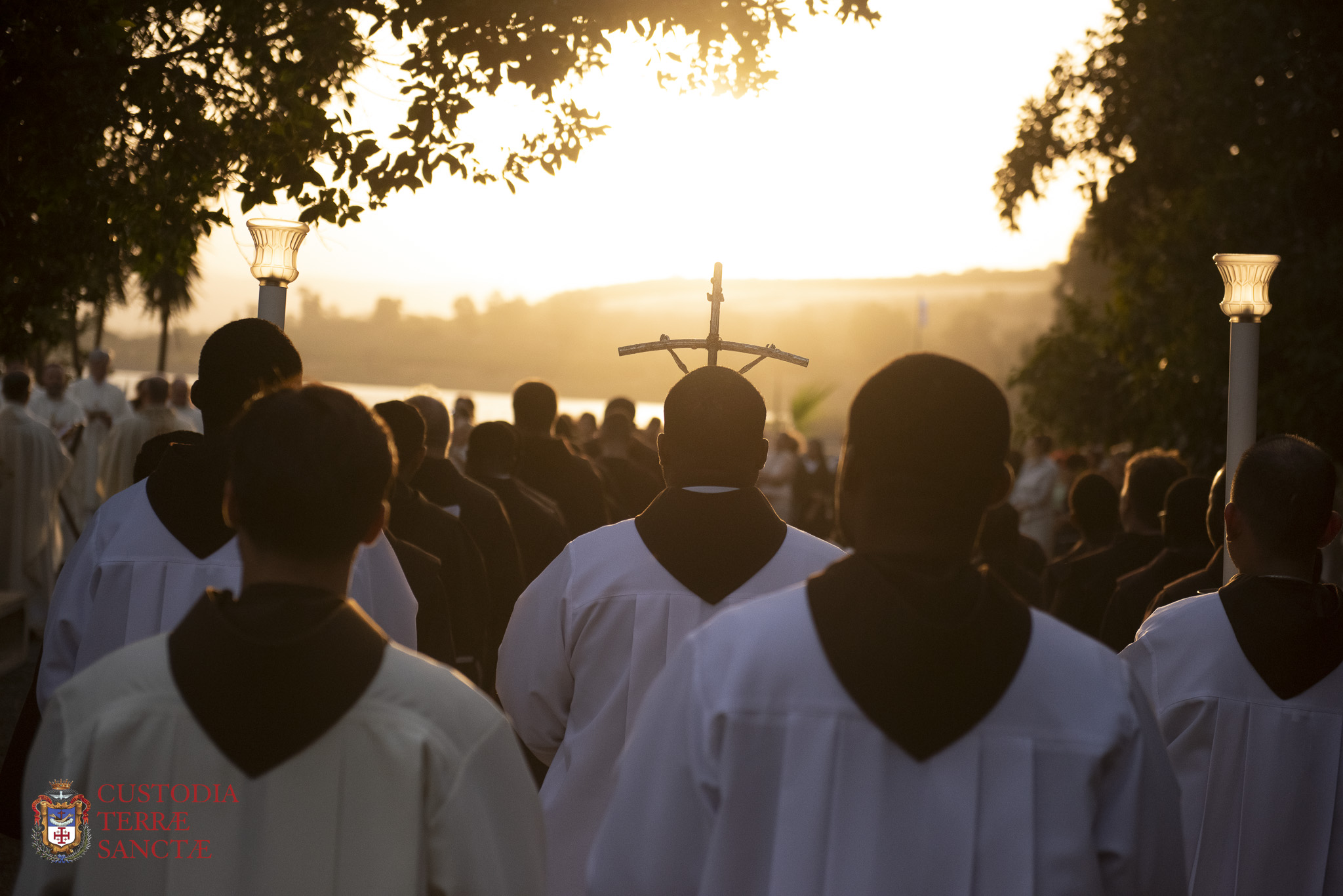
Walking where Jesus walked. Passing through the same places He chose for His daily life, to gather His first disciples, to discuss in the synagogue and to perform miracles. Seeing with one's own eyes that same lake where the Lord chose his "fishers of men". Hearing that same sound of the waves breaking upon the waves. Breathing that breeze that clears the haze, as He might have done. Watching the sun descend between the mountains of Galilee and set the waters stirred by the breeze ablaze.
It is thinking about this that makes celebrating the feast of the city of Jesus so unique, in procession through places that are among the most important stages of the Lord's earthly experience. And the Custos of the Holy Land, Fr. Francesco Ielpo, wished to emphasize precisely the importance of walking where Christ walked. The privilege enjoyed by those who arrive in Capernaum is also a challenge: being in the village chosen as the heart of His preaching and following in his very footsteps means trying to live as He lived. "To place our feet and hands as Jesus placed them," Fr. Ielpo stated, but also "to look at people as Jesus looks at them, to love as Jesus loves, to forgive as Jesus forgives and to give one's life as He did."
It is precisely from here that one must begin in order to understand one of the many reasons why Capernaum is so important to the Christian faith. What had been a simple fishing village and a crossroads for merchants and people from everywhere was transformed by Jesus into the nerve center of His earthly experience. And a site that the friars minor today safeguard with care and dedication from their convent on the shores of the lake shows pilgrims where Jesus met Peter, John, James, Andrew and Matthew. Where He healed Peter's mother-in-law, the paralytic lowered through the roof, the possessed man and the servant of the Roman centurion. Fundamental figures for understanding the message of Christ. Because people such as the leper, the Roman centurion and Peter's mother-in-law embody completely different lives united by their encounter with Christ, who draws near to those who live on the margins or who feel like outsiders or even unworthy. A sick man excluded by everyone, a pagan and a woman. Human lives that God chooses as part of his Church and that in Capernaum become the center of salvation.
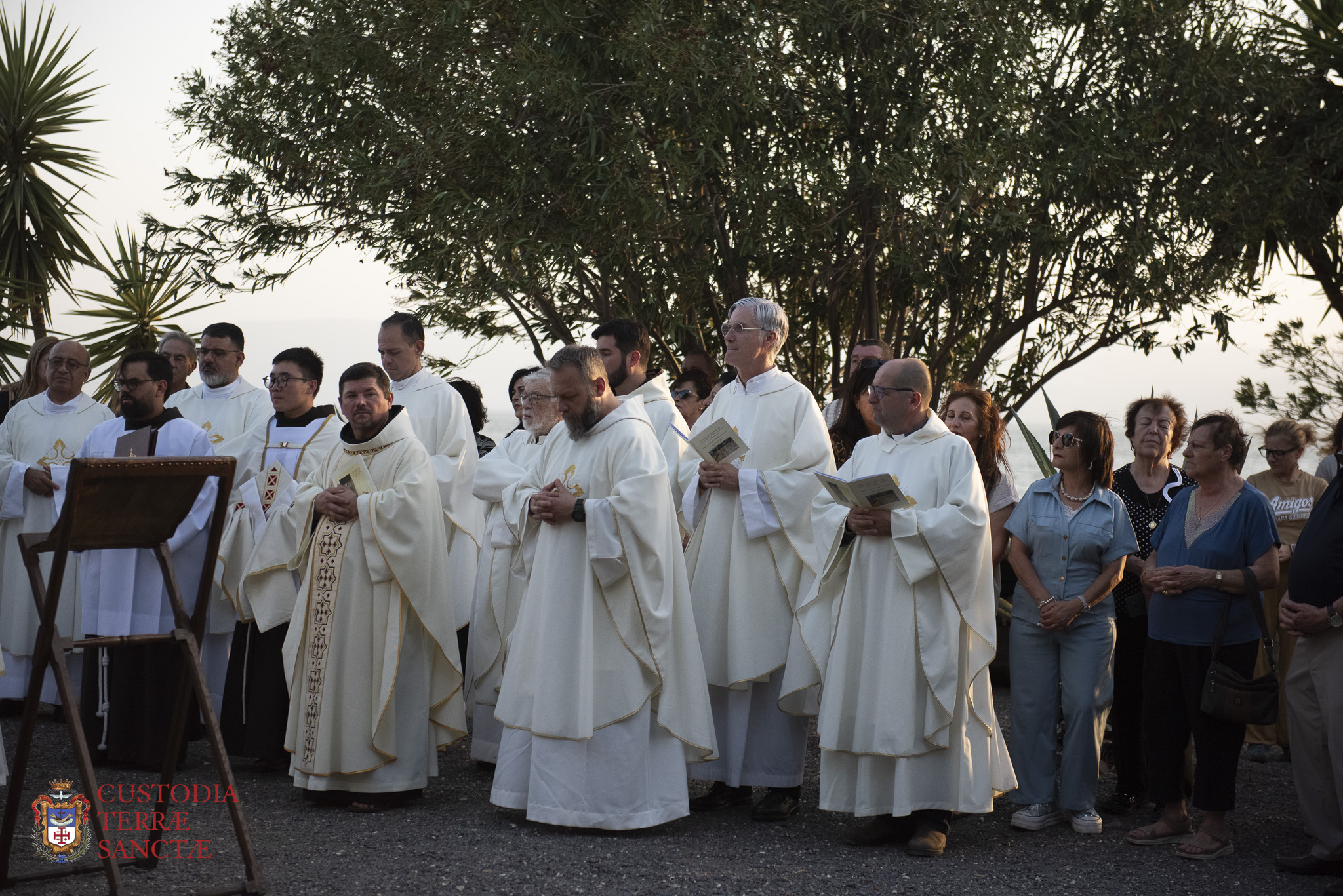
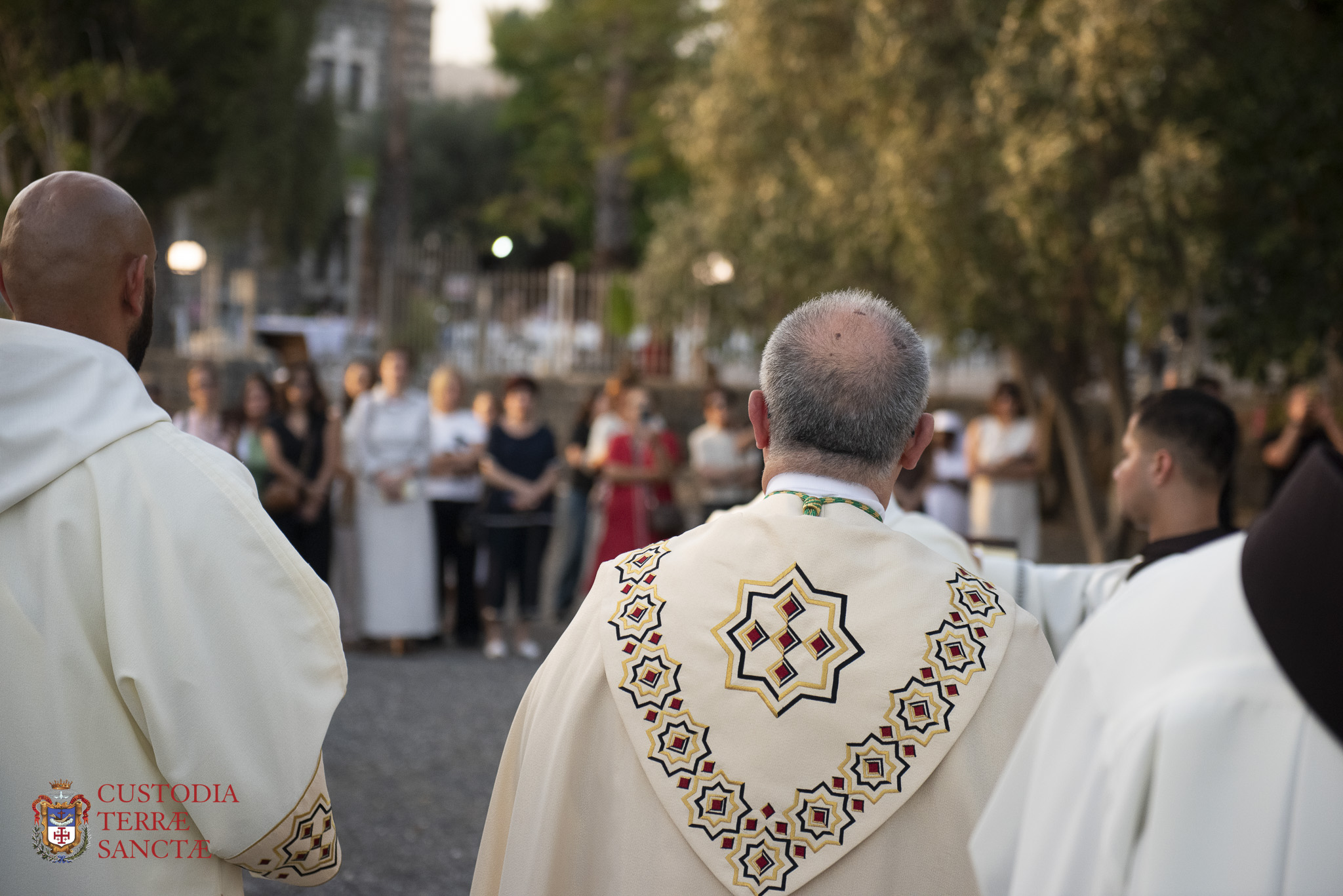
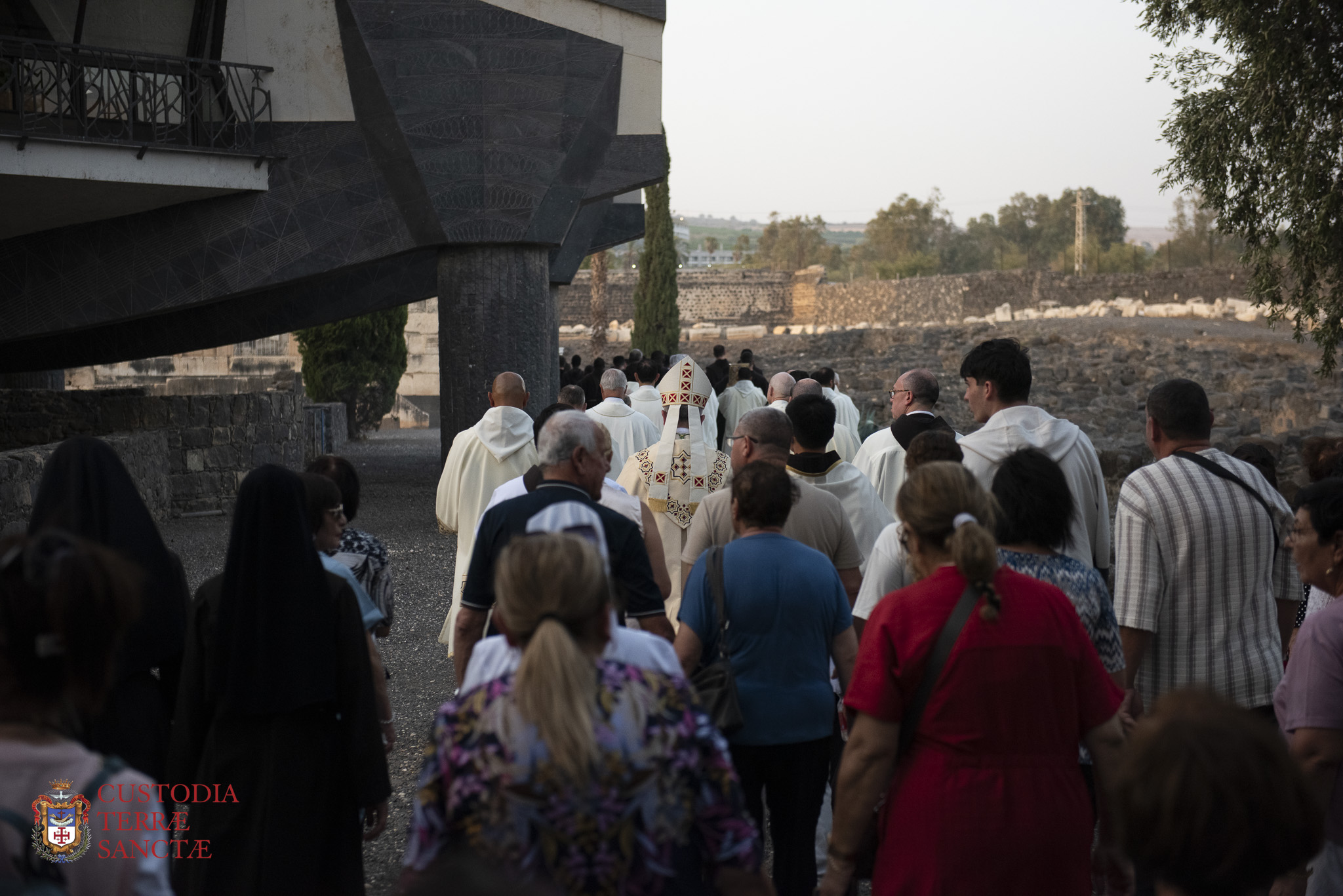
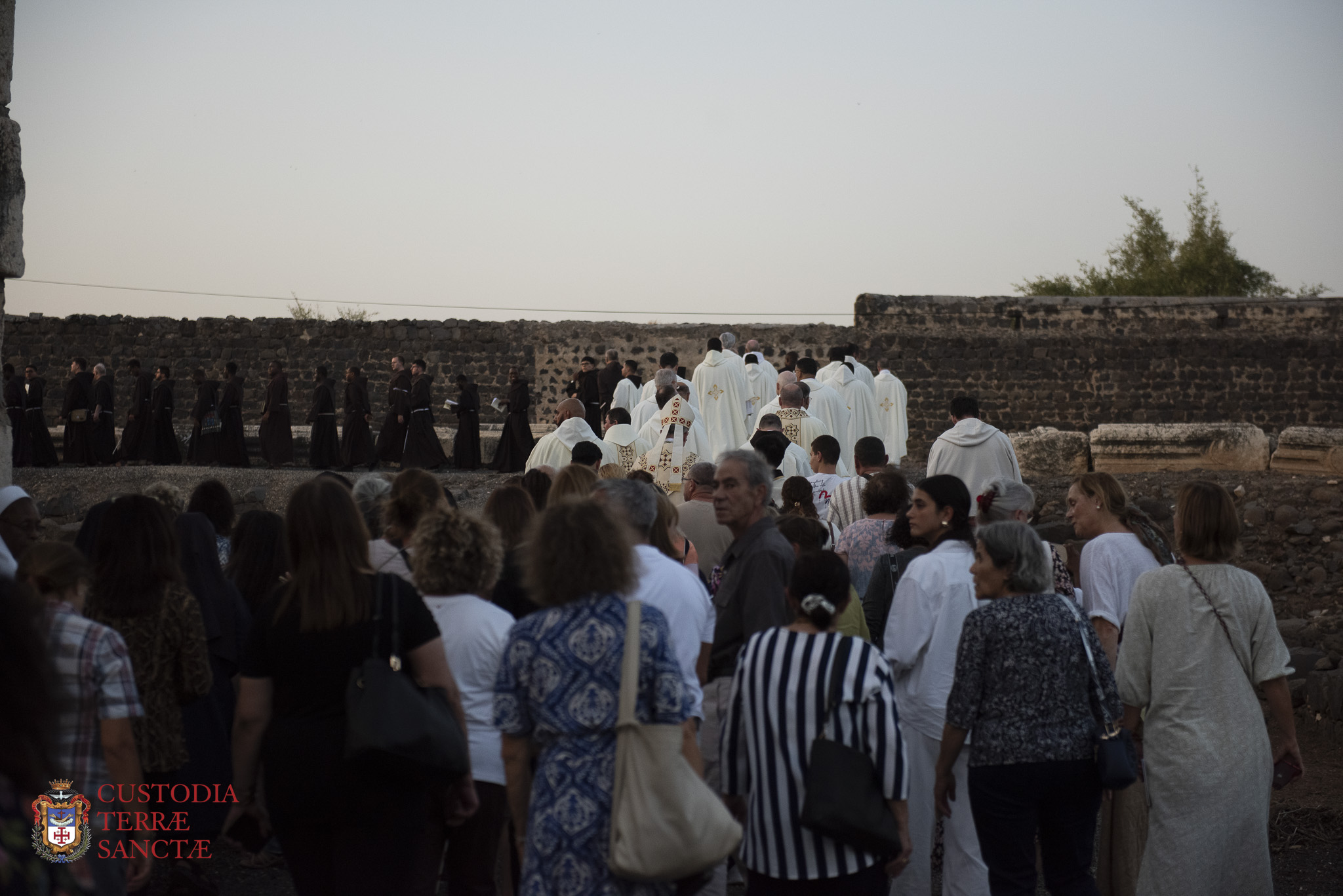
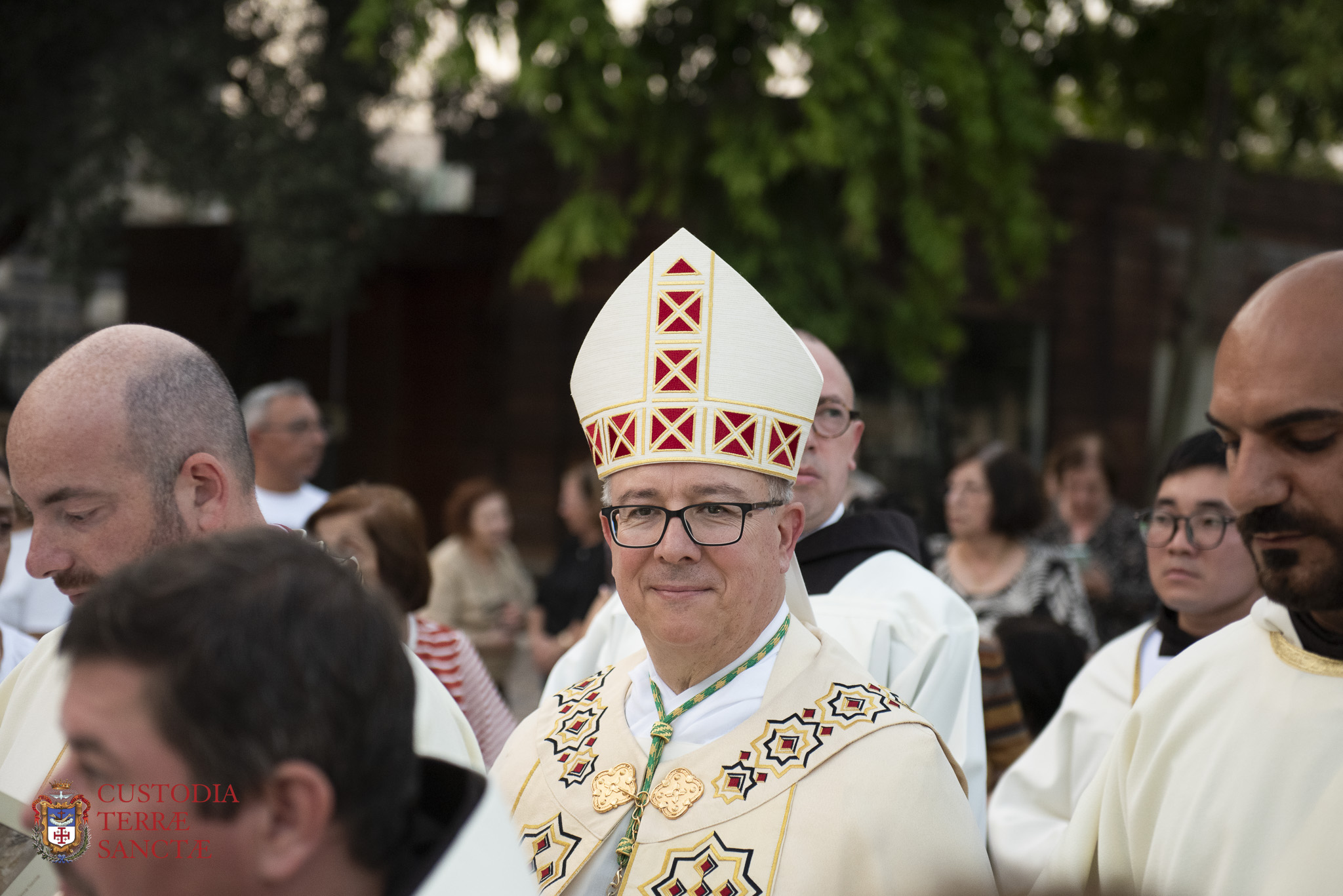
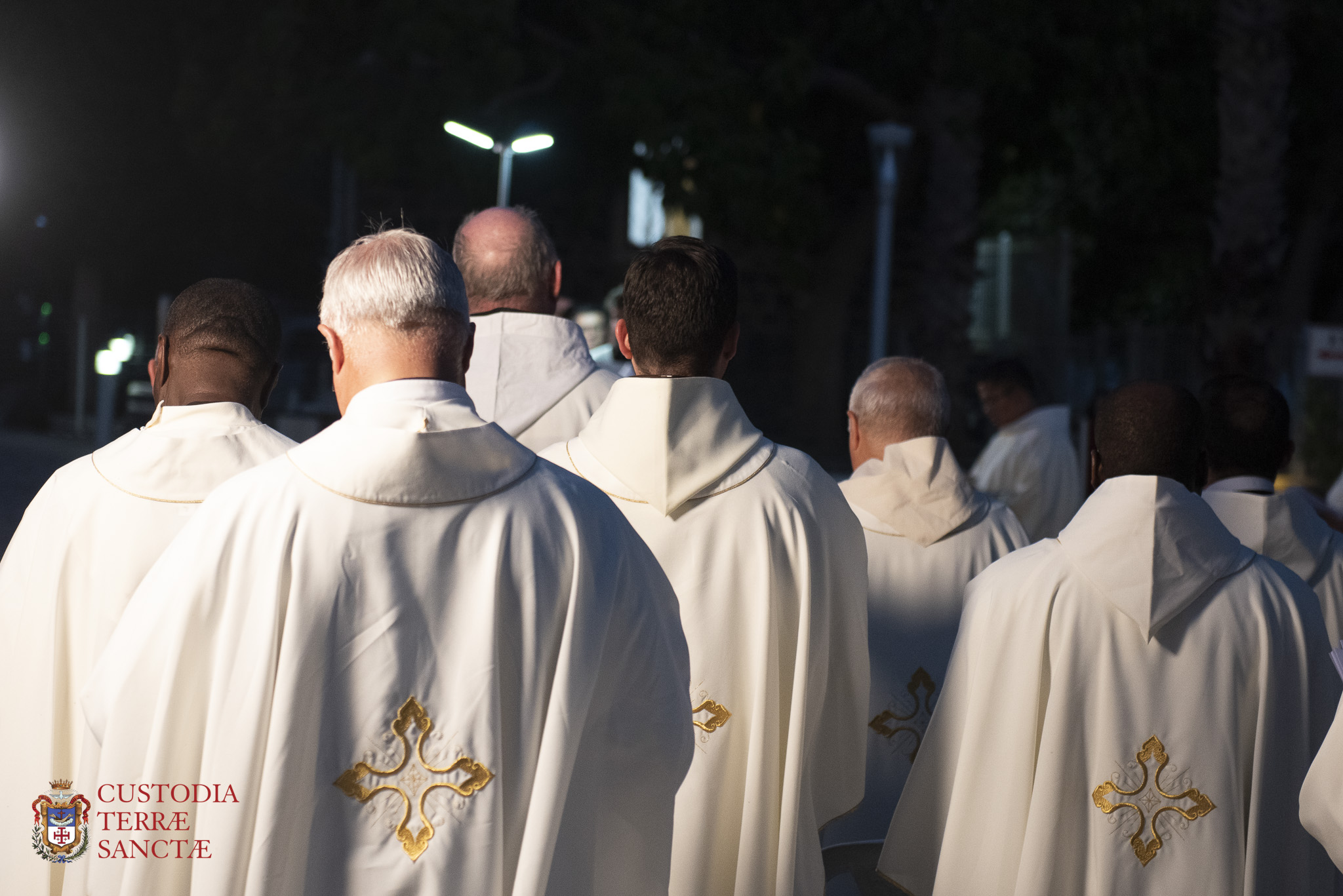
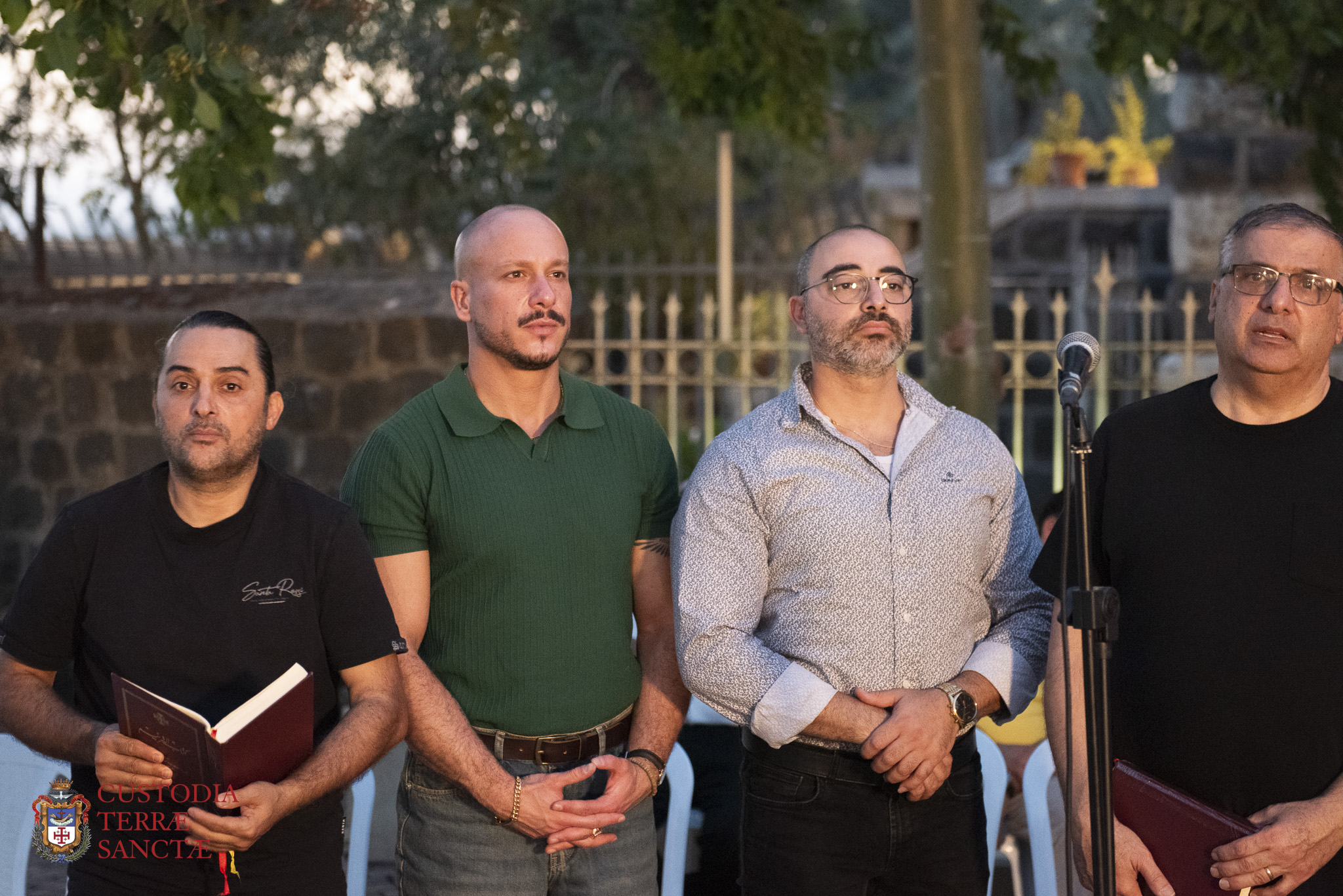
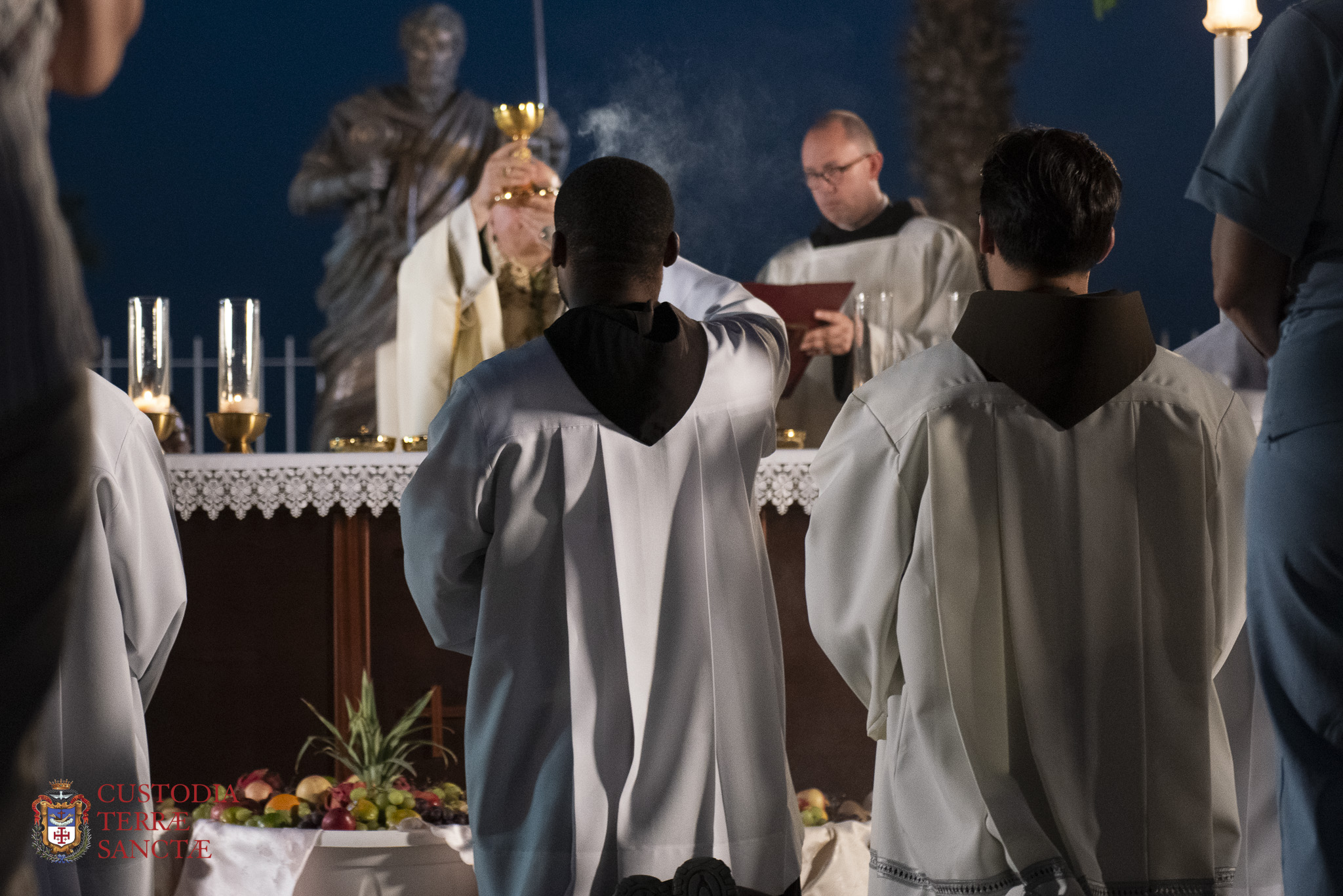
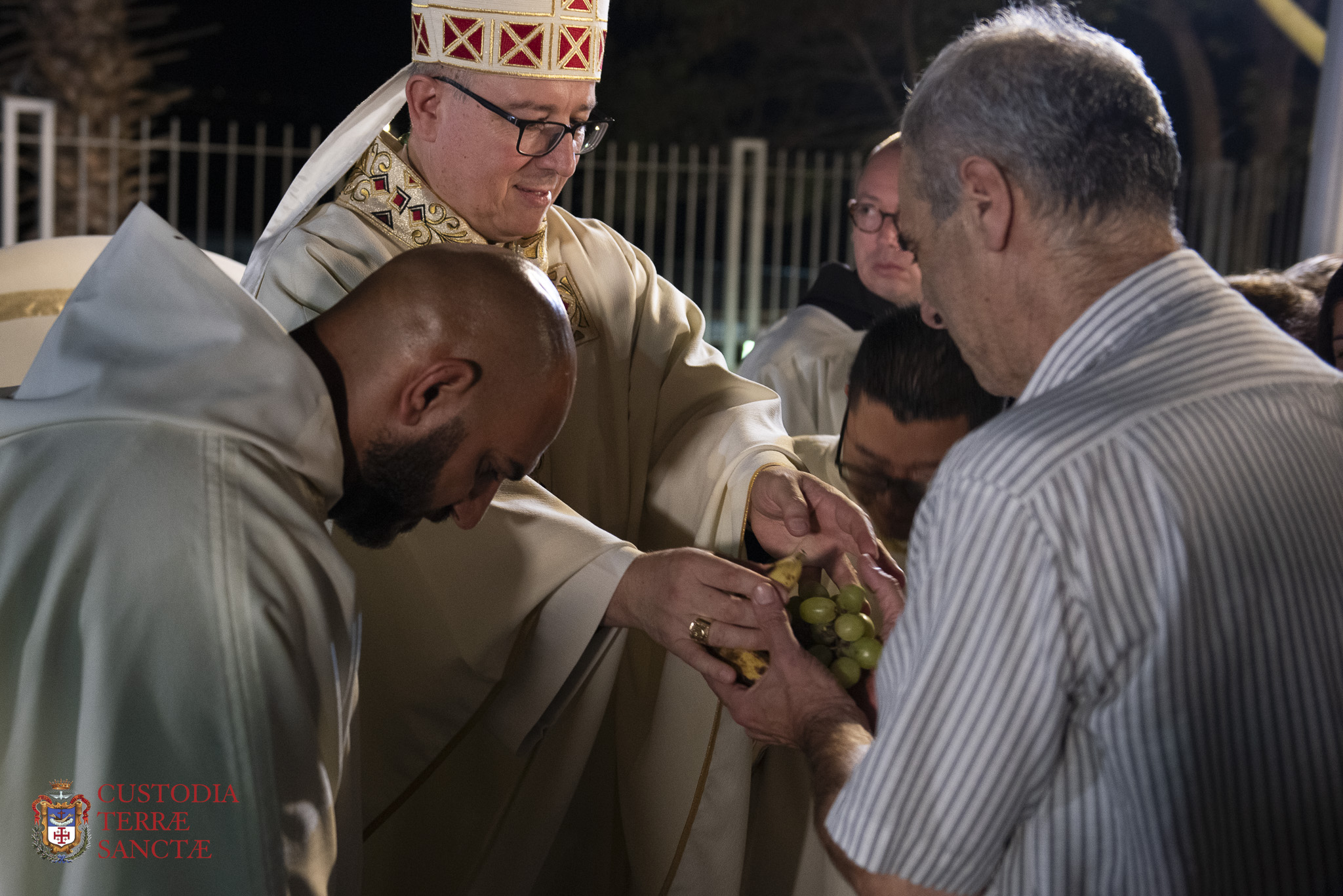
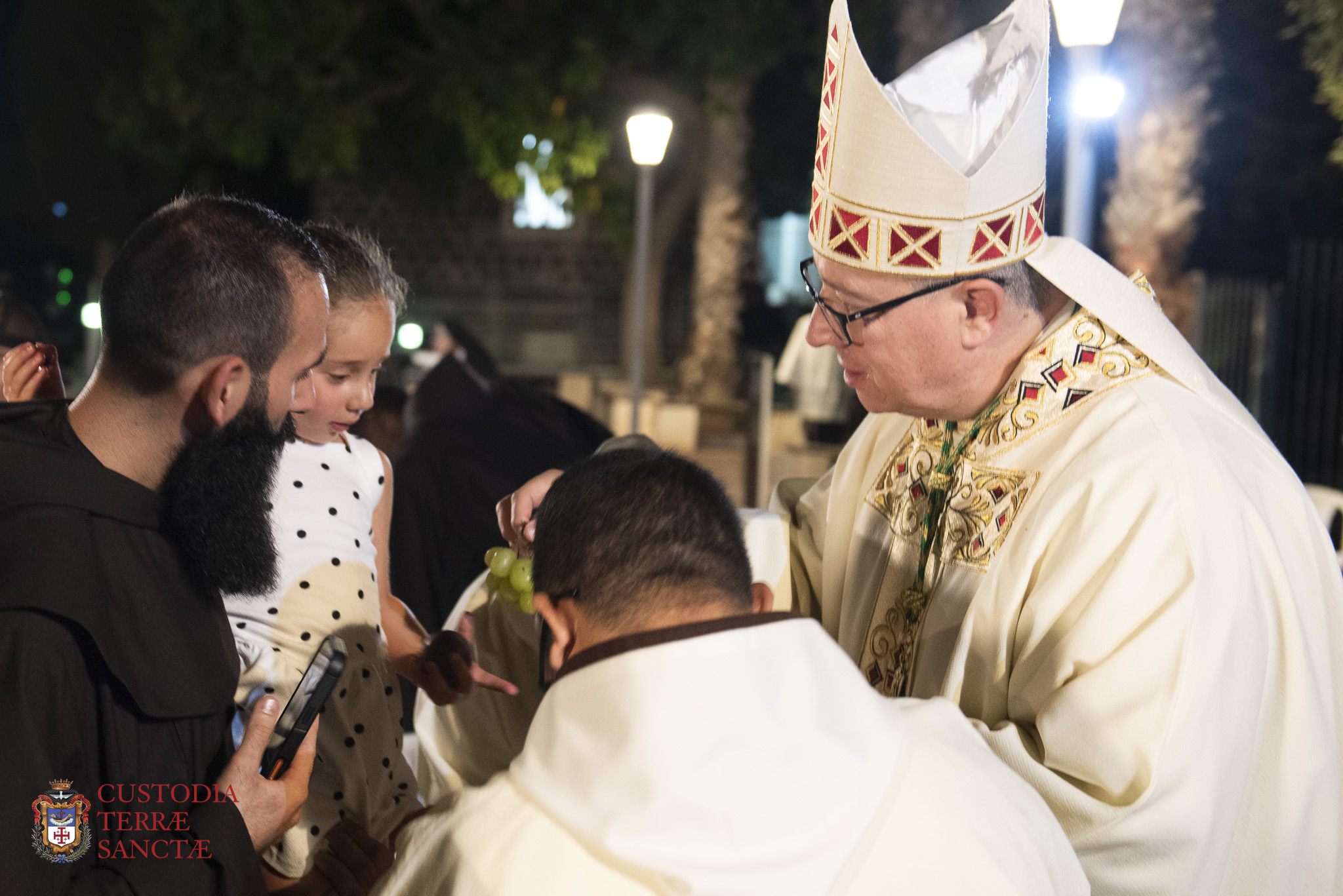
Precisely for this reason, the feast of the city of Jesus takes on a profound and unique meaning. Following the most significant places of Capernaum, the procession, which began on the shores of the Sea of Galilee and continued along what were once the ancient streets of the village around Peter's house, means physically and in one's heart retracing the life of Jesus. A symbol of a faith that in Capernaum celebrates not only the memory of ancient stones, but "living stones". Stones that still represent a relevant message today: the house of Jesus, the Custody, and therefore the Church, are always open to everyone. And this bond between the city of Christ and Peter, the friars and Rome was symbolically sealed by another element recalled by Ielpo: the appointment of Monsignor Vittorio Francesco Viola, a member of the Order of Friars Minor of Umbria, as his vicar general for Vatican City, archpriest of the Papal Basilica of Saint Peter in the Vatican and president of the Fabric of Saint Peter.
Lorenzo Vita