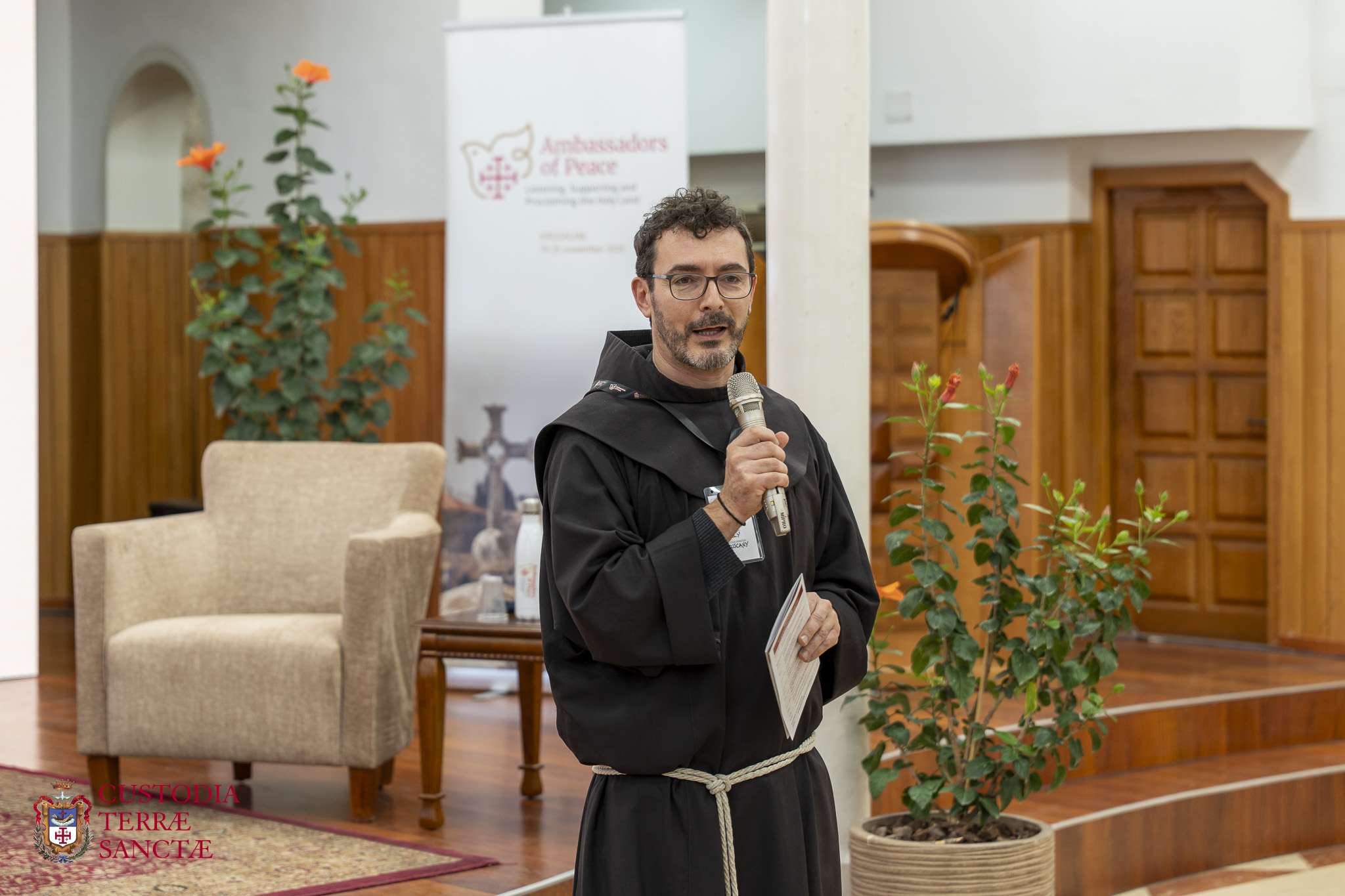
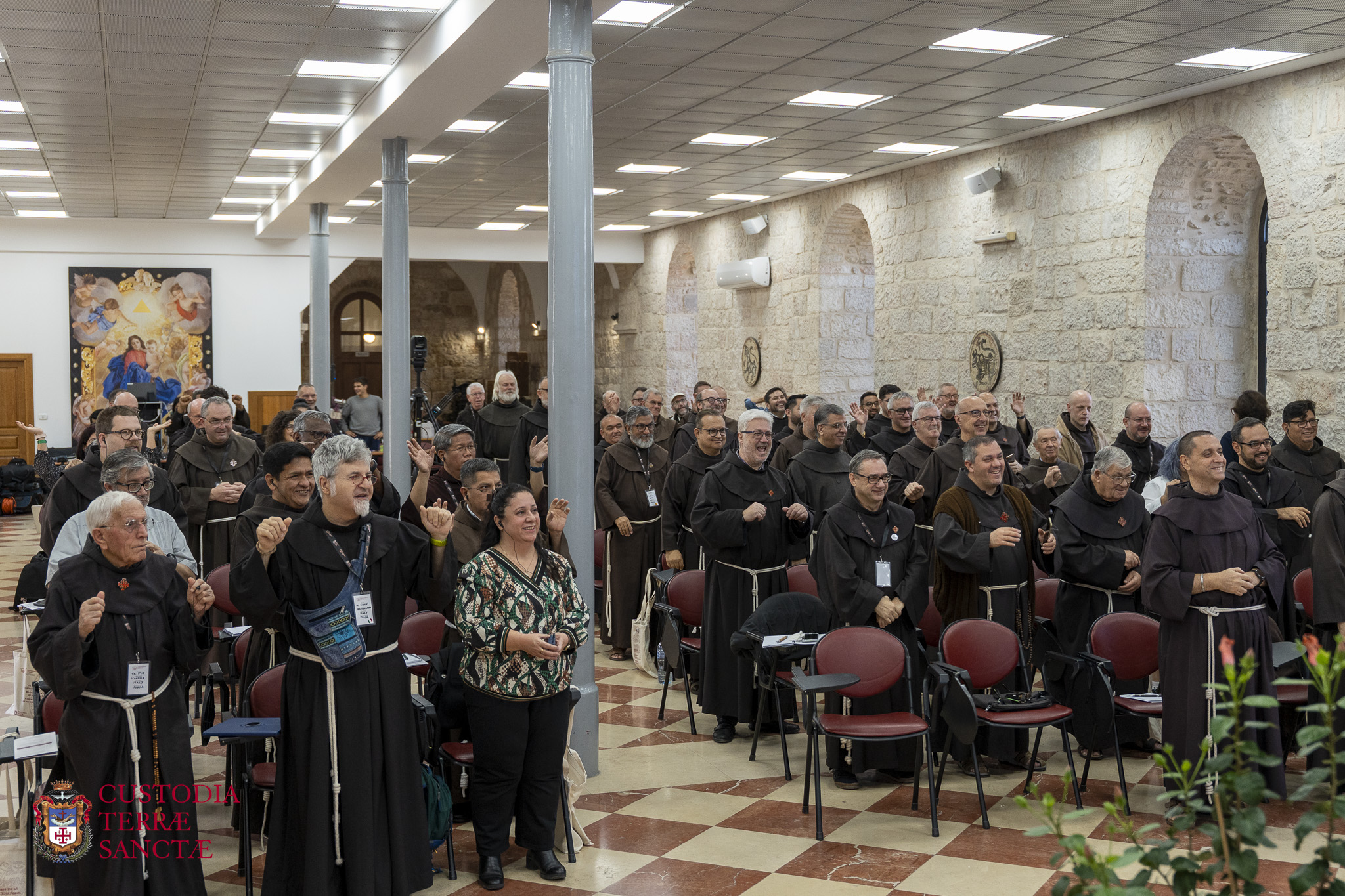
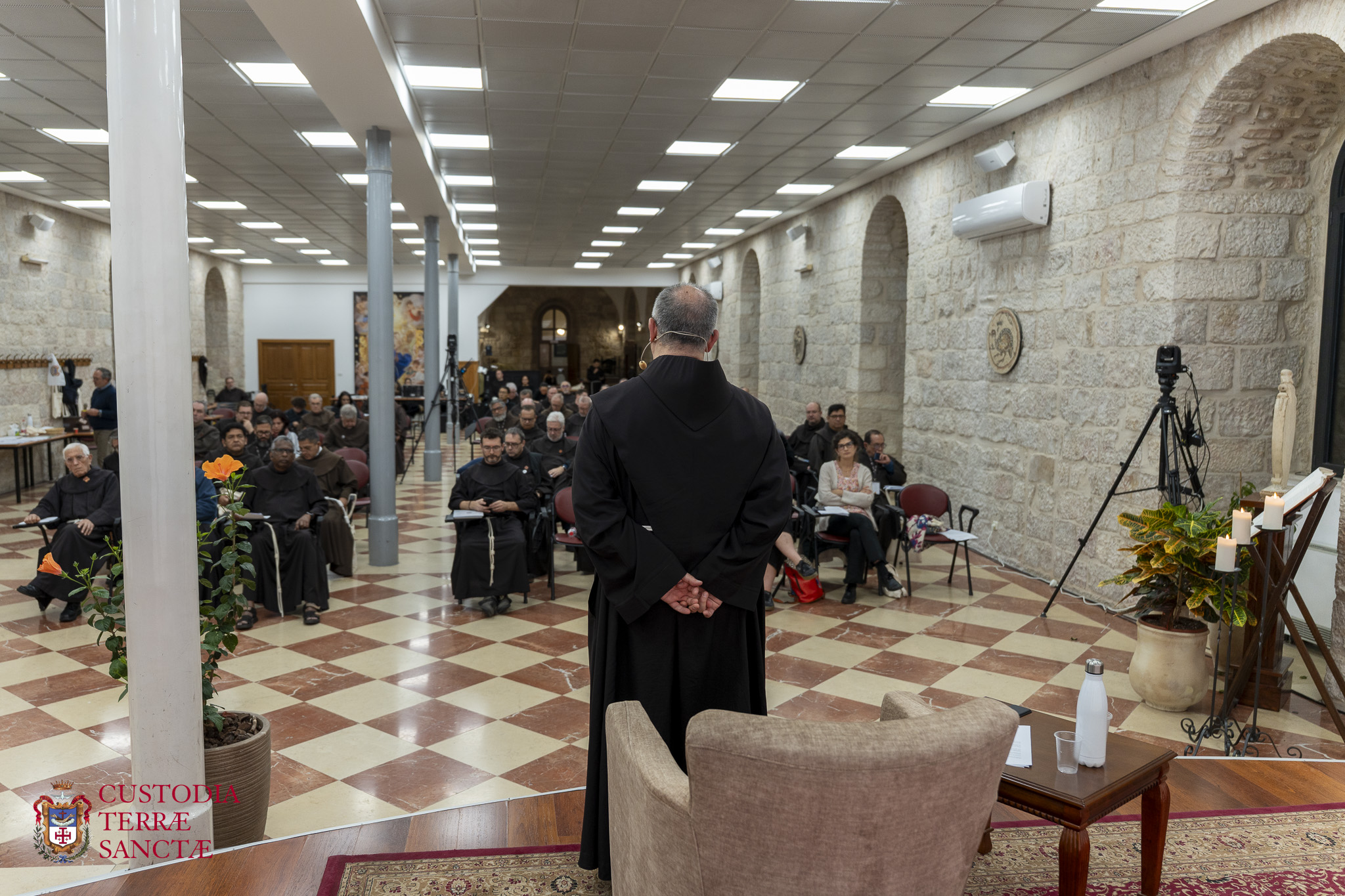
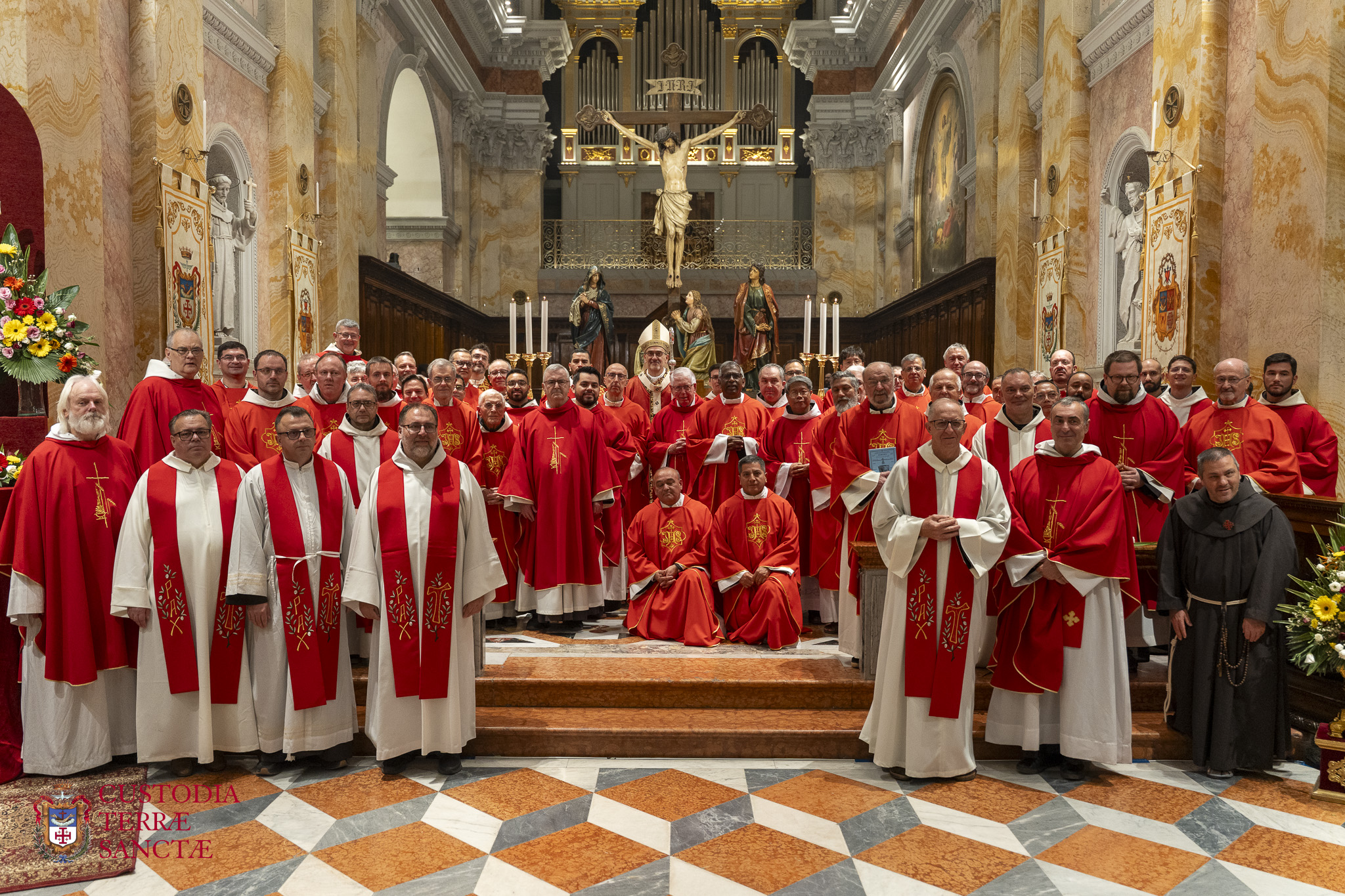
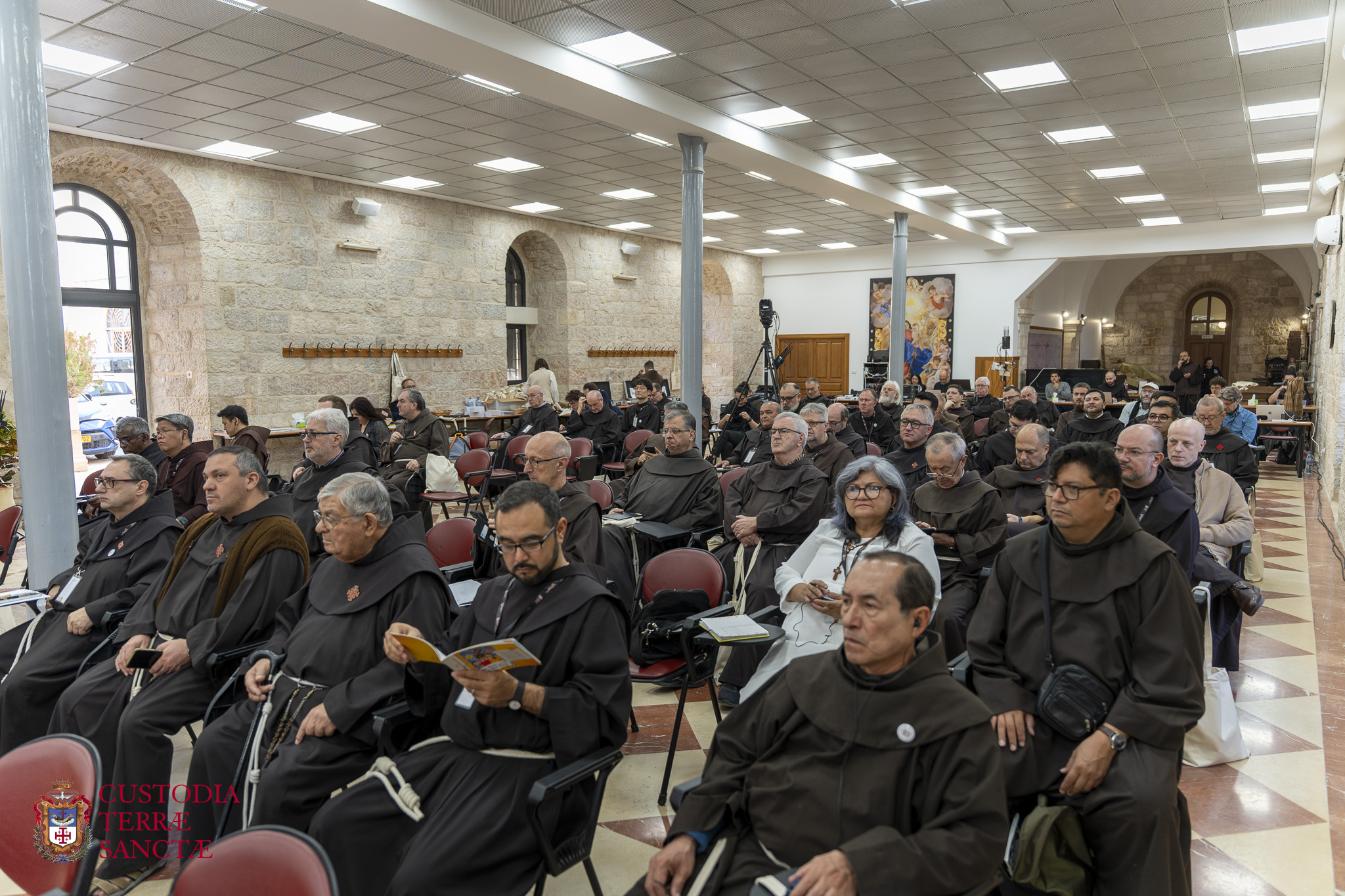
The day of November 21 opens with a verb that does not leave one indifferent: to sustain. It is the second chapter of the journey of the Congress of the Commissaries, as Fr. Matteo Brena recalls, introducing the morning session. To sustain does not only mean to act, but first of all to listen, to understand the reality of the works, of the communities, of the families and of the friars who live daily in the Holy Land.
It is an intense day: testimonies, life stories, and in the afternoon, a major focus dedicated to the Good Friday Collection, a pillar of the mission of the Commissaries.
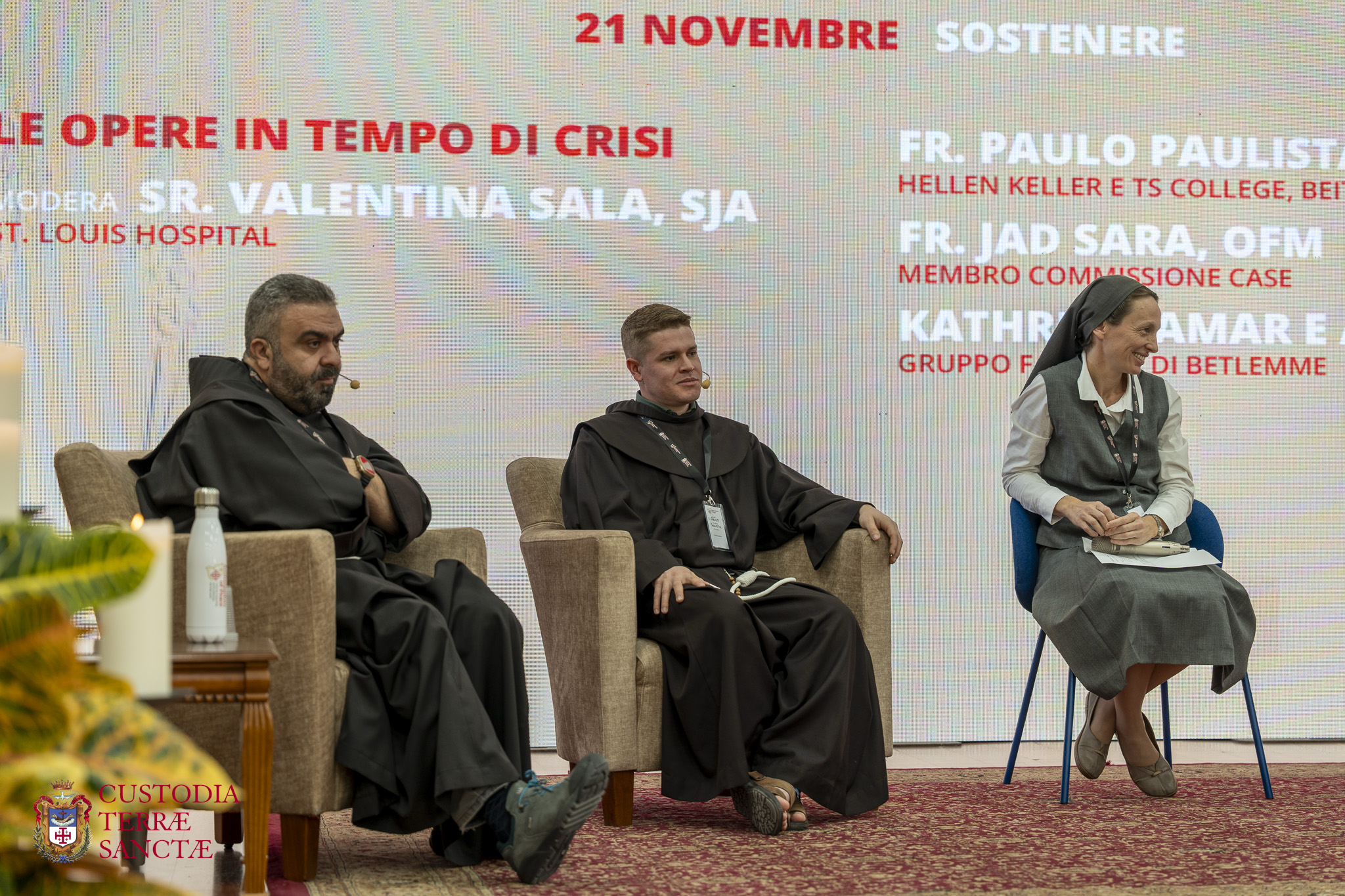
The morning opens with the meeting moderated by Sister Valentina Sala SJA, a figure with deep roots in the local health care world, a midwife with years of service at St. Joseph Hospital. Her speech immediately highlights a paradox: "The verb sustain would call to action, but today you are called above all to listen".
A listening that becomes a sign of closeness for those who, in recent years, have lived through loneliness, abandonment and the fear of not being seen. It is at once a denunciation and an invitation: to look again, to make oneself present again.

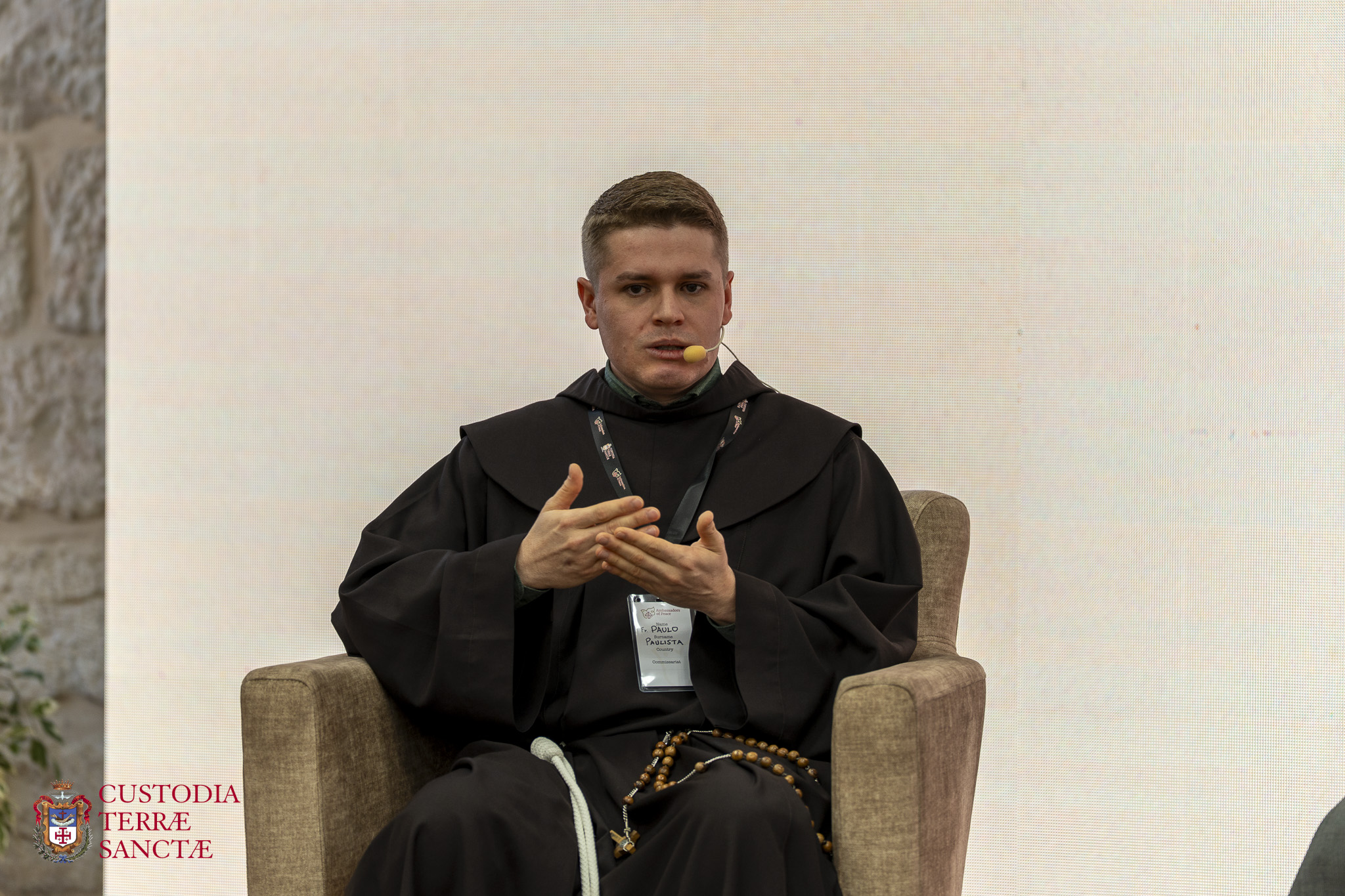
The first major testimony is that of Fr. Paulo Paulista OFM, Brazilian, a young priest with four years of ministry, now director of the Helen Keller Center in Beit Hanina. A school which is in fact three institutions together:
Fr. Paulo recounts with simplicity and intensity the days of the war:
The testimony emerges as a story of dedication: from pastoral care to the management of families in difficulty, all the way to accompanying a blind child who, after a past of trauma, succeeded in singing before Pope Francis at the Olympic Stadium in Rome during the first World Children’s Day.
A concrete sign that to sustain means to let blossom what seems lost.
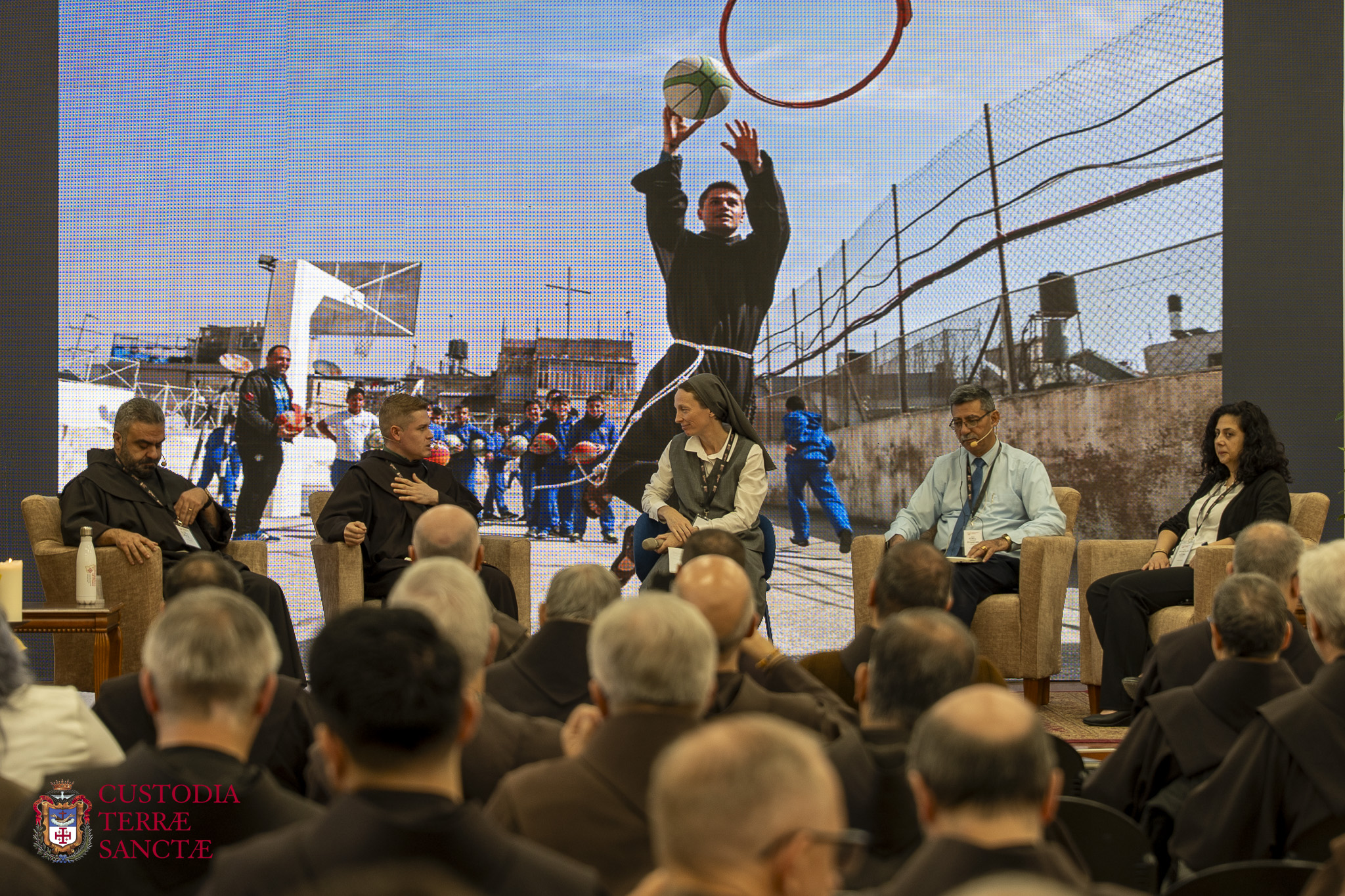
One of the key points of Fr. Paulo’s intervention concerns the growing difficulty of finding qualified Christian teachers.
The Israeli school system requires high standards, including mastery of Hebrew. But:
It is one of the points where the fragility of the Christian presence appears most clearly: without local teachers, a future community cannot be built.
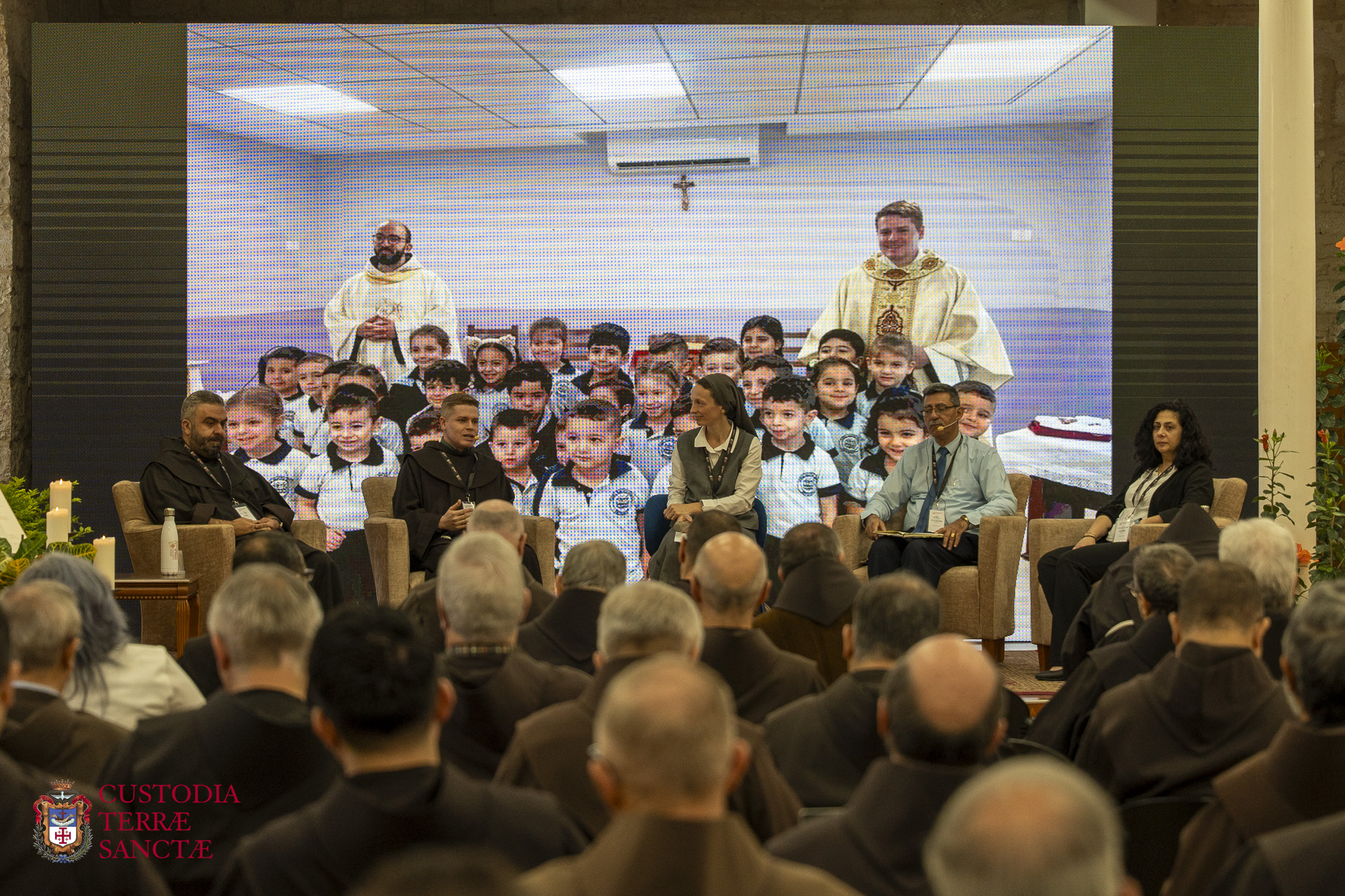
Fr. Jad Sara OFM, responsible for the infirmary of the Custody since 2006 and member of the Housing Commission since 2014.
His is a long, vivid testimony, full of personal stories that illuminate the complexity of the issue of Christian housing in Jerusalem.
Fr. Jad begins from the beginning: the story of his mother, who in the 1980s waited four and a half years to obtain a house from the Custody. A story that conveys the value, and the weight, of housing for local Christians.
Fr. Jad lists a series of now chronic problems:

One of the most serious issues is the pressure pushing Christians to emigrate: lack of work, exorbitant costs, bureaucracy, political and family tensions. The Custody today also attempts new forms of support: help for external rents, personalized accompaniment processes, shared responsibilities.
But, as Fr. Jad recalls, "people always want more", and the management becomes a pastoral, social and even psychological challenge.
The next speakers are Kathrin Kamar and Adel Moghrabi, both part of the Bethlehem Families Group. Their story is emblematic:
Marriage meant for her, with an Israeli passport but married to a Palestinian, the possibility of losing her civil rights, a sacrifice that many Christian women make for love, but which shows the legal precariousness of mixed families.
Their message is clear: staying is a call, but it is possible only if the Church concretely sustains the daily life of families.
Then Adel Moghrabi of the Bethlehem Families Group took the floor, wanting to strongly emphasize a fundamental issue: education as the key to the future for the new Christian generations in the Holy Land.
For Moghrabi, to educate does not only mean guaranteeing a good level of schooling, but above all cultivating a sense of belonging:
belonging to the Palestinian Christian community and to the land where Jesus was born, lived and rose, the land that is the cradle of the universal Mother Church.
A belonging that today risks weakening, crushed between political instability, economic pressure and the temptation to emigrate.

Moghrabi then gave a concrete example: the indispensable role of the schools of the Custody, and more generally of Catholic schools, considered throughout the region a true educational excellence. In these schools, he recalled, about 90% of the students are Muslim. Many Muslim families actively seek to enroll their children in Franciscan or Catholic institutions, so much so that very long waiting lists often form.
This reality, while on the one hand representing a challenge, pedagogical, social, pastoral, on the other hand is a sign of extraordinary richness: it means that the school becomes a place of encounter between young people of different faiths, a space of formation for coexistence, mutual respect, the discovery of the other and his values.
For Moghrabi, this is perhaps the strongest testimony of the potential of Christians in the Holy Land: not a closed or defensive presence, but an educational, generative presence, capable of building bridges.

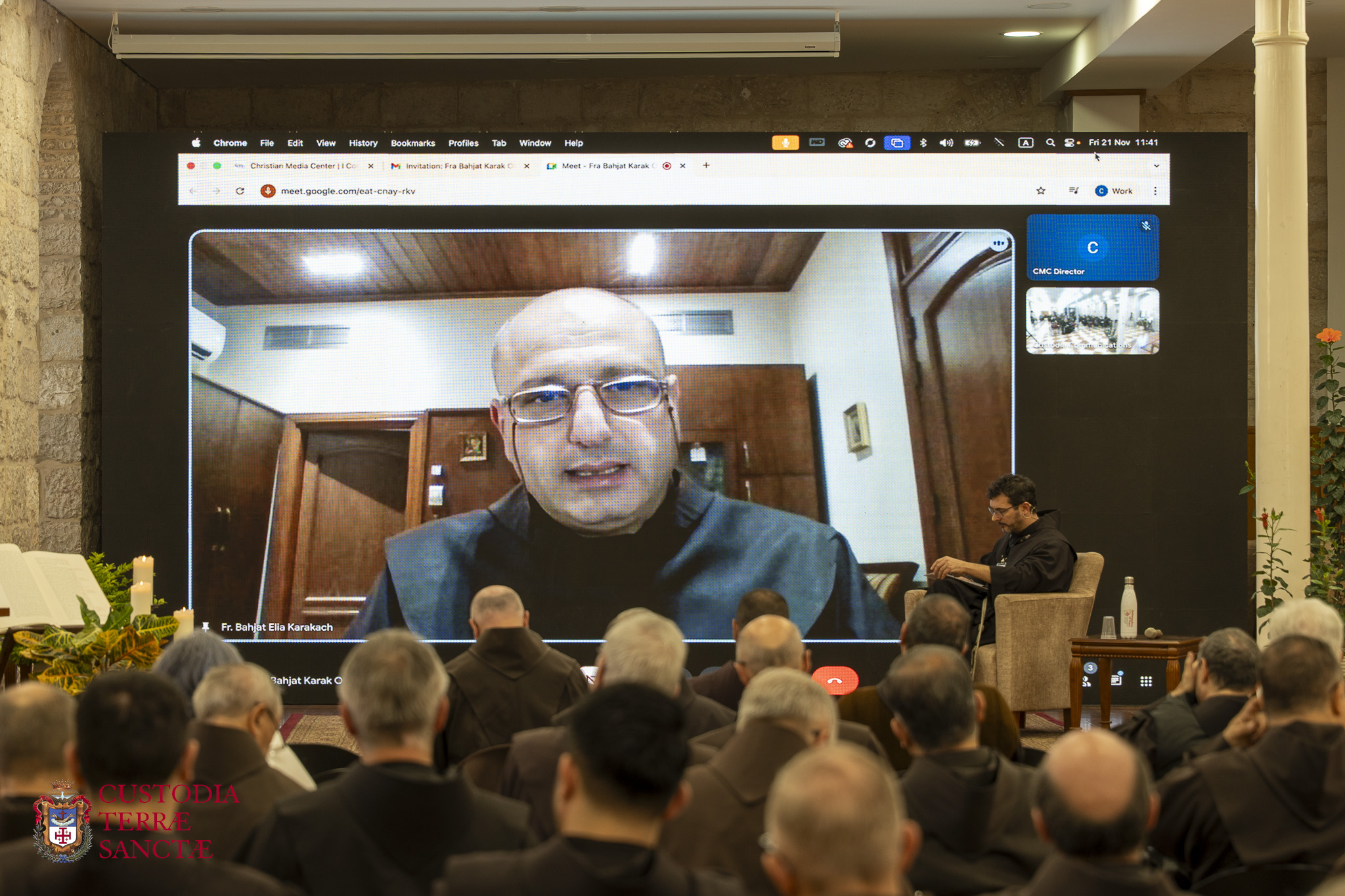
In the second part of the morning, the assembly experienced a highly anticipated moment: the live connection with Syria to listen to the intervention of Fr. Bahjat Karak OFM. The program indeed included a session dedicated to "The action of the Franciscans in Syria", a contribution designed to offer the Commissaries a direct look at one of the most afflicted realities in the Middle East. The connection was introduced by Fr. Brena, recalling the importance of opening one's gaze beyond the boundaries of the Holy Land, to understand how the Franciscan mission accompanies peoples and communities marked by years of conflict, instability and poverty.
The connection with Syria was an opportunity to listen to the voice of those who continue to serve the population with dedication, restoring dignity, hope and pastoral presence even in the most difficult conditions.
Particularly with young people: the activity of the Franciscans sees strong participation among youth. In community days, in the request for formation and spiritual care, in the need to feel part of something, where emigration attracts most young people.
An intense moment, which called the Commissaries to the responsibility of concrete solidarity, closeness and constant support for Christian communities in suffering.

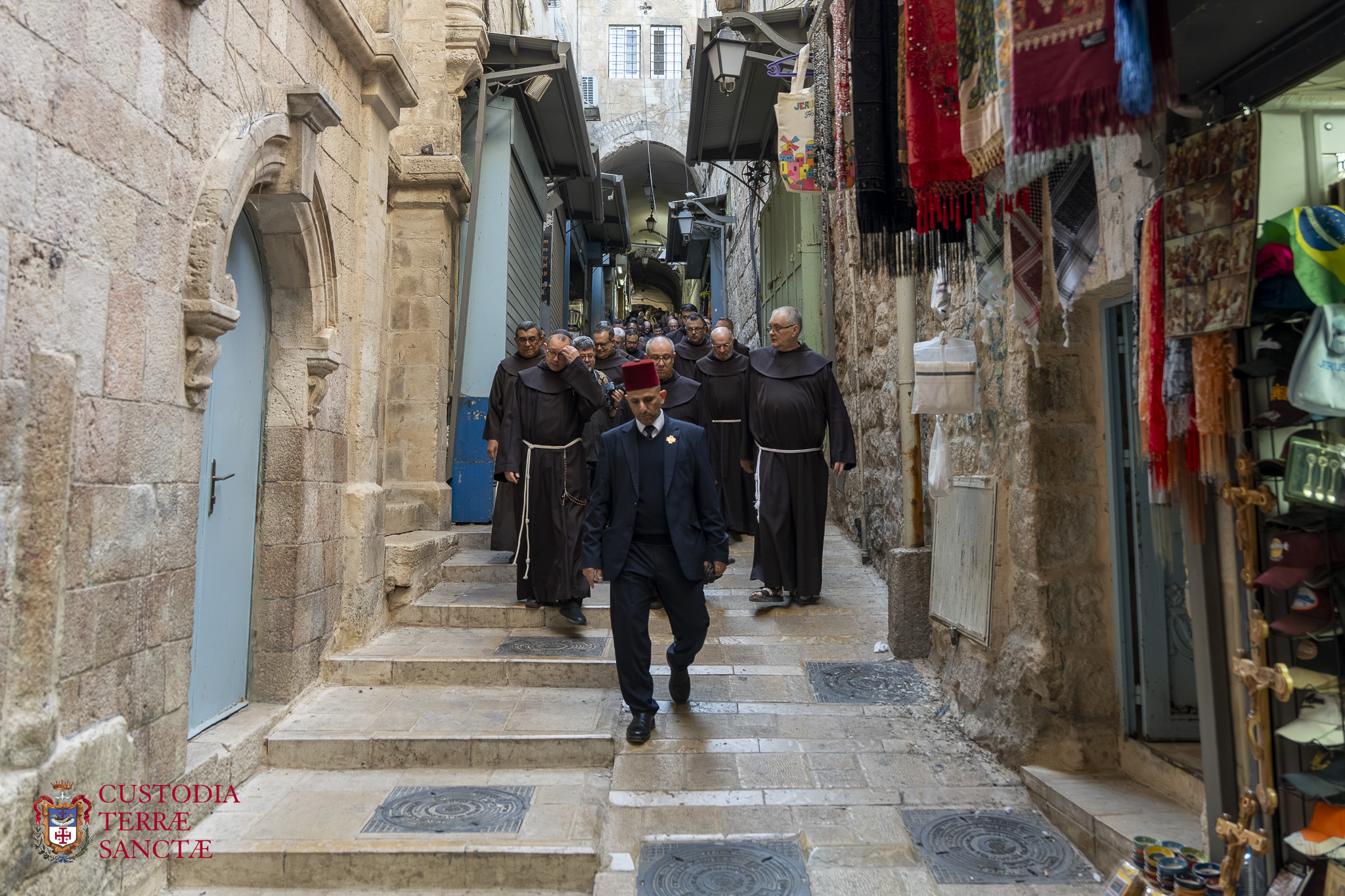
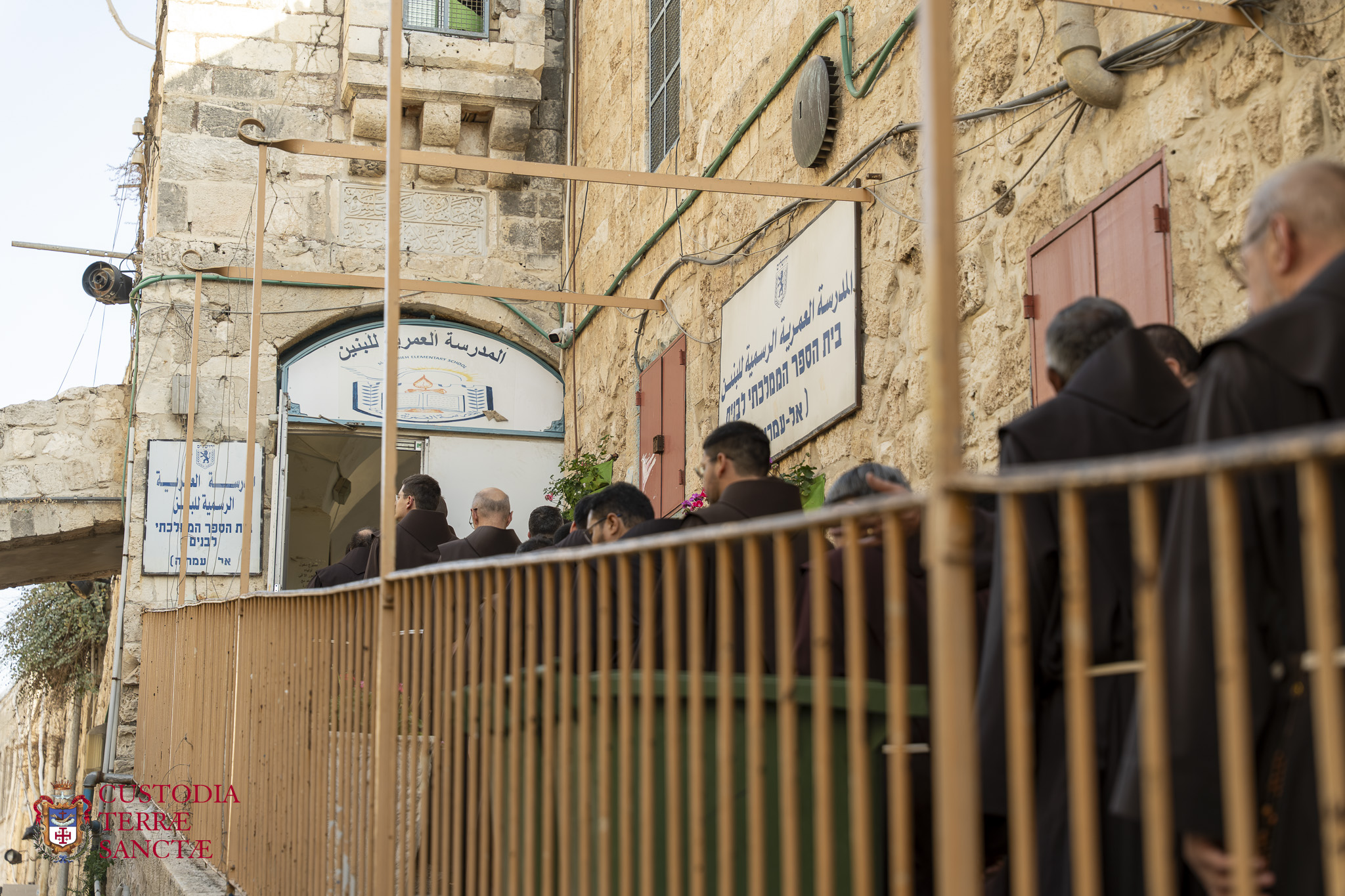
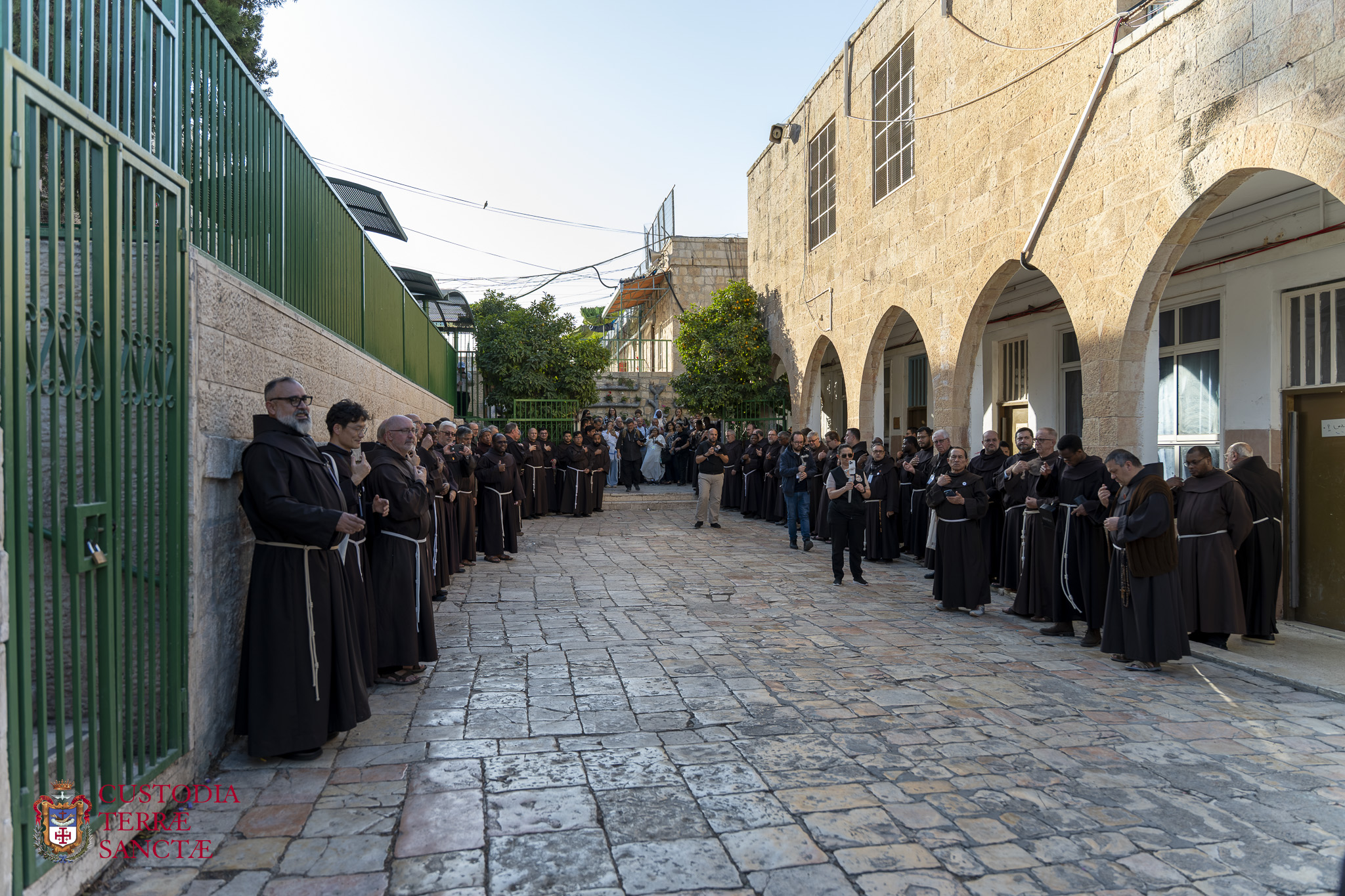
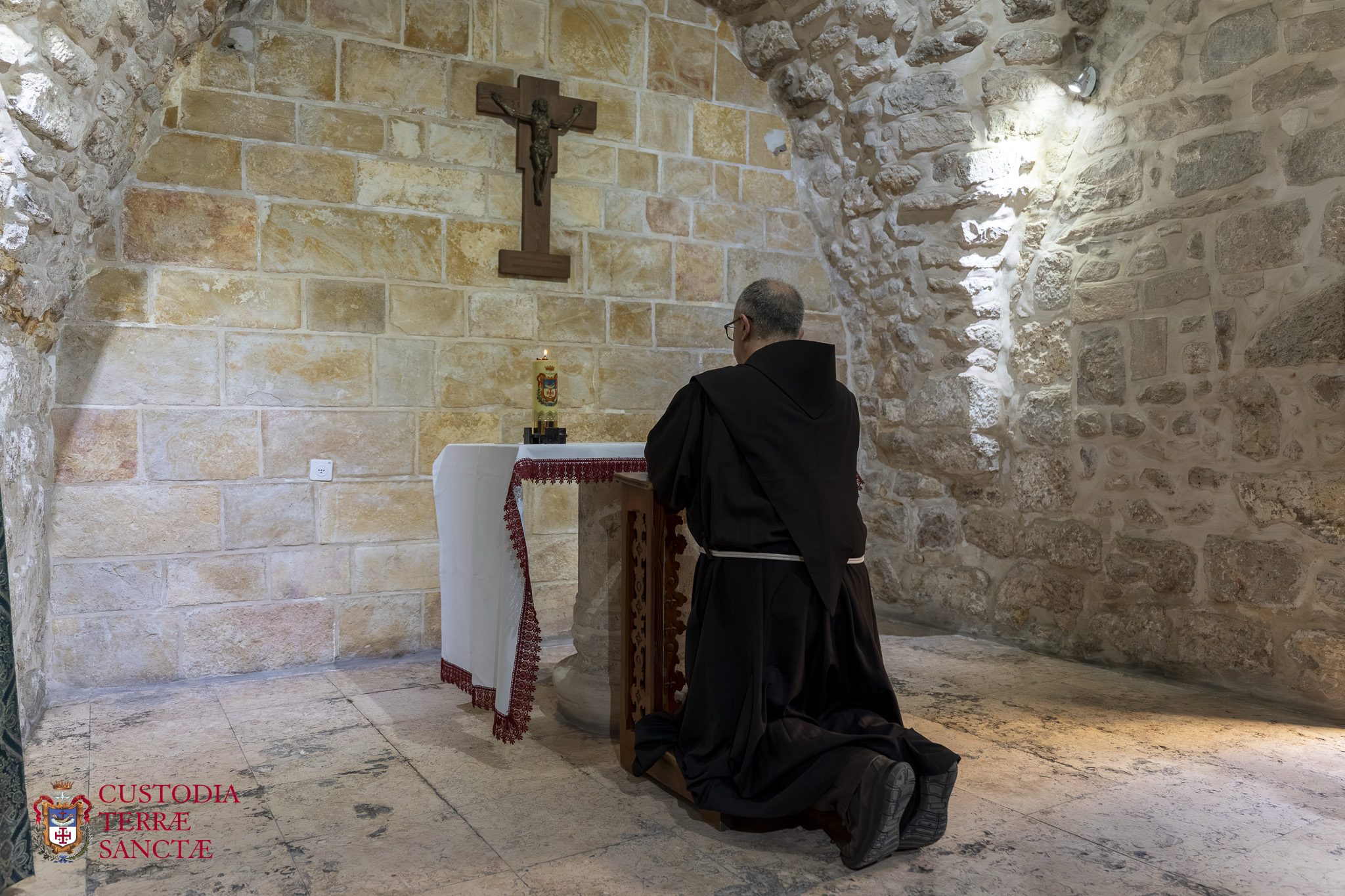
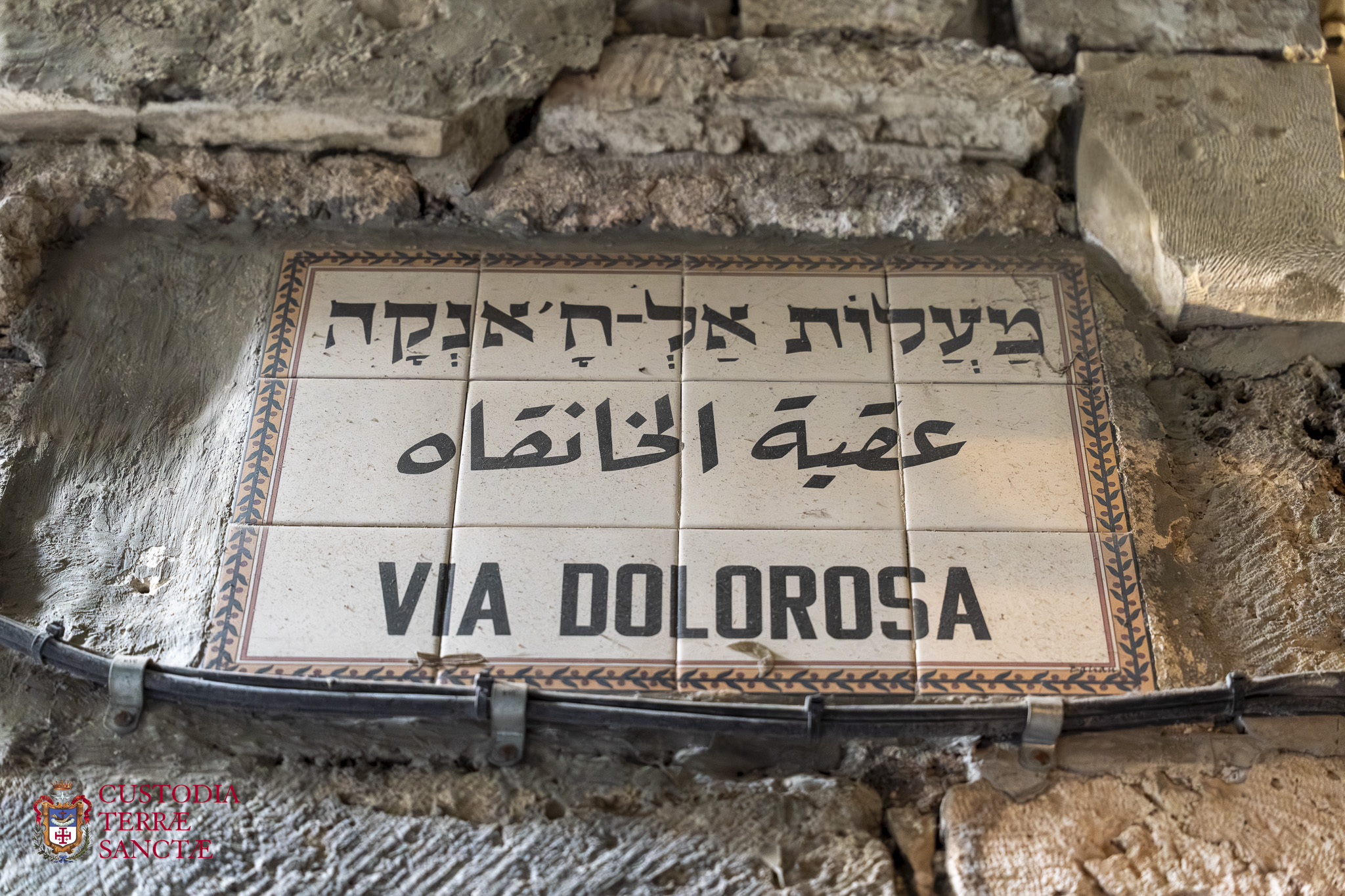
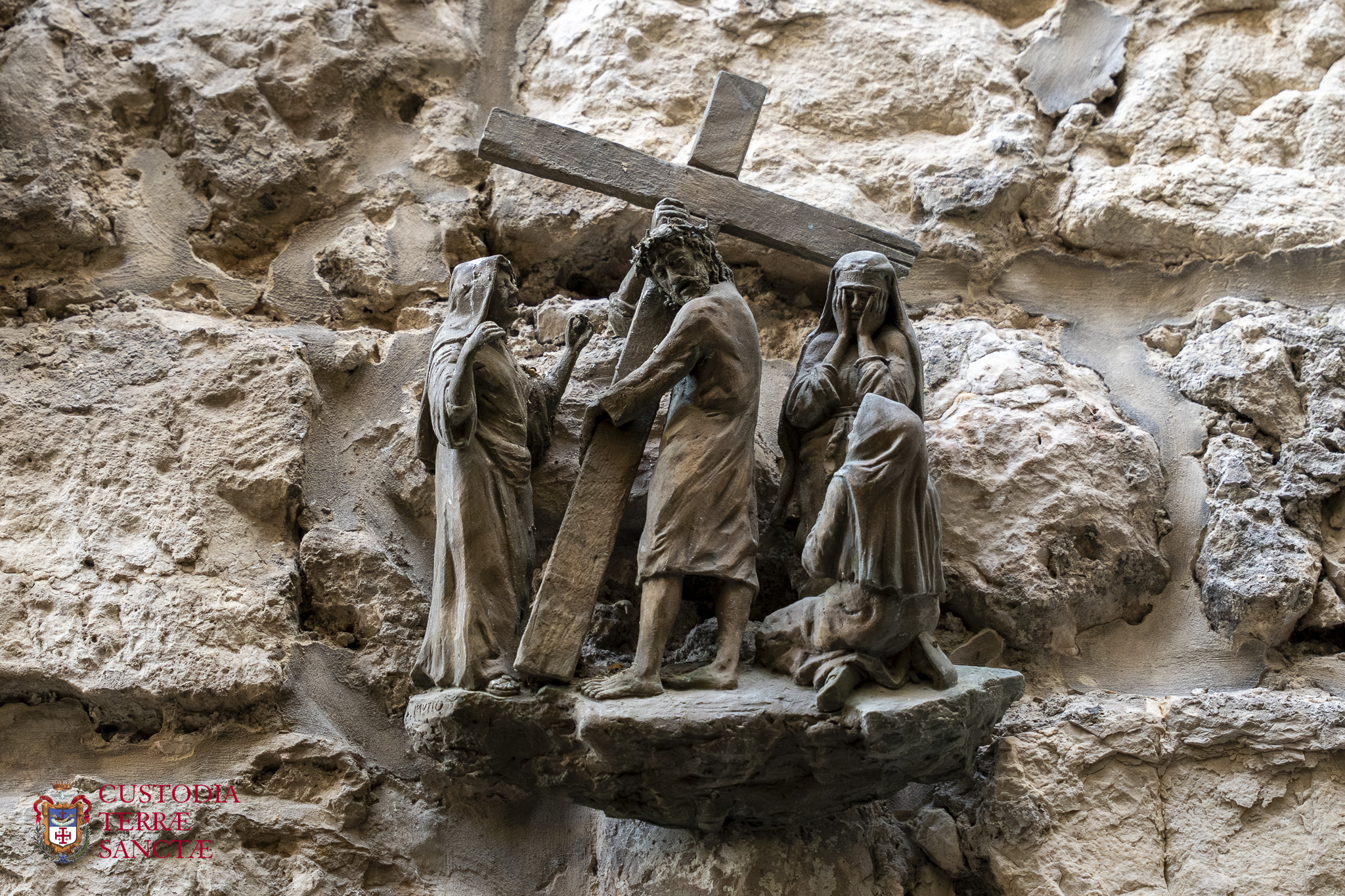
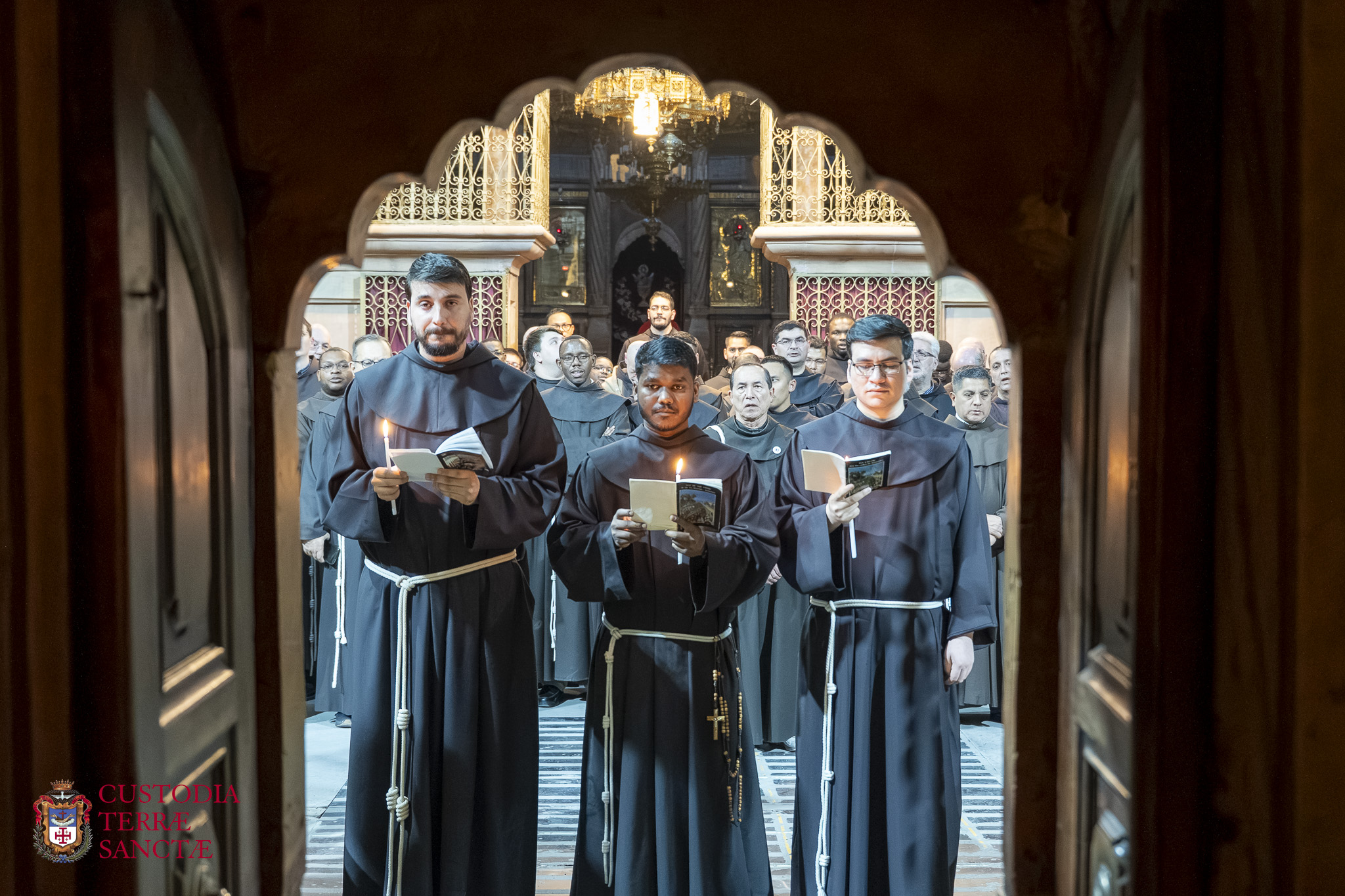
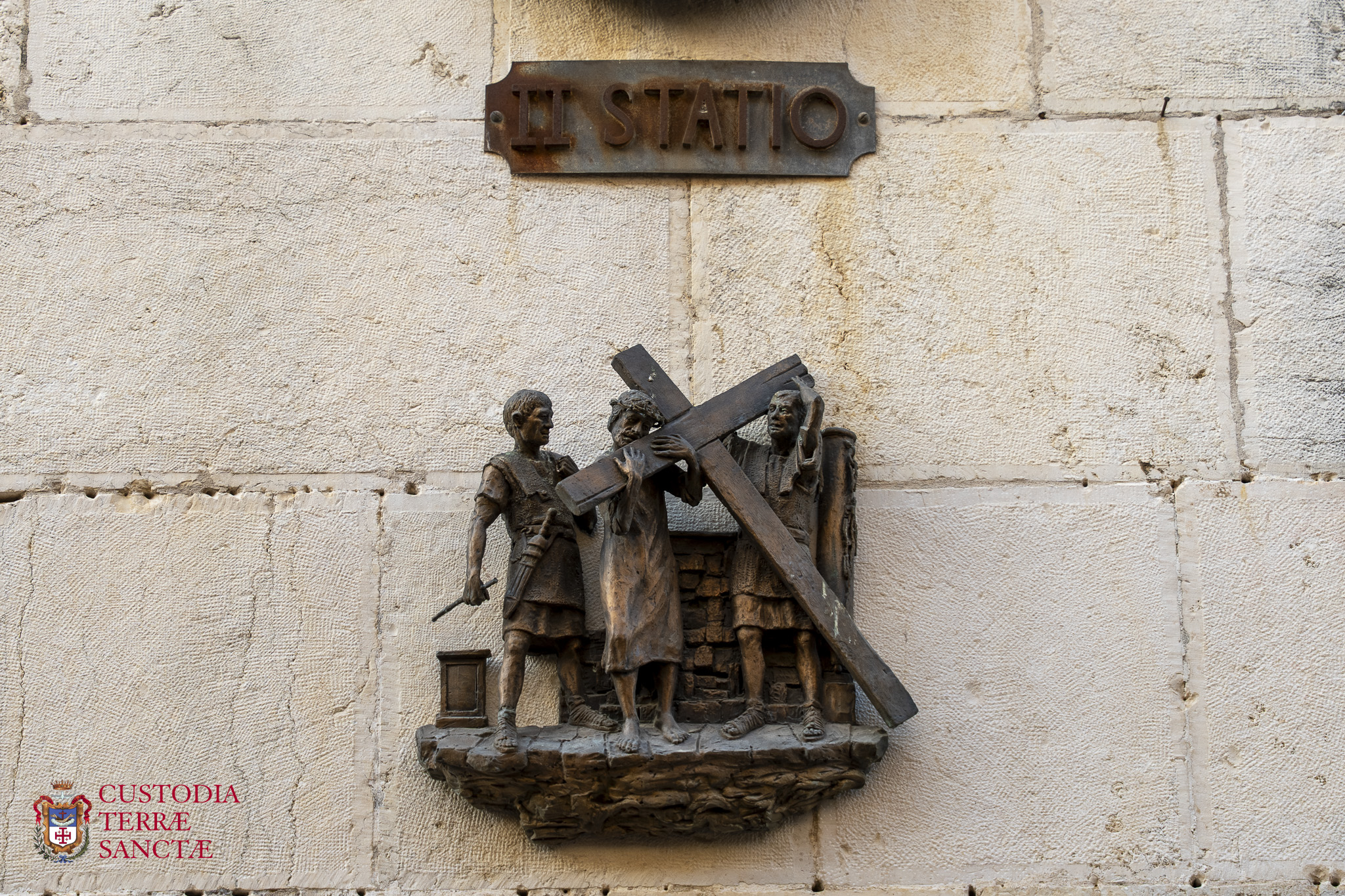
In the early afternoon, after the community lunch, the Commissaries gathered together with the custos to celebrate the Way of the Cross through the streets of Jerusalem. They walked on those same stones, in the same alleys that saw Jesus pass on the day of his Passion. Every step, every stop along the Via Dolorosa was a return to that ancient path, an immersion in the living memory of the city.
Alongside the friars of the Custody and the Commissaries, some local faithful and pilgrims who were in the city joined. The prayer followed the simple and profound rhythm that accompanies the Way of the Cross of every Friday in Lent, the one that prepares the heart for Easter and that for centuries has marked the spiritual life of the holy city.
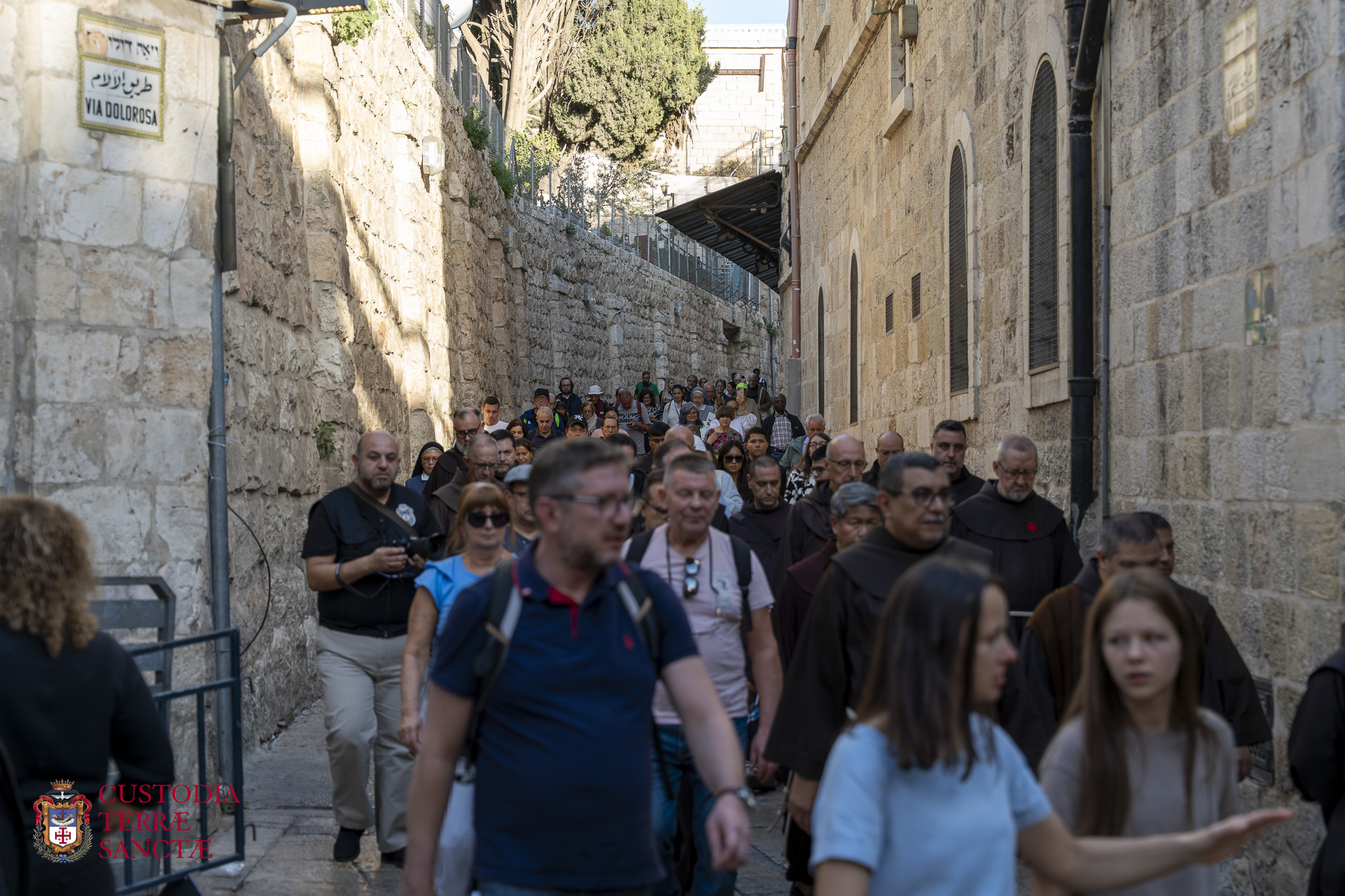
The same stations, the same places: from the walls of the convent of St. Saviour to the Basilica of the Holy Sepulchre. But around them, the life of the city flowed as always. The souq, the market, with its colors, the scents of spices, the open shops and the sellers watching from their doorways, provided the backdrop for the procession. A contrast that in Jerusalem does not jar: here faith and daily life intertwine, touch, call each other forth.
Among shop windows full of objects and stores hoping for the return of pilgrims for Christmas, the procession brought a sign of presence, almost a breath of normality in a season marked by fears and expectations.
While the city observed discreetly, the prayer of the Commissaries also became a supplication for peace and for the recent political developments in the region, so that they may not suffocate the hope that the Holy Places may soon welcome pilgrims from all over the world again.
The afternoon is devoted entirely to one of the main tasks of the Commissaries: the promotion of the Good Friday Collection.
It is introduced again by Fr. Matteo Brena, recalling that this moment is "ours", of the Commissaries, an opportunity to share experiences and methods.
Speakers of the session:
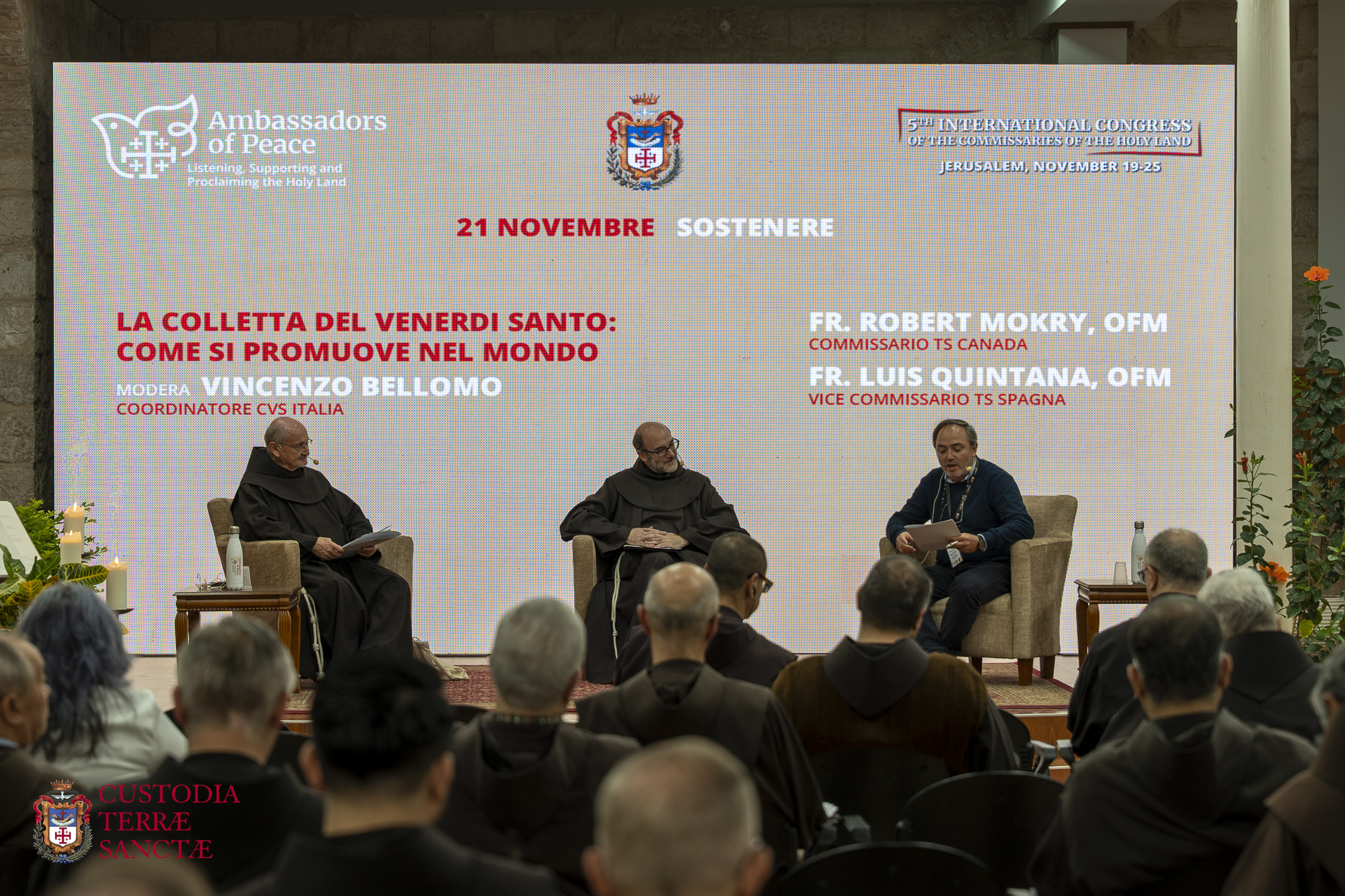
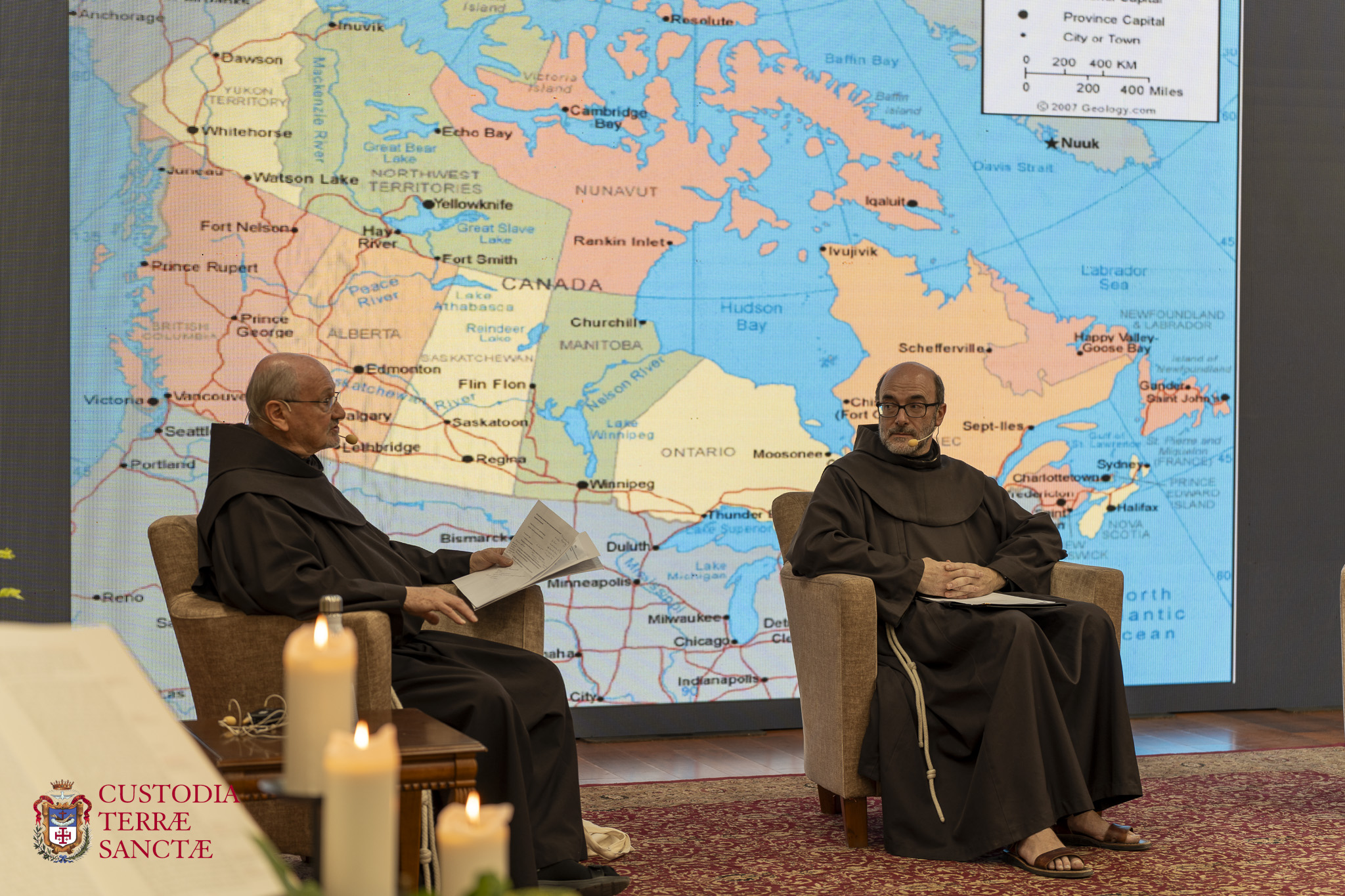
Fr. Robert Mokry describes a vast country, with 73 dioceses, different cultures, different languages and a Church now largely composed of immigrants.
The Canadian Commissariat sends material to 3,400 parishes, coordinates bilingual communication and keeps awareness high through timely reports to the bishops which, with a smile, Fr. Robert defines as a form of "healthy competition".
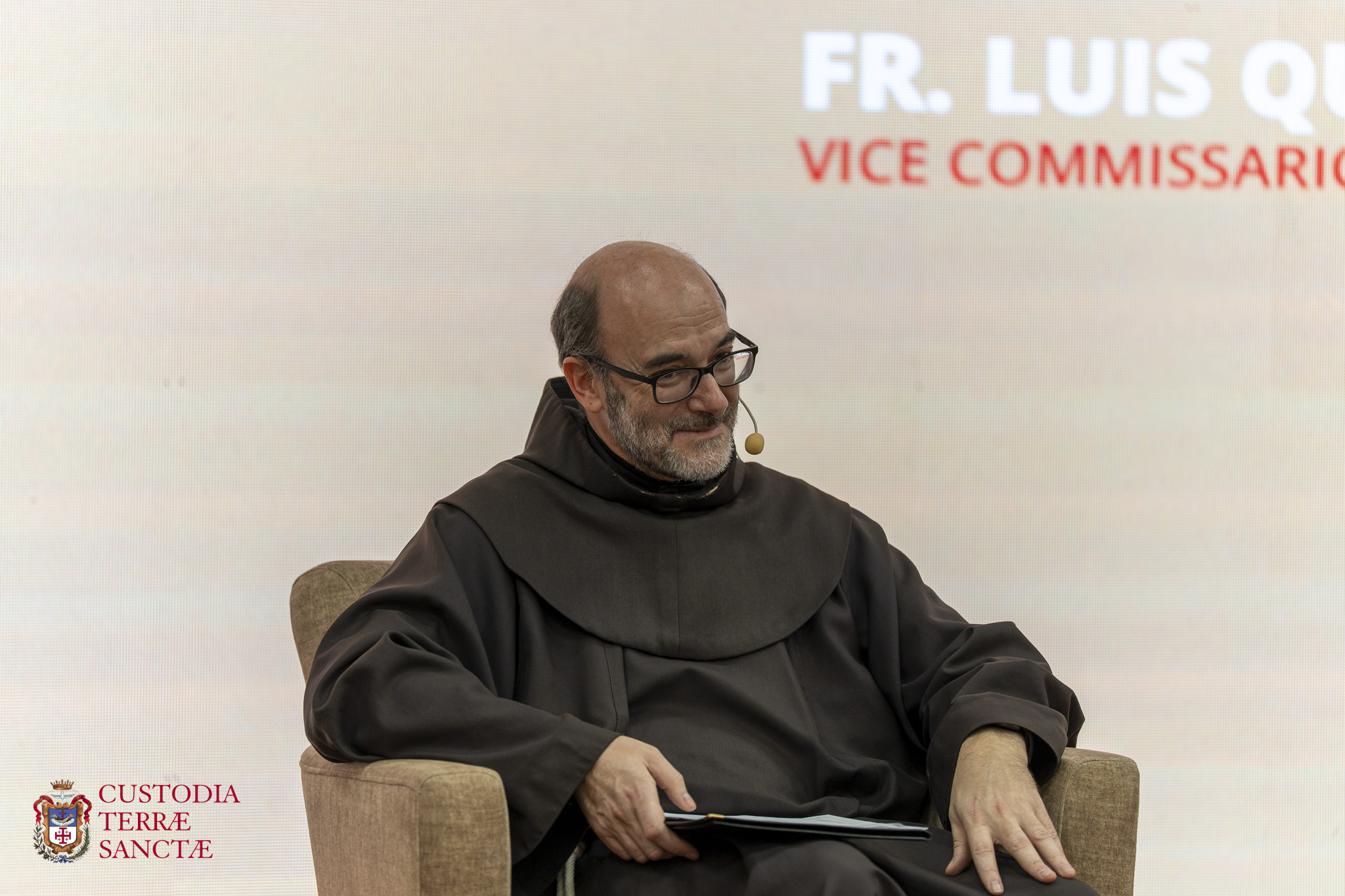
Fr. Luis Quintana illustrates an extremely structured and dynamic system:
Spain is an example of how presence and communication create a stable culture of support for the Holy Land.

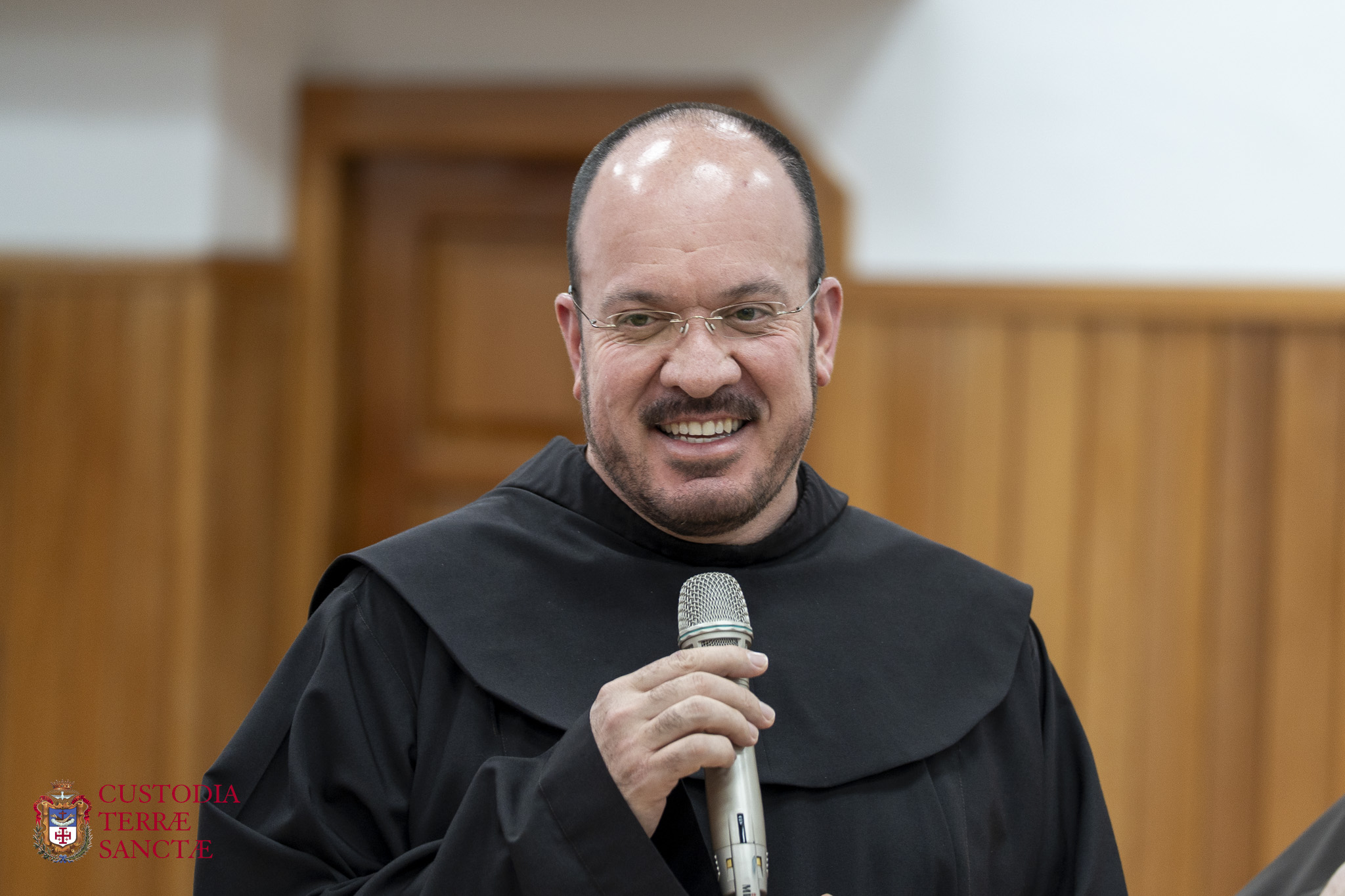
The final panel of the day was presided over by the custos of the Holy Land, Fr. Francesco Ielpo OFM, who introduced and presented the friars engaged in the service of the custodial economate: Fr. Agustin Pelayo OFM, custodial bursar, and Fr. Ivan Utjesinovic OFM, vice–bursar.
Their testimony was particularly significant, a deep and sincere sharing, full of commitment, dedication and love for the Holy Land. They explained how their task does not consist in "managing the money of the Custody", but in knowing exactly which resources exist and how they can be allocated to people, educational and social works, charitable interventions and the maintenance of the Holy Places. It is a service of discernment, even before being administrative, which requires sensitivity, precision and a great sense of responsibility.
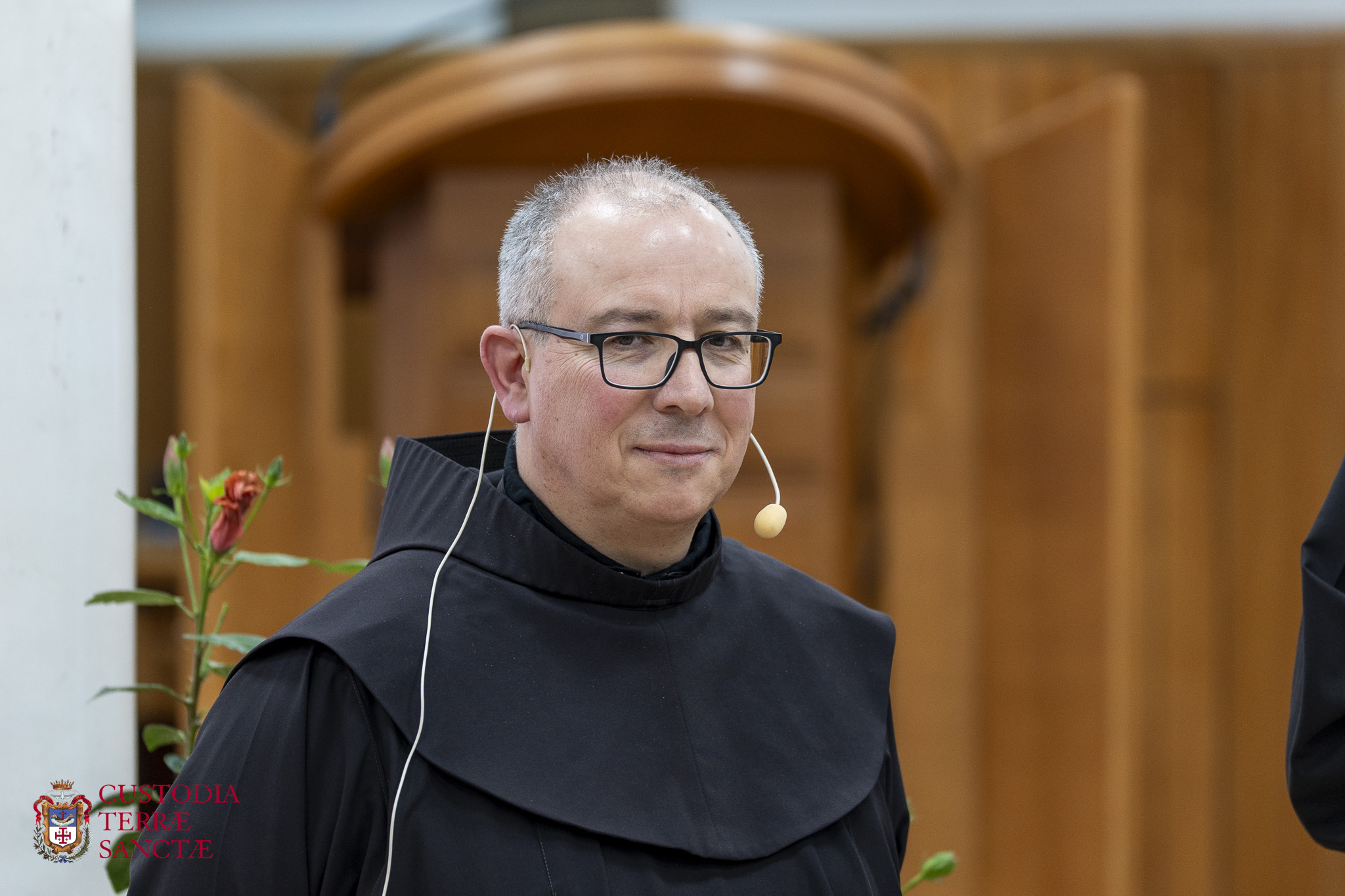
The custos offered the Commissaries a clear and transparent explanation of the management of the Good Friday Collection, illustrating the entire path of donations, the responsibilities of the various offices, the critical issues encountered over the years and the corrections already introduced. Through concrete examples and references to recent history, he showed how the mistakes of the past can become valuable tools to illuminate the future and build new methods, new procedures and new forms of collaboration.
Fr. Ielpo announced that beginning in January 2026 new operational methods will be introduced, involving all the Commissaries, designed to make the work on the Collection more effective, more transparent and better integrated with the current needs of the Custody.
In the final part of the panel, the custos launched a clear and shared challenge. The future of the Collection, as well as the Custody’s ability to optimize its resources, will depend on the concrete and united commitment of the Commissaries scattered throughout the world. Without their contribution, he recalled, the Custody would not be what it has been in its long history and it cannot become what it is called to be.
It is an appeal to shared responsibility, rooted in the present and projected toward the future, always with an attentive gaze on the fundamental mission: to serve the Holy Land and the people who inhabit it.
Francesco Guaraldi