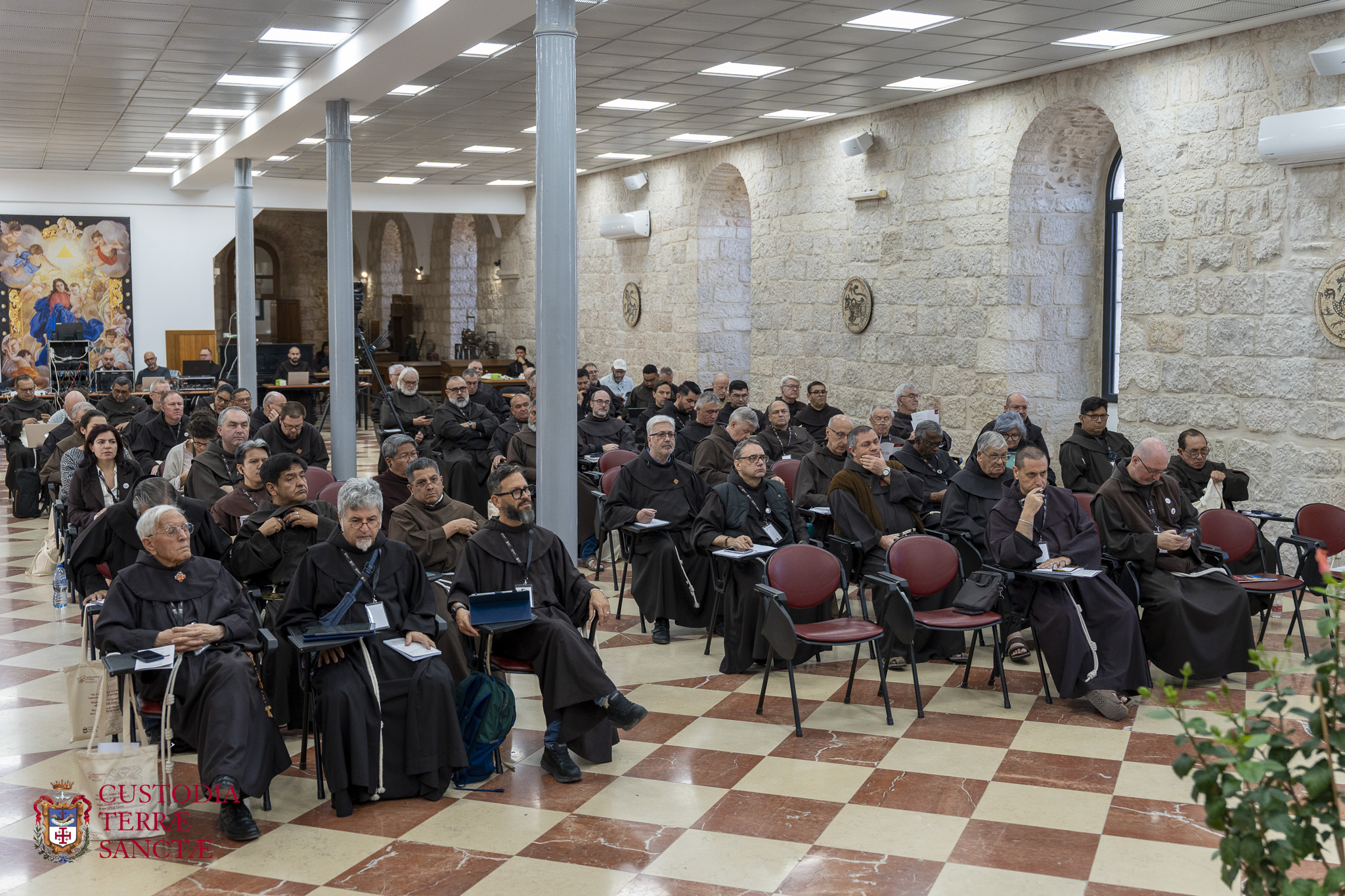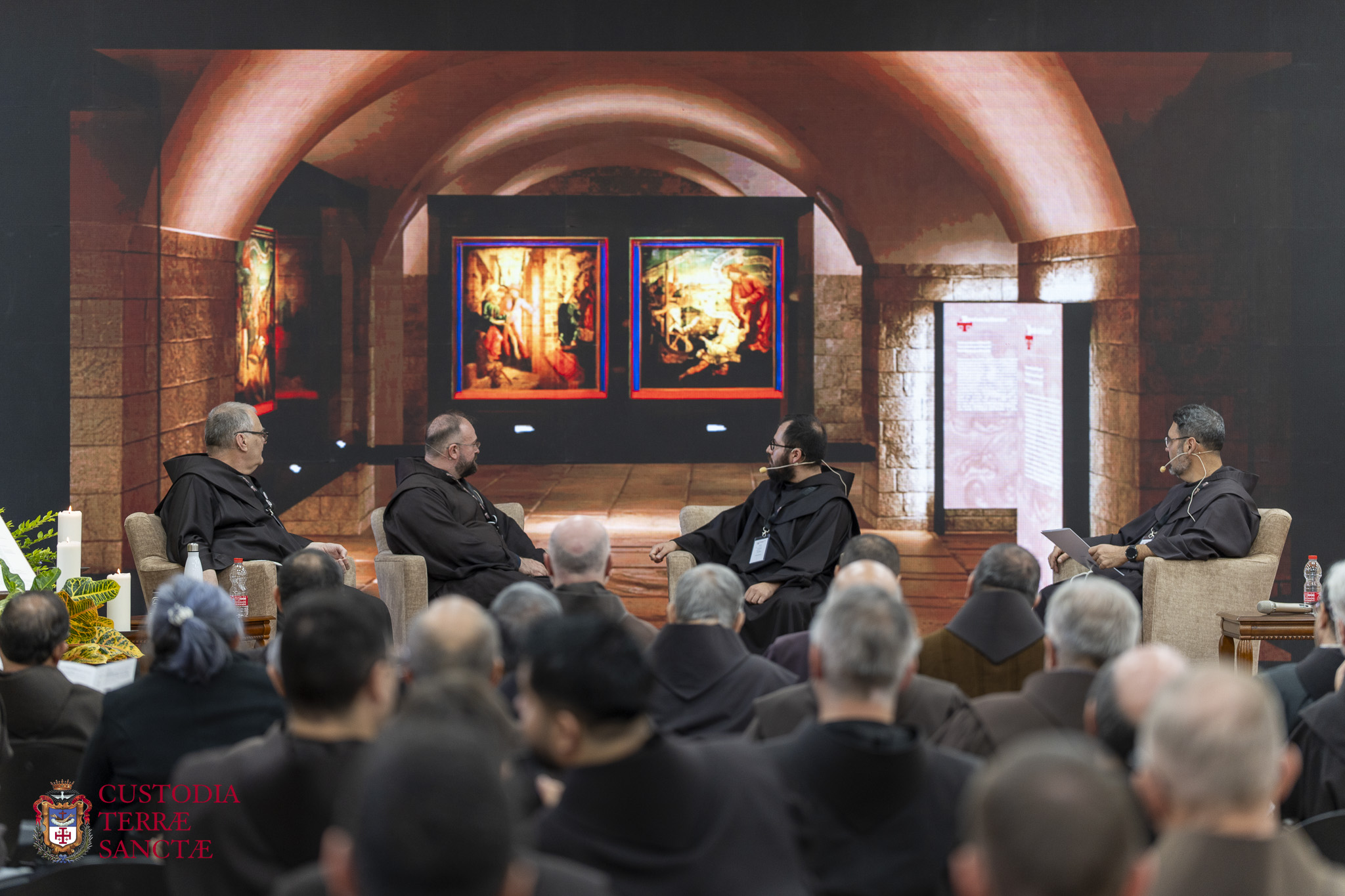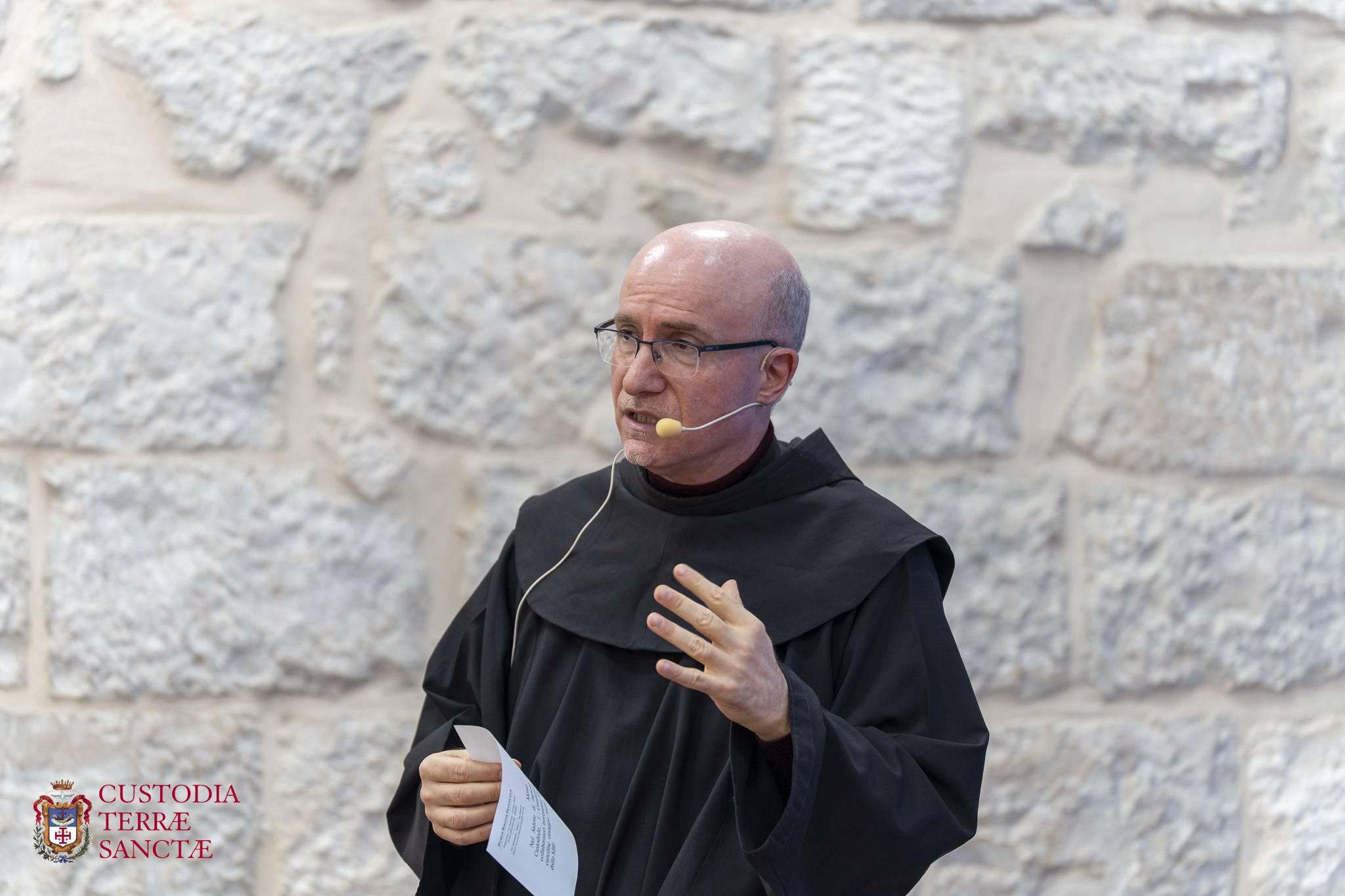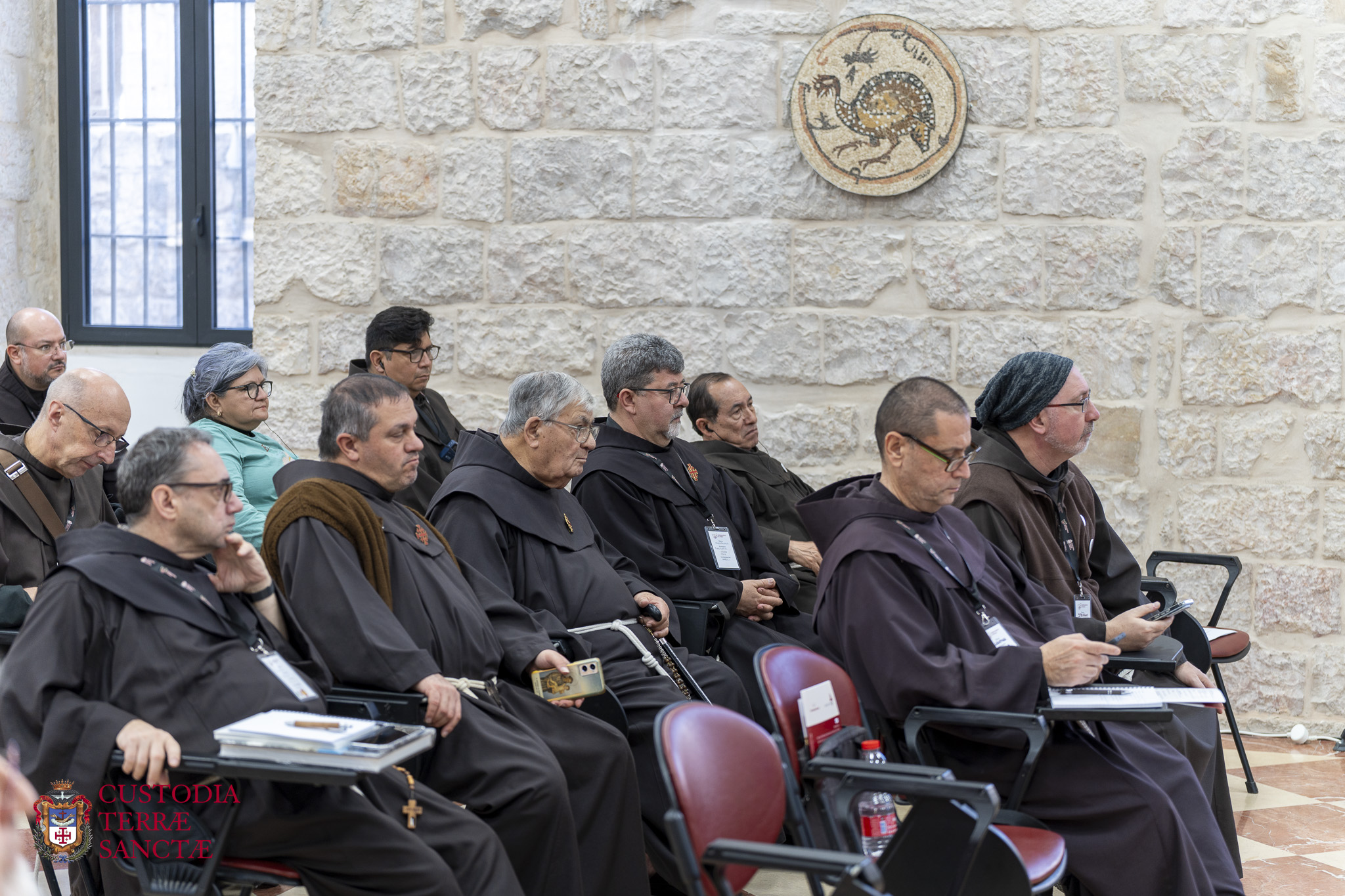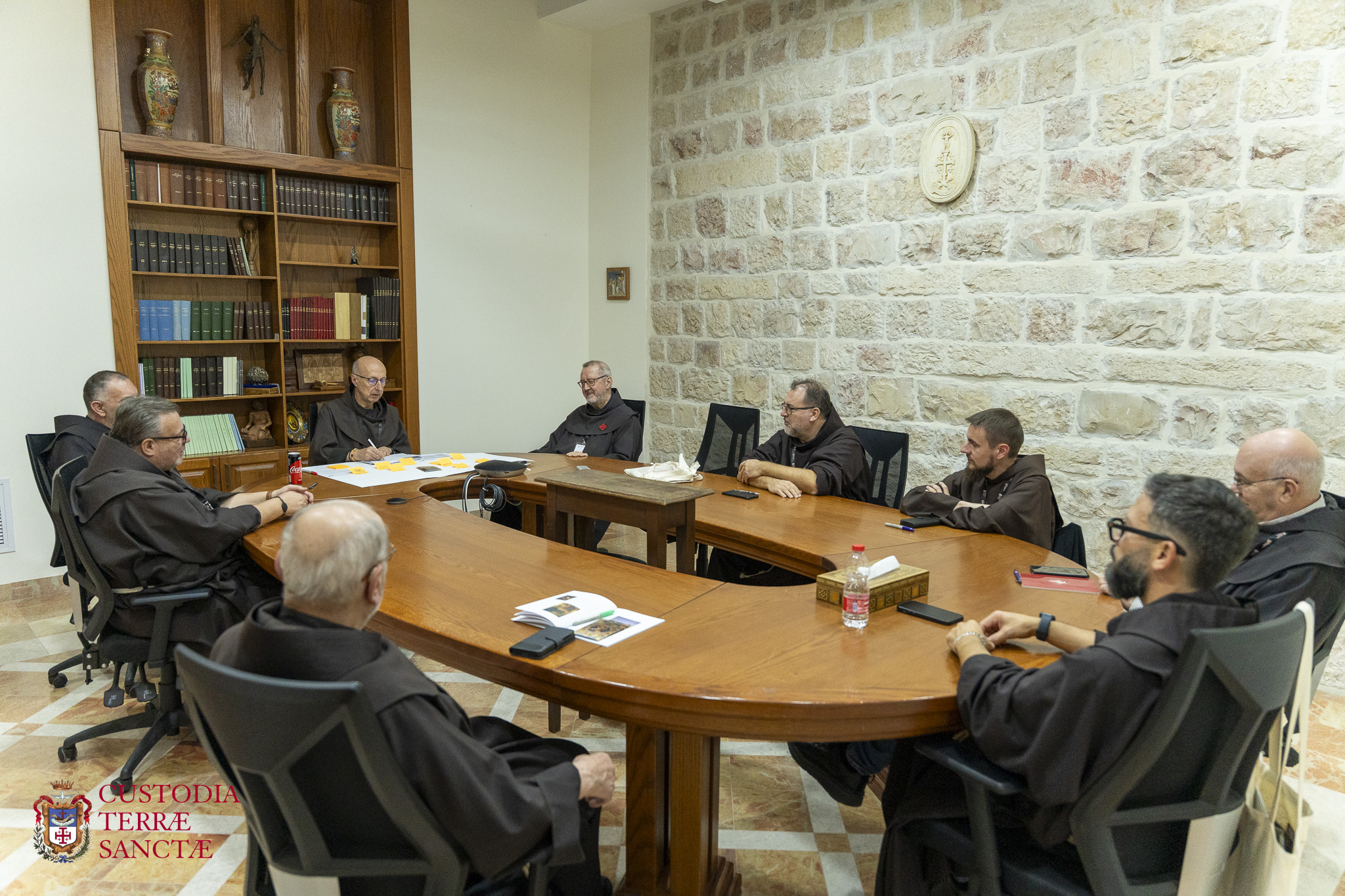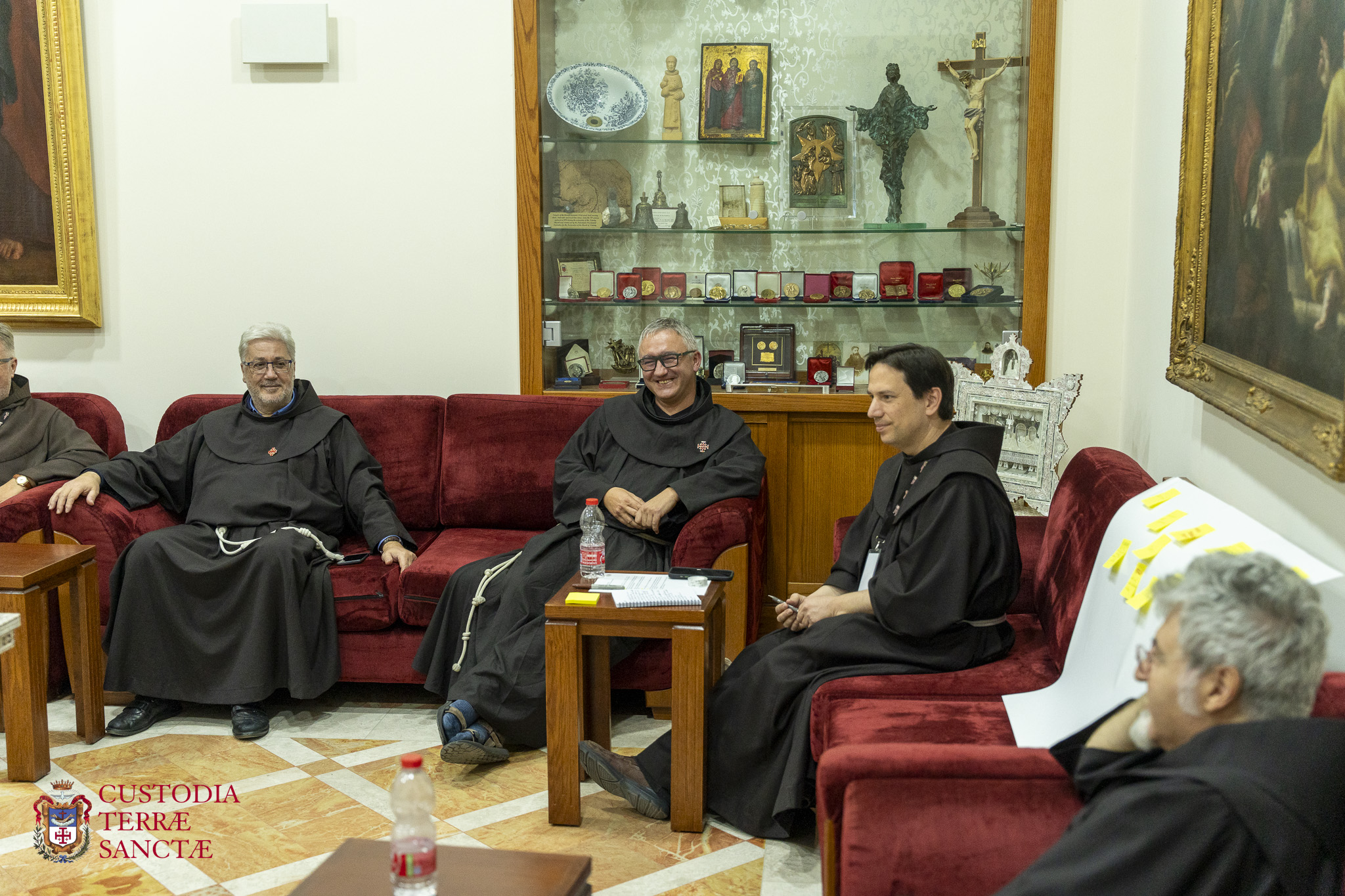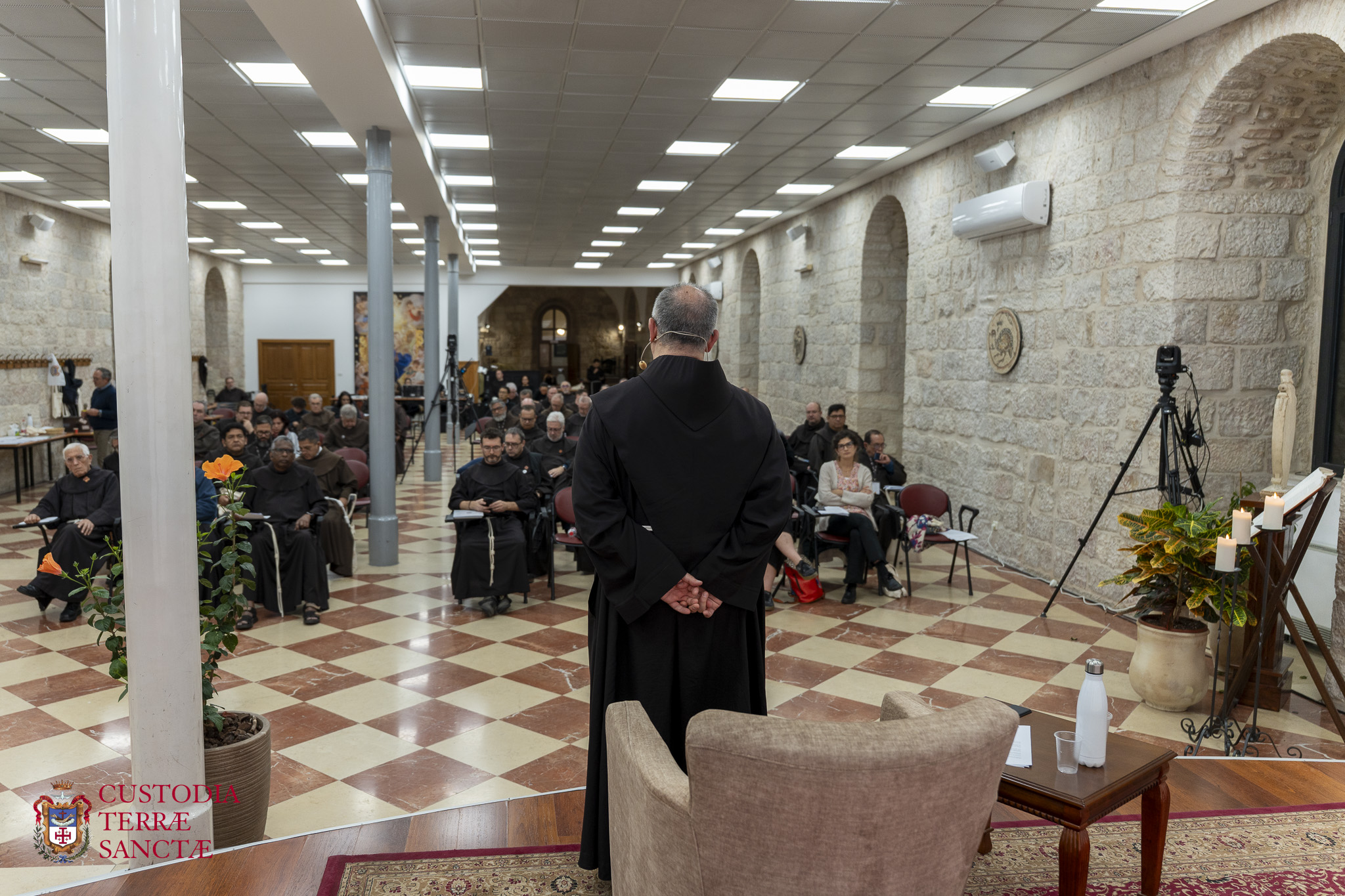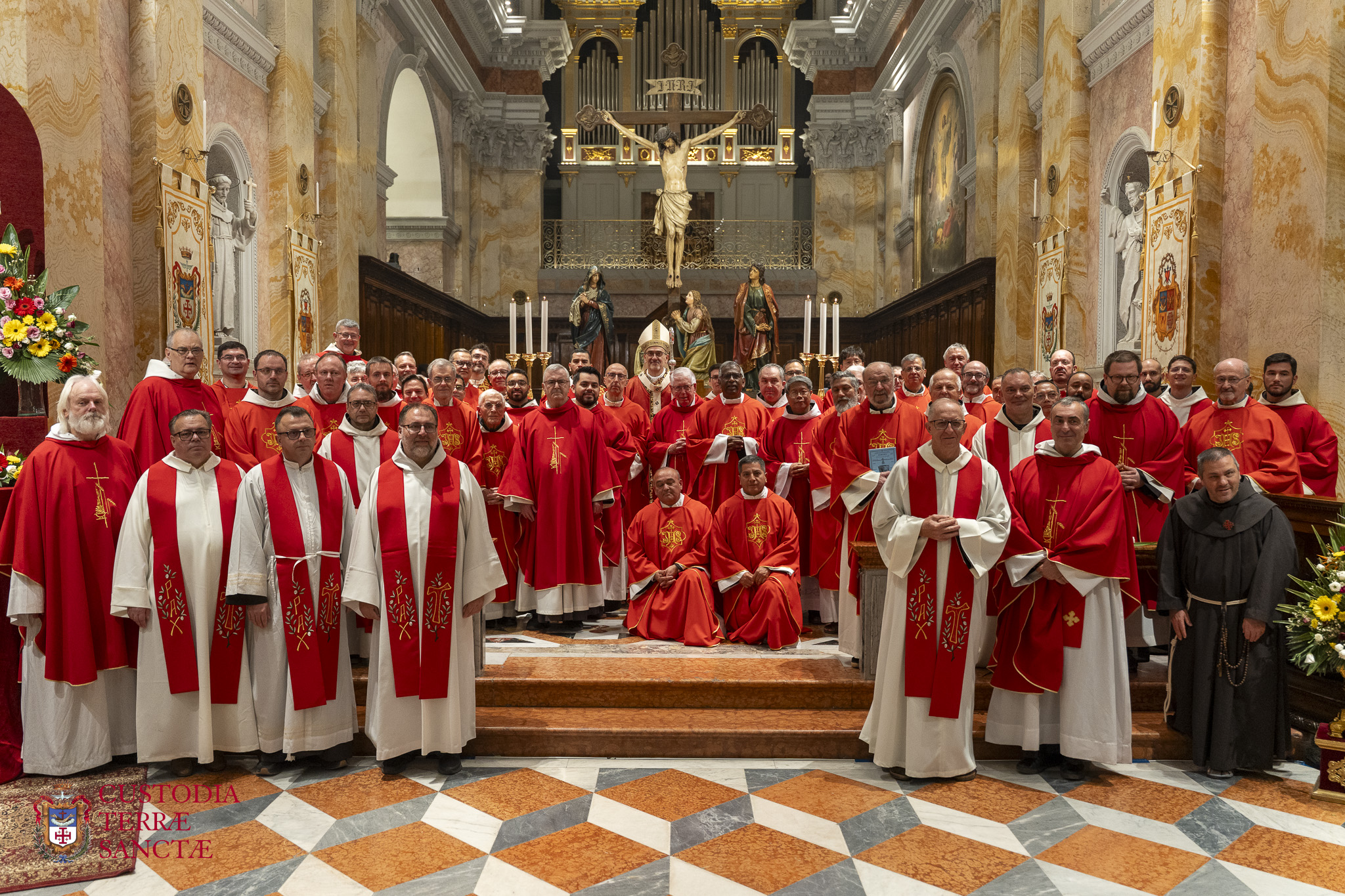
The second day of the congress “Ambassadors of Peace” opened with a key word that ran through all the interventions: custody. Not only the custody of stones and sanctuaries, but custody of memory, relationships, vocations, future.
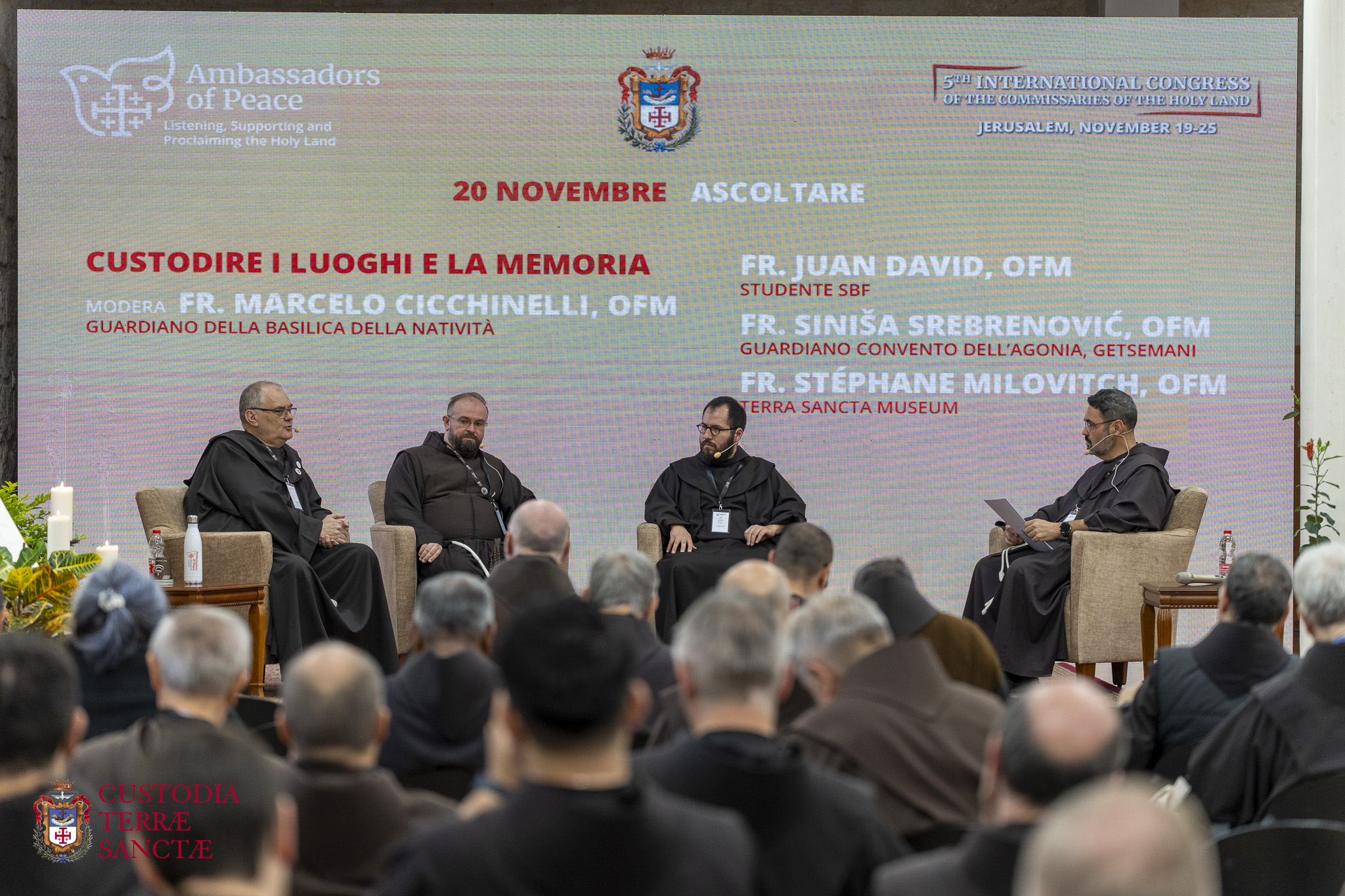
The theme of the morning, “Preserving places and memory”, was guided by Fr. Marcelo Cicchinelli OFM, custos of the Nativity in Bethlehem, who moderated the dialogue among three voices of the Custody of the Holy Land, Fr. Stéphane Milovitch OFM, responsible for the Terra Sancta Museum, Fr. Siniša Srebrenović OFM, custos of the convent of the Agony in Gethsemane, Fr. Juan David OFM, a young Colombian friar and student of the Studium Biblicum Franciscanum. What emerged was a living mosaic, the Holy Land as a place where the Gospel is written in geography, but also in the biographies of those who inhabit and serve it.

Fr. Stéphane Milovitch retraced the path that led to the birth of the Terra Sancta Museum, defining it as a tool for narrating the eight hundred years of uninterrupted presence of the Custody in the Holy Land. The Custody, he recalled, has always lived a threefold mission, to guard the holy places and make them accessible to the faithful, to serve the local population, to welcome pilgrims from all over the world.
The museum was created to reflect and make these three lines of apostolate understood. It is not conceived as a "cemetery of sacred objects", but as a place where the heritage becomes an epiphany of the identity of the Custody, a Church that prays, that celebrates, that welcomes, that cares.
Many of the works on display, chalices, vestments, gifts of kings, pilgrims, commissaries, were born for the liturgy and tell a story of communion between the local Church and the universal one. Moreover, the museum wishes to be a space of dialogue with Jews and Muslims, in a city where everyone "must occupy a space", political, physical and cultural.
Through documents, firmani, baptismal registers, archives, the museum gives local Christians the awareness of a rooted and fruitful identity. Culture thus becomes a bridge, between the Church and society, between past and future, between the Christian community and the other faiths.
The word then passed to Fr. Siniša Srebrenović, who brought the concrete experience of life in the sanctuaries during the recent crises, from the pandemic to wartime.
In the Holy Sepulcher, during COVID, the scene was almost paradoxical, on March 25, solemnity of the Annunciation, the basilica was closed by the government. The friars of the Custody, the only community living inside the basilica, found themselves literally locked inside their home, without a key to go out. The convent has only one door, the one of the basilica, sealed. For weeks the food arrived through a small window, as in past centuries, then, thanks to an internal passage, the Greek Orthodox opened an exit for the friars through their monastery.
But the decisive point is not logistical. It is spiritual.
Fr. Siniša recalled that in the long history of the Custody the absence of pilgrims was often more normal than the massive presence to which we had become accustomed in recent decades. And he summarized the vocation of the Custody in this way, "To guard the holy place means, first of all, to pray in the holy place."
Even with the basilica empty, the daily processions never stopped. The same happens today in Gethsemane, often with very few or no pilgrims, the community continues to celebrate, pray, intercede for the whole Church and for the world.
If prayer is missing, he insisted, the sanctuary risks becoming only a museum. The difference between a heritage to be preserved and a place of life is precisely the liturgy celebrated, the intercession, the silent offering in a context often marked by fear, by sirens, by the memory of wars lived on one’s own skin.

The testimony of Fr. Juan David, a young Colombian architect, brought the breath of someone who encountered the Holy Land as a vocational surprise.
Raised in Bogotá, where for many religion remains a "grandmother’s thing", he discovered almost by chance the presence of the Franciscans in the Holy Land. His parish priest proposed he learn about the Custody, sensing that his profile as an architect could be a gift for the mission of guarding the holy places.
Arriving in 2015, his first experience was not so much "beginning a path toward the priesthood", but rediscovering his faith, verifying that Jerusalem, Bethlehem, the Holy Sepulcher were not only names heard at Mass, but concrete places where the Word became flesh.
Today, as he continues his biblical and archaeological studies, he looks to the future with strong conviction, the stones speak, and they will continue to speak. Recalling the Gospel in which Jesus says that if the disciples are silent, the stones will cry out, Fr. Juan David compared this image to the great Franciscan archaeologists who excavated in Nazareth, Capernaum, Magdala.

The inscriptions, houses, ancient churches emerging from the excavations have "cried out" for centuries, giving back to the world the concrete memory of Mary’s house, Peter’s house, the villages of the Gospel. But much remains to be done, entire areas like Capernaum, excavated only in small part, still await exploration.
For him, the future passes through this,
Coming to the Holy Land, for a young man, does not only mean choosing a charism, but serving the universal Church by guarding the "Footstep of the Word on the earth."
In closing, Fr. Siniša offered a direct message to the commissaries of the Holy Land, called to narrate in their countries the mission of the friars,
not only to "speak of sanctuaries", of projects or economic needs, but to make known the concrete people who live and serve in these places, friars who pray, study, welcome, care, accompany, Christian local communities that resist and hope, many lay people involved in schools, social works, pilgrimages.
Without faces, names, stories, even the noblest discourse risks remaining abstract. With faces and stories, instead, the Holy Land appears again for what it is, the pearl of the missions, as the Franciscan Constitutions call it, but an inhabited pearl, not one for display.
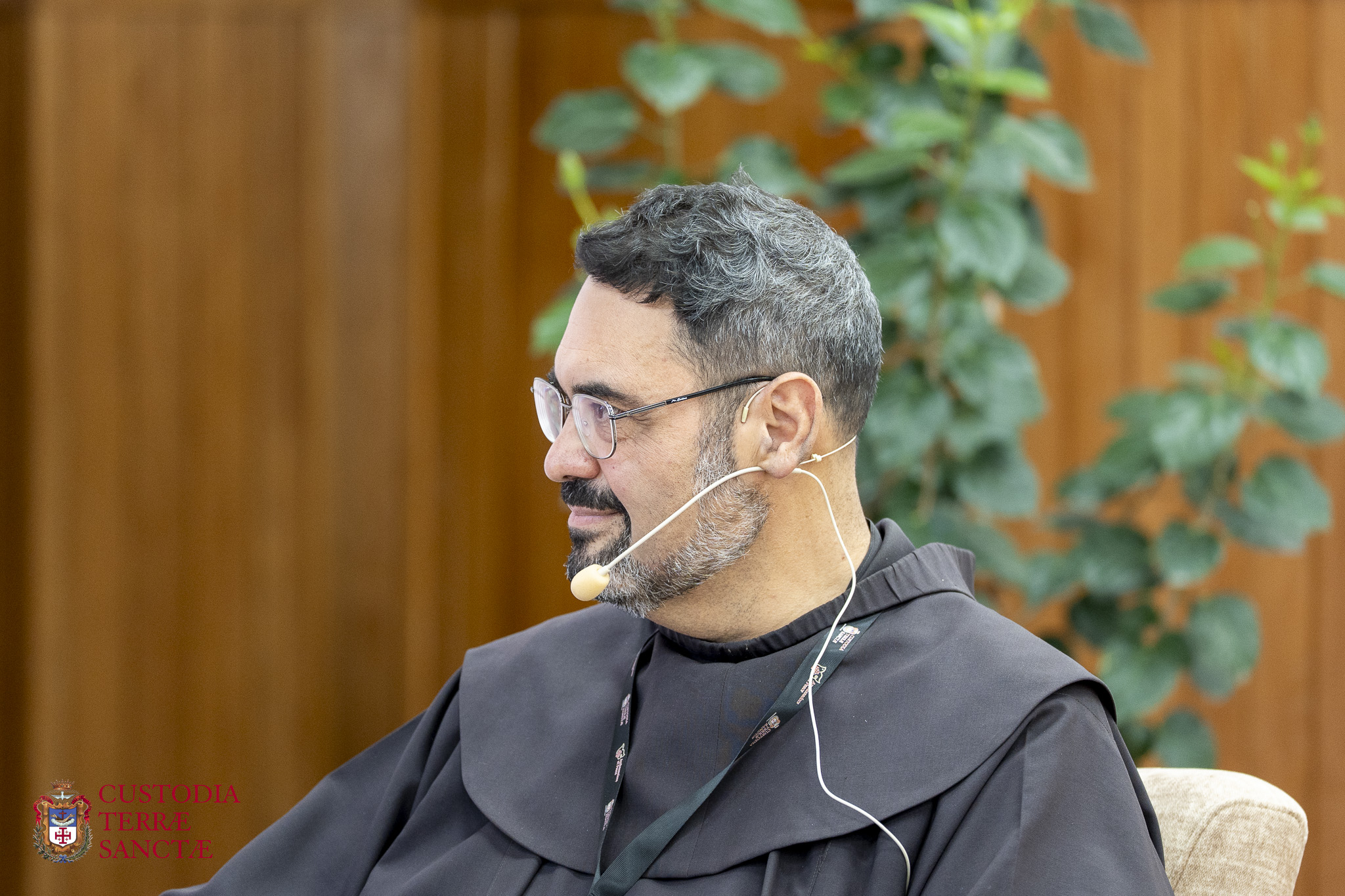
Fr. Marcelo Cicchinelli concluded the session by recalling the center from which everything takes meaning, Hic.
Hic (here) he was born, here he died, here he rose again. Everything the Custody does, everything the commissaries narrate, all the projects, museum, pastoral, archaeological, educational, have their epicenter in the "here" of the Risen One, who continues to give life to this land and to those who serve it.
The second day of the congress “Ambassadors of Peace” thus brought into focus a simple and radical truth, to be ambassadors of peace means, first of all, to guard places and memories so that they may be open to encounter with God, with others, with one’s own story.
In a Holy Land marked by wounds and conflicts, the friars of the Custody remind with their life that as long as there is a community that prays, welcomes, studies and narrates these places, hope will continue to find a home here.

The morning then continued with the presentation by Fr. Rosario Pierri on the history, formative proposals, future objectives and historical excellences of the Studium Biblicum Franciscanum. A professor of Biblical Greek and textual criticism, Pierri is today one of the most authoritative figures of the SBF. His leadership, begun in 2017, coincided with years of international revival of the Faculty, culminating in the centenary of 2024. With sober and rigorous style, Pierri insists on a key point, the study of Scripture is not abstract, but rooted in the Holy Land, a theological place that speaks through stones, texts and memory.
The Studium Biblicum Franciscanum was born from an intuition of the Custody of the Holy Land at the beginning of the twentieth century, to give the friars and the Church a stable center for biblical studies right in the heart of Jerusalem. After years of preparation, lessons began in 1924 in the convent of the Flagellation, along the Via Dolorosa. In 1960 the SBF was linked to the Pontifical Antonianum University, and in 2001 it officially became the Faculty of Biblical and Archaeological Sciences, unique of its kind within the Catholic world.
From its origins, the Studium has combined study and field research, excavations, archaeological surveys, cataloguing of artifacts, scientific publications, museums. The approach is typically Franciscan, uniting academic rigor and direct contact with the places of the Bible.

Its history is marked by outstanding figures. Among the pioneers stand out Maurus Witzel, Donato Baldi, Gaudenzio Orfali and Sylvester Saller, who laid the methodological and academic foundations of the institute. In the post war period emerged the figure of Bellarmino Bagatti, tireless archaeologist and director of the SBF, protagonist of excavations that redefined the knowledge of the first Christian centuries.
At his side worked Virgilio Corbo, one of the greatest Franciscan archaeologists, architect of the enhancement of important sites in the Holy Land and of the collections that flowed into the Terra Sancta Museum. With Corbo worked Stanislao Loffreda, a fine scholar of ceramics and director of the SBF for over a decade, a point of reference for the excavations in Capernaum, Machaerus and Herodium, sadly recently deceased.
Another key figure is Michele Piccirillo, known worldwide for his studies on Byzantine archaeology and for the valorization of the mosaics of Jordan, from Mount Nebo to Madaba. In the international sphere, the work of Gabriele Allegra is also memorable, founder of the Chinese section of the Studium and author of the first complete Catholic translation of the Bible into Chinese.
The year 2024 marked the milestone of one hundred years, a century of friars who teach, excavate, study and narrate, because the Holy Land is not only a scenario, but a key to reading the Bible and the world. Under the leadership of Fr. Rosario Pierri, the SBF continues to be a bridge between scientific research and the life of the Church, a place where the Word is studied where it was born.

Fr. Matteo Munari, a professor at the Studium Biblicum, offered a profound meditation on the theme of listening to the voice of God in moments of crisis. An intense intervention, rich in biblical references, personal experiences and spiritual provocations, which sincerely touched one of the most complex knots of the human experience, understanding where God is when everything seems to darken.
Fr. Matteo opened his reflection with a surprising image, the first mention of the voice of God in the Bible does not appear as consolation, but as a call. In the third chapter of Genesis, after original sin, Adam and Eve "heard the voice of the Lord God walking in the garden".
Man, marked by sin, flees from that voice. "This is what happens to us as well", explains Fr. Matteo, "the voice of God becomes uncomfortable because it highlights what we do not want to see". Yet, in that "Where are you?" that God addresses to man, Aiekka in Hebrew, there is no condemnation, but loving search.

Recalling the experience of the Exodus, Fr. Matteo reminded that the first generation that left Egypt did not enter the Promised Land "because they had not listened to the voice of the Lord" (Joshua 5,6). Listening, therefore, is not an accessory element of faith, but its beating heart.
The preacher frankly denounces a typical attitude of contemporary man, the attempt to replace God, to modify reality at will, to manipulate creation. "Even wars", he affirms, "are often attempts to change history because we do not accept what God has done".
Elijah on Horeb: God is not in the din
In a central passage of the meditation, Fr. Matteo recalls the famous page of Elijah on Mount Horeb, where God does not manifest himself in the impetuous wind, nor in the earthquake, nor in the fire, but in the "whisper of a gentle breeze", literally "a voice of thin silence".
It is a decisive lesson for our time, God speaks in silence. And precisely fragile, difficult silence, often avoided, becomes the privileged place of listening. In Jerusalem, recounts Fr. Matteo, the greatest risk was not the sirens or missiles, but the noise of the media, the constant connection that prevented authentic interiority.

The center of the voice of God is Christ himself. In the Transfiguration, the divine cloud declares, "This is my Son, the Beloved, listen to Him!" For Fr. Matteo there is no clearer voice in times of crisis, "If a mother abbess asked me for a word on behalf of God, I would say to her, read the Gospel."
The most radical example, the commandment to love one’s enemies. A young Muslim, a friend of the friar, once confided to him that no sacred book (neither Torah nor Quran) contains words as clearly divine as those of Jesus in Matthew 5, "love your enemies". Words that, in his judgment, "can truly change the Middle East."
Fr. Matteo shared several personal episodes, such as that of an Israeli soldier met on a train, in crisis for what he had seen and done during his military service in Gaza. "Why did he come to speak about it precisely with me?", asks the friar, "because he knew he needed a different light."
To be Christians in the Holy Land means this, not taking sides, not accusing, but being a presence that illuminates, that meets, that listens and invites to reconciliation.

Finally, Fr. Munari does not hide the difficulties of religious life, nor the temptation to take refuge in the "comfort zone" of convents or one’s own studies. But he recalls the example of the first Christians, whose testimony, even through persecution, conquered the heart of the world.
To be ambassadors of peace, he affirms, we must be willing to let ourselves be encountered, to welcome even scorn, to live without fear.
Francesco Guaraldi